Details
Artist
Styles
Original photolithograph in colors on Ragcote paper // Fisherman Golfer by Jeff Koons, created in 1986, is a lithograph that captures the artist’s playful engagement with kitsch and pop culture. The image presents a highly polished, metallic figure of a cartoonish character that combines elements of both a fisherman and a golfer, complete with exaggerated features and accessories such as a fishing rod, a golf club, and various tools. The shiny, reflective surface emphasizes Koons' fascination with consumer culture, using familiar objects to provoke thought about taste, value, and mass production. The sculpture-like quality of the image and its pristine, mirror-like finish underscore the artificiality and humor in Koons’ work, inviting viewers to both admire and question the cultural icons of everyday life.
Details
Artist
Styles
Original photolithograph in colors on Ragcote paper // Fisherman Golfer by Jeff Koons, created in 1986, is a lithograph that captures the artist’s playful engagement with kitsch and pop culture. The image presents a highly polished, metallic figure of a cartoonish character that combines elements of both a fisherman and a golfer, complete with exaggerated features and accessories such as a fishing rod, a golf club, and various tools. The shiny, reflective surface emphasizes Koons' fascination with consumer culture, using familiar objects to provoke thought about taste, value, and mass production. The sculpture-like quality of the image and its pristine, mirror-like finish underscore the artificiality and humor in Koons’ work, inviting viewers to both admire and question the cultural icons of everyday life.
- Recently Added
- Price (low-high )
- Price (high-low )
- Year (low-high )
- Year (high-low )

Jeff Koons
Balloon Venus Dom Perignon, 2013
Sculpture / Object
Resin
USD 50,000 - 70,000

Jeff Koons
Balloon Dog (Blue), 2021
Sculpture / Object
Porcelain
Inquire For Price
Jeff Koons
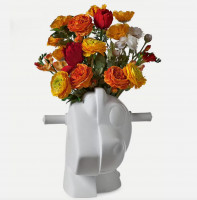
Split-Rocker (Vase), 2012
Sculpture / Object
Porcelain
EUR 3,000

Jeff Koons
Diamond (Red), 2020
Sculpture / Object
Mixed Media
EUR 18,000

Jeff Koons
Balloon Animals, Set I, 2017
Sculpture / Object
Porcelain
EUR 45,000

Jeff Koons
Balloon Animals (Collector´s Set), 2017-2019
Sculpture / Object
Porcelain
EUR 95,000

Jeff Koons
Balloon Monkey (Orange), 2019
Sculpture / Object
Porcelain
USD 12,000

Jeff Koons
Balloon Monkey (Blue), 2017
Sculpture / Object
Porcelain
USD 12,000

Jeff Koons
Balloon Swan (Yellow), 2017
Sculpture / Object
Porcelain
EUR 14,000

Jeff Koons
Balloon Dog (Magenta), 2015
Sculpture / Object
Porcelain
EUR 8,500

Jeff Koons
Balloon Dog (Orange), 2015
Sculpture / Object
Porcelain
EUR 9,000

Jeff Koons
Balloon Dog (Yellow), 2015
Sculpture / Object
Porcelain
EUR 9,000

Jeff Koons
Balloon Animals, Set II, 2019
Sculpture / Object
Porcelain
EUR 38,000

Jeff Koons
Blue Balloon Dog, 2002
Sculpture / Object
Porcelain
USD 17,750

Jeff Koons
Red Balloon Dog, 1995
Sculpture / Object
Porcelain
USD 21,200

Jeff Koons
Monkey Train (Blue), 2007
Limited Edition Print
Silkscreen
USD 30,000 - 40,000

Jeff Koons
Ballon Dogs - Set Of 3, 2015 -2017
Sculpture / Object
Porcelain
USD 30,000 - 40,000

Jeff Koons
Balloon Rabbit (Red), 2017
Sculpture / Object
Porcelain
EUR 20,000 - 30,000

Jeff Koons
Seated Ballerina, 2015
Sculpture / Object
Wood
EUR 85,000 - 100,000

Jeff Koons
Diamond (Blue), 2023
Sculpture / Object
Porcelain
USD 16,500

Jeff Koons
Balloon Swan (Magenta), 2019
Sculpture / Object
Porcelain
USD 11,900

Jeff Koons
Balloon Rabbit (Violet), 2019
Sculpture / Object
Mixed Media
USD 11,900

Jeff Koons
Dolphin Saddle, 2009
Limited Edition Print
Lithograph
GBP 10,700

Jeff Koons
Fisherman Golfer, 1986
Limited Edition Print
Lithograph
Artwork On Hold
Jeff Koons
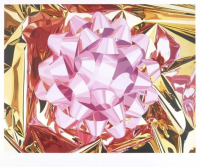
Pink Bow - Celebration Series, 2013
Limited Edition Print
Inkjet Print
Currently Not Available

Jeff Koons
Loopy, 2000
Limited Edition Print
Digital Print On Paper
Currently Not Available
Related Artists



Related Articles

Popular, Artists - February 17, 2025
Decoding Contemporary Iconography: Uncovering Hidden Symbols in Modern Art
Uncover hidden meanings in contemporary art. Explore the symbolism in works by Ai Weiwei, Banksy, Koons, Hirst, Haring, Kusama, and Magritte. Read More

What is Kitsch?
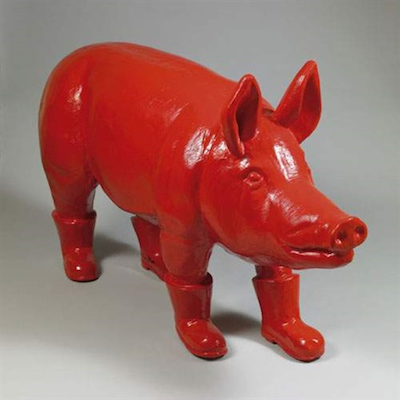
Kitsch is a term used to describe cheap, commercial, sentimental, or vulgar art and objects commonly associated with popular culture. The word is borrowed from German, where it originally means trash. Since the 1920s, kitsch has been used to denote the opposite of high art, often implying that the work lacks sophistication or artistic merit.