Details
Artist
Styles
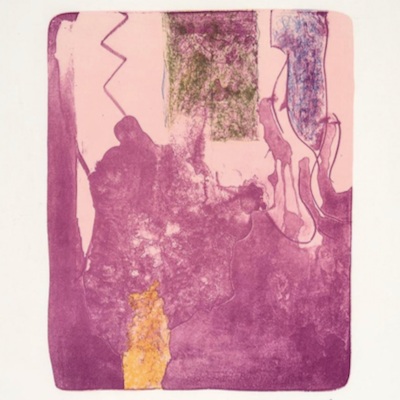
Lithograph on paper. - Signed, dated and numbered in pencil. - Printed and published by Arte Adrien Maeght, Paris, France // Jean-Paul Riopelle’s Album #7 Cat. No. 221 (1967) is a vibrant lithograph showcasing the artist's abstract expressionist language. The composition features dense and intertwined strokes of orange, green, blue, and black, creating a dynamic interplay of color and form. The layers of gestural marks convey energy and spontaneity, while the central white space adds balance and structure. Measuring 40.6 × 80 cm, this lithograph is part of a limited edition of 75 with an additional 10 hors commerce (HC) copies. Each piece is hand-signed, dated, and numbered by the artist. Printed and published by Arte Adrien Maeght in Paris, this work exemplifies Riopelle's mastery of abstraction.
Album #7 Cat. No. 221, 1967
form
Medium
Size
40.6 x 80 cm
- Inches
- Centimeters
Edition
Price
- USD
- EUR
- GBP
Details
Artist
Styles
Lithograph on paper. - Signed, dated and numbered in pencil. - Printed and published by Arte Adrien Maeght, Paris, France // Jean-Paul Riopelle’s Album #7 Cat. No. 221 (1967) is a vibrant lithograph showcasing the artist's abstract expressionist language. The composition features dense and intertwined strokes of orange, green, blue, and black, creating a dynamic interplay of color and form. The layers of gestural marks convey energy and spontaneity, while the central white space adds balance and structure. Measuring 40.6 × 80 cm, this lithograph is part of a limited edition of 75 with an additional 10 hors commerce (HC) copies. Each piece is hand-signed, dated, and numbered by the artist. Printed and published by Arte Adrien Maeght in Paris, this work exemplifies Riopelle's mastery of abstraction.
- Recently Added
- Price (low-high )
- Price (high-low )
- Year (low-high )
- Year (high-low )

Jean-Paul Riopelle
Four Winds (I), 1980
Limited Edition Print
Monoprint
Inquire For Price

Jean-Paul Riopelle
Album #7 Cat. No. 221, 1967
Limited Edition Print
Lithograph
USD 4,125

Jean-Paul Riopelle
Album #10 Cat No. 222, 1967
Limited Edition Print
Lithograph
USD 4,125
Related Artists


Related Articles

Popular, Art Movements - November 20, 2024
Understanding Abstract Expressionism: Emotion and Gesture
Explore the emotional depth of Abstract Expressionism! Discover how artists like Pollock and Rothko used gesture and color to convey human complexity. Read More

What is abstract expressionism?
Abstract Expressionism is an art movement that emerged in the United States during the 1940s and 1950s. Characterized by large, abstract canvases, the movement emphasized spontaneous, expressive brushwork and the use of color and form to convey emotion rather than represent reality. Artists like Jackson Pollock, Mark Rothko, and Willem de Kooning are key figures in this movement. Abstract Expressionism marked a shift in the art world, making New York City a center of the international art scene.