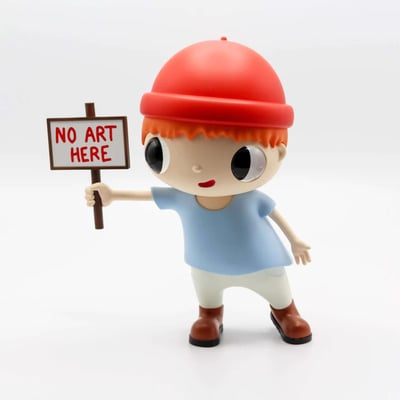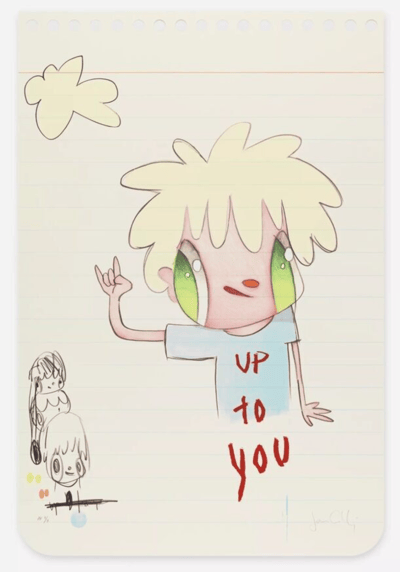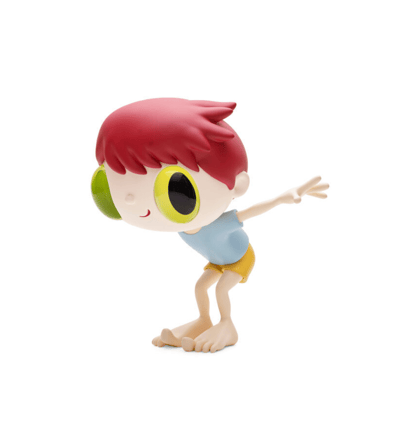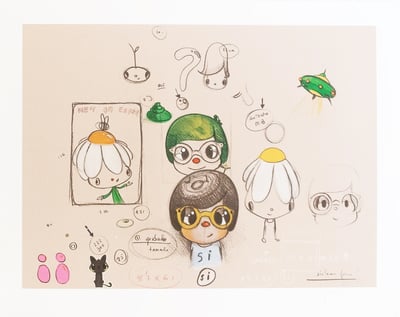
Heads ver.2 by Javier Calleja, created in 2022, is a playful sculpture composed of PVC and crystal glass, standing 30 cm tall. This edition of 1000 features Calleja's signature wide-eyed, childlike characters stacked atop one another. The piece radiates whimsy and innocence, with exaggerated facial features and vibrant hair colors. A tiny figure holding a plush toy-like head sits atop the stack, topped with a spiky, pale object resembling a playful tuft or accessory. The work captures Calleja's ongoing themes of emotional vulnerability and childlike wonder, merging collectible art with endearing charm.
Javier Calleja (Spain, 1971) is a contemporary artist celebrated for his whimsical paintings and sculptures featuring wide-eyed characters. Blending humor and innocence, his works often incorporate text, creating playful interactions between image and word. Calleja’s distinctive style has earned him international acclaim, with exhibitions in leading galleries worldwide.
GlassGlass is a transparent solid that varies in composition depending on the type. Artists use different types of glass to create art forms such as stained glass, blown glass, and various decorated pieces. Glass can be cut, textured, overlaid, engraved, and shaped in many ways to produce intricate and beautiful works of art.
Heads ver.2 by Javier Calleja, created in 2022, is a playful sculpture composed of PVC and crystal glass, standing 30 cm tall. This edition of 1000 features Calleja's signature wide-eyed, childlike characters stacked atop one another. The piece radiates whimsy and innocence, with exaggerated facial features and vibrant hair colors. A tiny figure holding a plush toy-like head sits atop the stack, topped with a spiky, pale object resembling a playful tuft or accessory. The work captures Calleja's ongoing themes of emotional vulnerability and childlike wonder, merging collectible art with endearing charm.
Javier Calleja (Spain, 1971) is a contemporary artist celebrated for his whimsical paintings and sculptures featuring wide-eyed characters. Blending humor and innocence, his works often incorporate text, creating playful interactions between image and word. Calleja’s distinctive style has earned him international acclaim, with exhibitions in leading galleries worldwide.
I like simple things. Simple, but not easy.
- Javier Calleja
Javier Calleja, born in 1971 in Málaga, Spain, is a contemporary artist renowned for his distinct visual language that often combines playful innocence with complex themes. He studied Fine Arts at the Polytechnic University of Valencia, where he honed his skills under mentors like Juan Carlos Eguillor and Manolo Valdés. Over time, Calleja has diversified his artistic mediums, transitioning from traditional painting to including drawings, sculptures, and installations in his repertoire.
His work is characterized by whimsical characters with oversized heads and diminutive bodies, situated in dreamlike environments. Despite their seemingly simplistic appearance, these characters explore multifaceted themes ranging from identity and the human psyche to the intricacies of daily life. Calleja uses irony and humor as effective tools to delve into deeper, more existential issues, making his art accessible yet profound.
Calleja’s works are a fusion of various art movements such as Surrealism, Cubism, and Pop Art, but they maintain a unique flair that sets him apart. His art has garnered international attention, captivating audiences across continents. With an expanding portfolio and a continually growing following, Calleja remains a significant figure in contemporary art, continuously challenging and engaging viewers with his emotive and intellectually stimulating creations.
Surrealism began in the 1920s as an art and literary movement with the goal of revealing the unconscious mind and unleashing the imagination by exploring unusual and dream-like imagery. Influenced by Sigmund Freud’s theories of psychoanalysis, Surrealist artists and writers sought to bring the unconscious into rational life, blurring the lines between reality and dreams. The movement aimed to challenge conventional perceptions and express the irrational aspects of the human experience.