Sam Francis

Untitled, 1984

106.7 X 73 inch

« previous

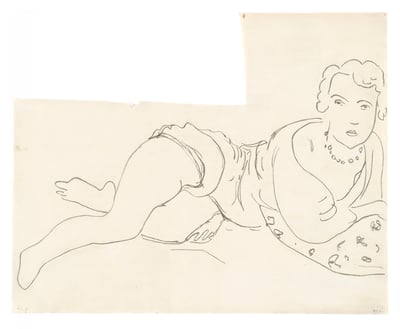
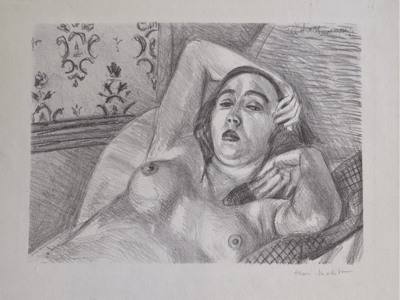
Orientale sur lit de repos

next »

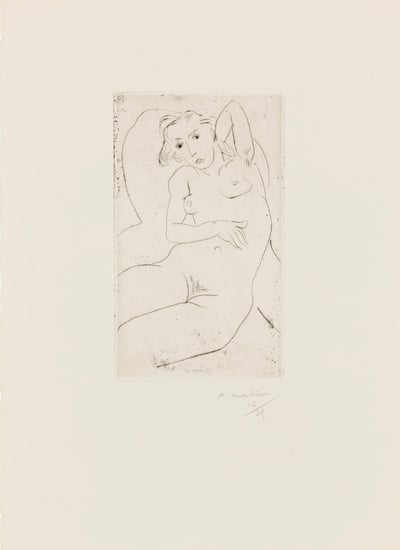
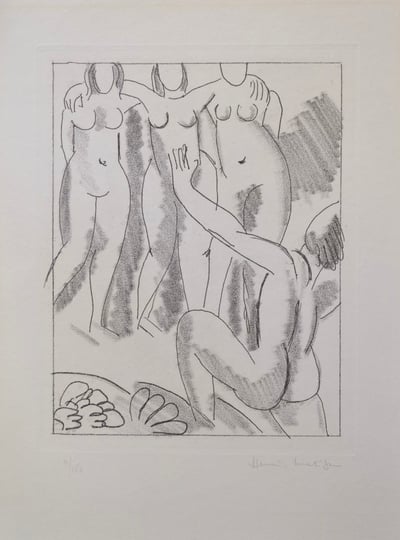
One plate, from Cinquante Dessins (Duthuit Books 2)

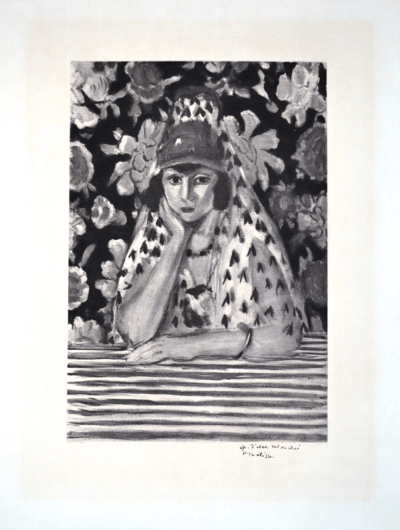
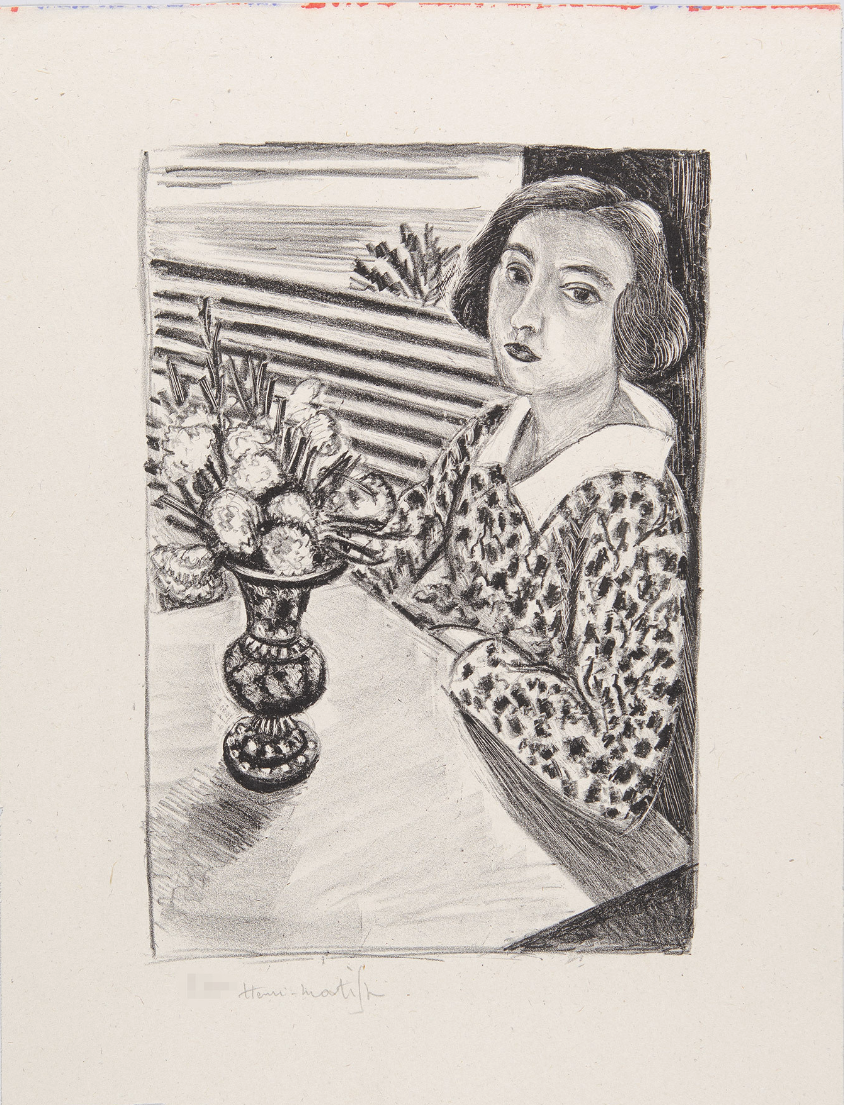
Henri MATISSE | Young Woman Sitting with Bouquet of Flower | Lithograph, 1923 — available on Composition Gallery

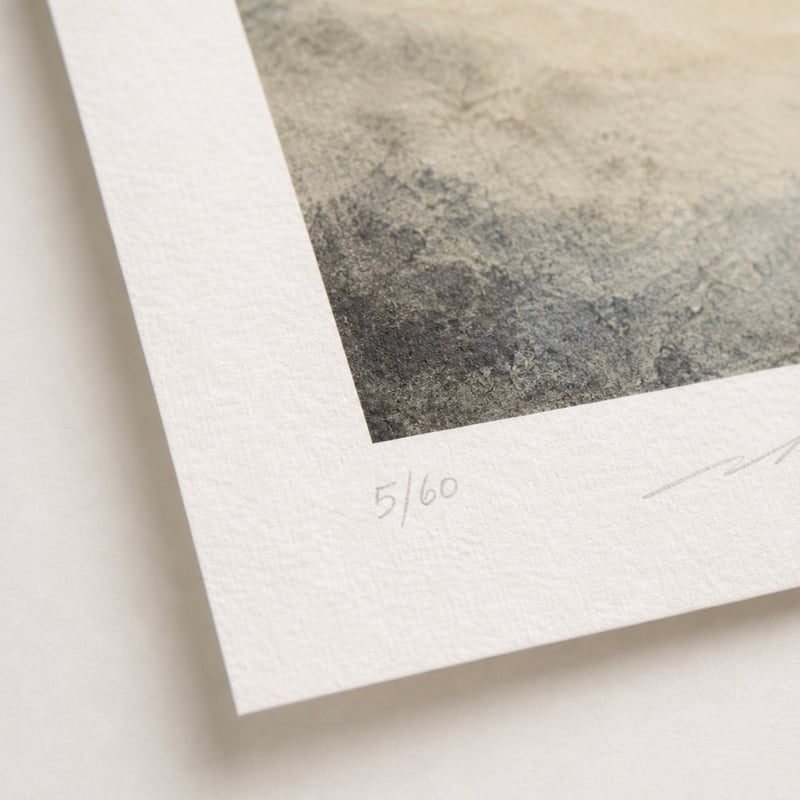
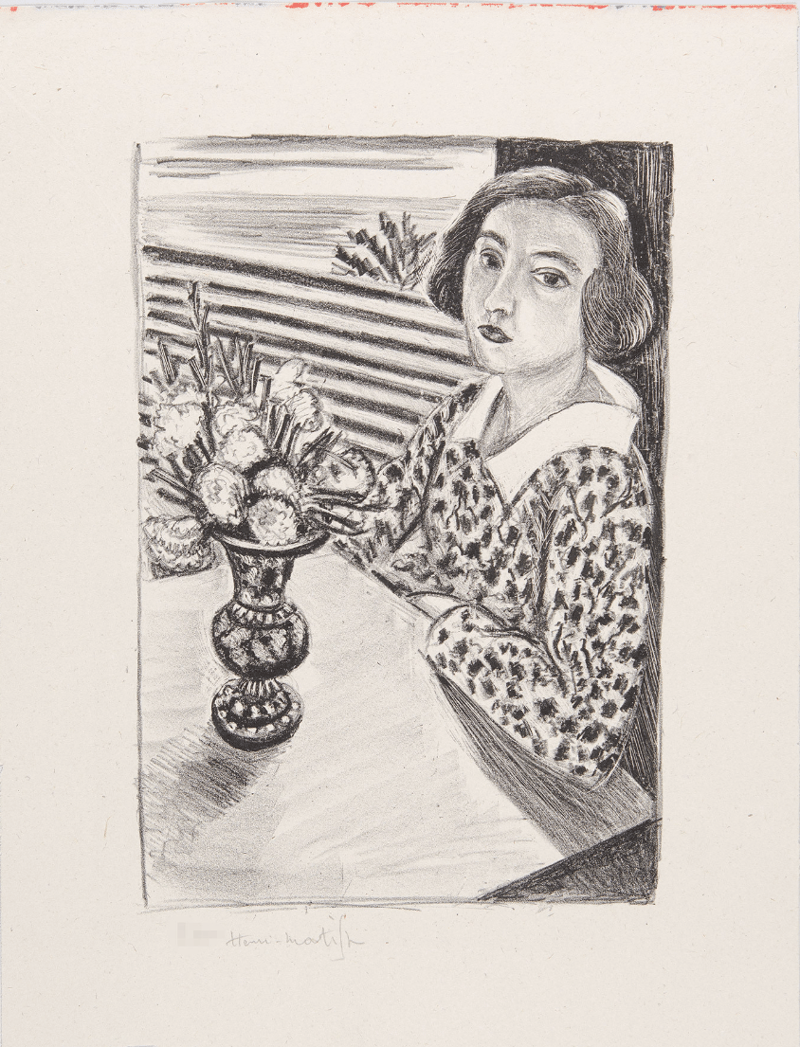
Original lithograph printed in black ink on China paper. Proof impression, one of only five such proofs, annotated 'Essai' in pencil lower left, apart from the numbered edition of 60. Sheet size: 36.5 x 27.9 cm (14 3/8 x 11 in) Image size: 27.3 x 18.4 cm (10 3/4 x 7 1/4 in) Frame size: 62.2 x 49.8 x 3.8 cm (24 1/2 x 19 5/8 x 1 1/2 in)// Young Woman Sitting with Bouquet of Flower is an exceptionally rare lithograph from 1923, when Matisse's graphic line was reaching the fluid economy that would define his mature style. A seated young woman holds a generous bouquet, her pose at once casual and composed, rendered in confident black strokes on delicate China paper. As one of only five such proof impressions — annotated 'Essai' in pencil — this sheet represents the most intimate tier of the edition, capturing the artist's first thoughts in their purest form. The work bridges Matisse's early Fauvist energy and his later decorative mastery, making it a landmark in the evolution of twentieth-century drawing.

Artwork Copyright © Henri Matisse

Young Woman Sitting with Bouquet of Flower, 1923

form

Medium

Edition

Original lithograph printed in black ink on China paper. Proof impression, one of only five such proofs, annotated 'Essai' in pencil lower left, apart from the numbered edition of 60. Sheet size: 36.5 x 27.9 cm (14 3/8 x 11 in) Image size: 27.3 x 18.4 cm (10 3/4 x 7 1/4 in) Frame size: 62.2 x 49.8 x 3.8 cm (24 1/2 x 19 5/8 x 1 1/2 in)// Young Woman Sitting with Bouquet of Flower is an exceptionally rare lithograph from 1923, when Matisse's graphic line was reaching the fluid economy that would define his mature style. A seated young woman holds a generous bouquet, her pose at once casual and composed, rendered in confident black strokes on delicate China paper. As one of only five such proof impressions — annotated 'Essai' in pencil — this sheet represents the most intimate tier of the edition, capturing the artist's first thoughts in their purest form. The work bridges Matisse's early Fauvist energy and his later decorative mastery, making it a landmark in the evolution of twentieth-century drawing.

Artwork Copyright © Henri Matisse

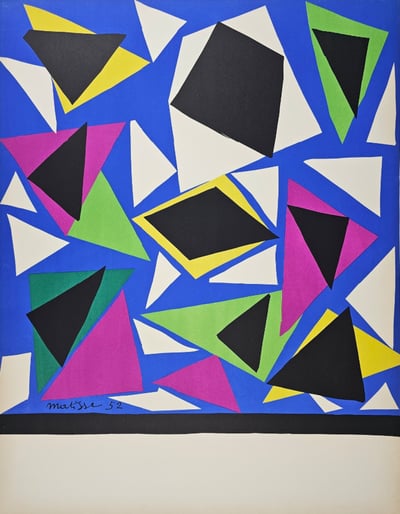
Henri Matisse

Centenaire De Mourlot, 1952

Limited Edition Print

Lithograph

USD 4,750
Henri Matisse

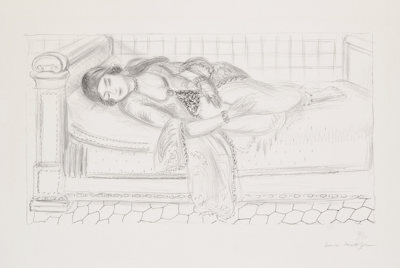
Orientale Sur Lit De Repos, 1929

Limited Edition Print

Lithograph

Inquire For Price
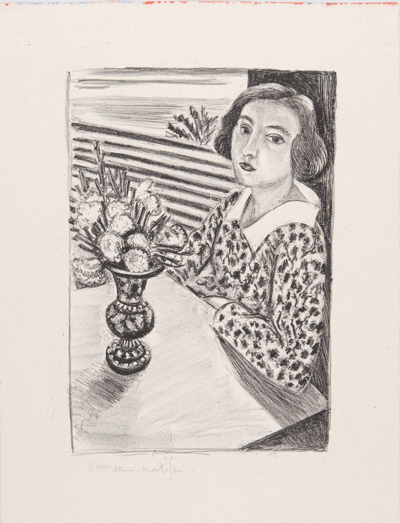
Henri Matisse

Young Woman Sitting With Bouquet Of Flower, 1923

Limited Edition Print

Lithograph

Inquire For Price
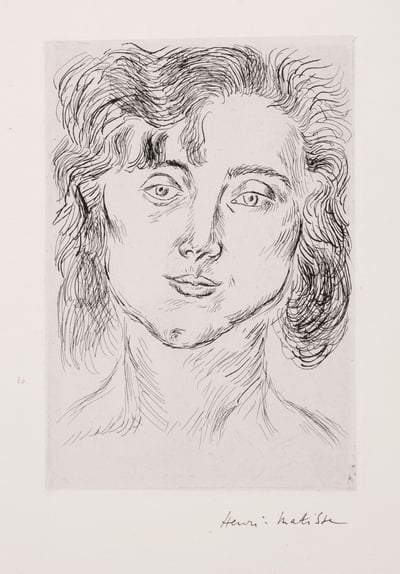
Henri Matisse

One Plate, From Cinquante Dessins (Duthuit Books 2), 1920

Limited Edition Print

Etching

Inquire For Price
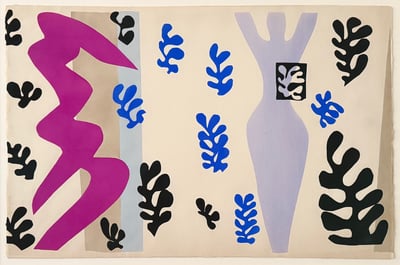
Henri Matisse

Le Lanceur De Couteaux, From Jazz, 1947

Limited Edition Print

Mixed Media

EUR 22,900
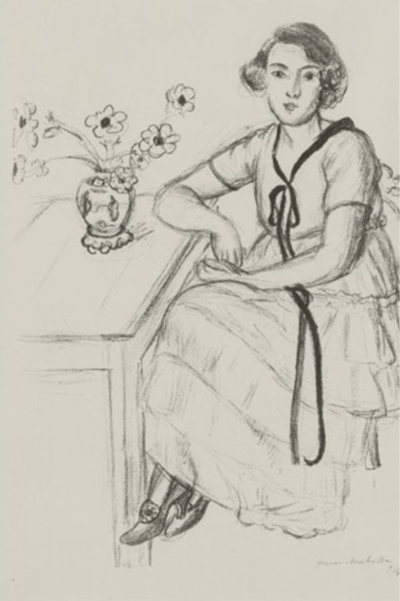
Henri Matisse

La Robe Jaune Au Ruban Noir, 1922

Limited Edition Print

Lithograph

USD 25,000 - 50,000

Henri Matisse

Espanol, c. 1925

Drawing / Watercolor

Mixed Media

Inquire For Price
Henri Matisse

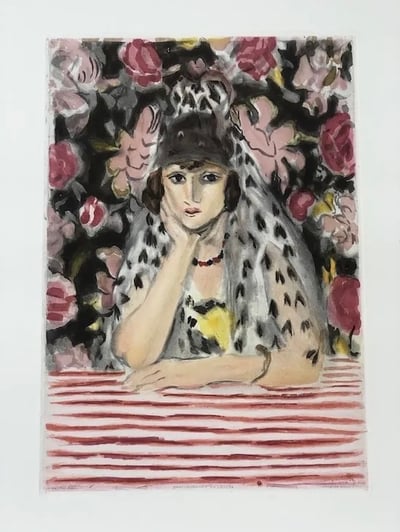
L'Espagnol à La Mantille, 1925

Limited Edition Print

Etching And Aquatint

EUR 3,100

Henri Matisse

D416 Le Repos Du Modele, 1922

Limited Edition Print

Lithograph

USD 8,600
Henri Matisse

D236 Nausicaa Ulyssess Pl202, 1935

Limited Edition Print

Lithograph

USD 10,500
Stay Updated on Henri Matisse

Subscribe to receive updates on new artworks, exhibitions and news about Henri Matisse.

We respect your privacy and protect your information.

What is Political Pop?

Political Pop was an art movement that emerged in China during the 1980s, blending the Pop Art style of Western countries with the socialist realism of China. This movement arose during a time of rapid social and political change in China, as artists sought to create works that questioned and critiqued these cultural shifts. Political Pop often juxtaposed iconic images from Chinese propaganda with Western consumer culture, highlighting the tensions between tradition and modernization.

RECENTLY VIEWED

-->