Sam Francis

Untitled, 1984

106.7 X 73 inch

« previous

Centenaire de Mourlot

next »

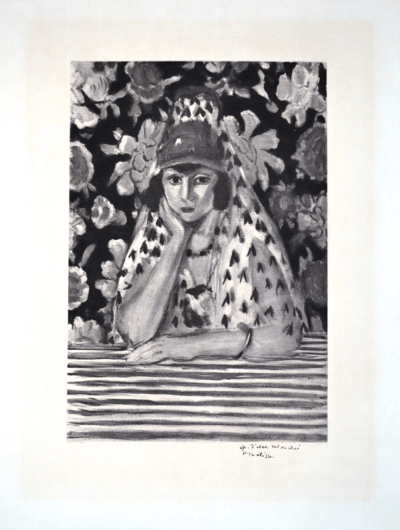
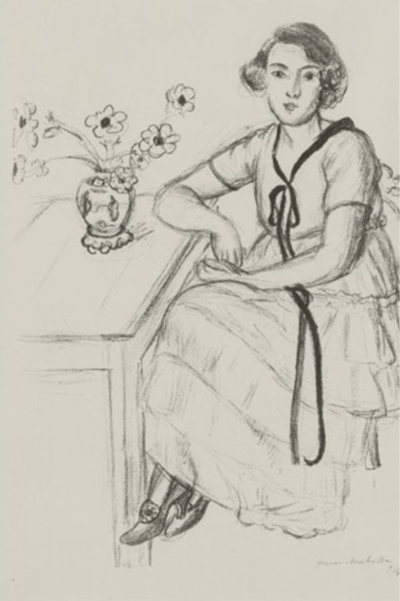
Young Woman Sitting with Bouquet of Flower

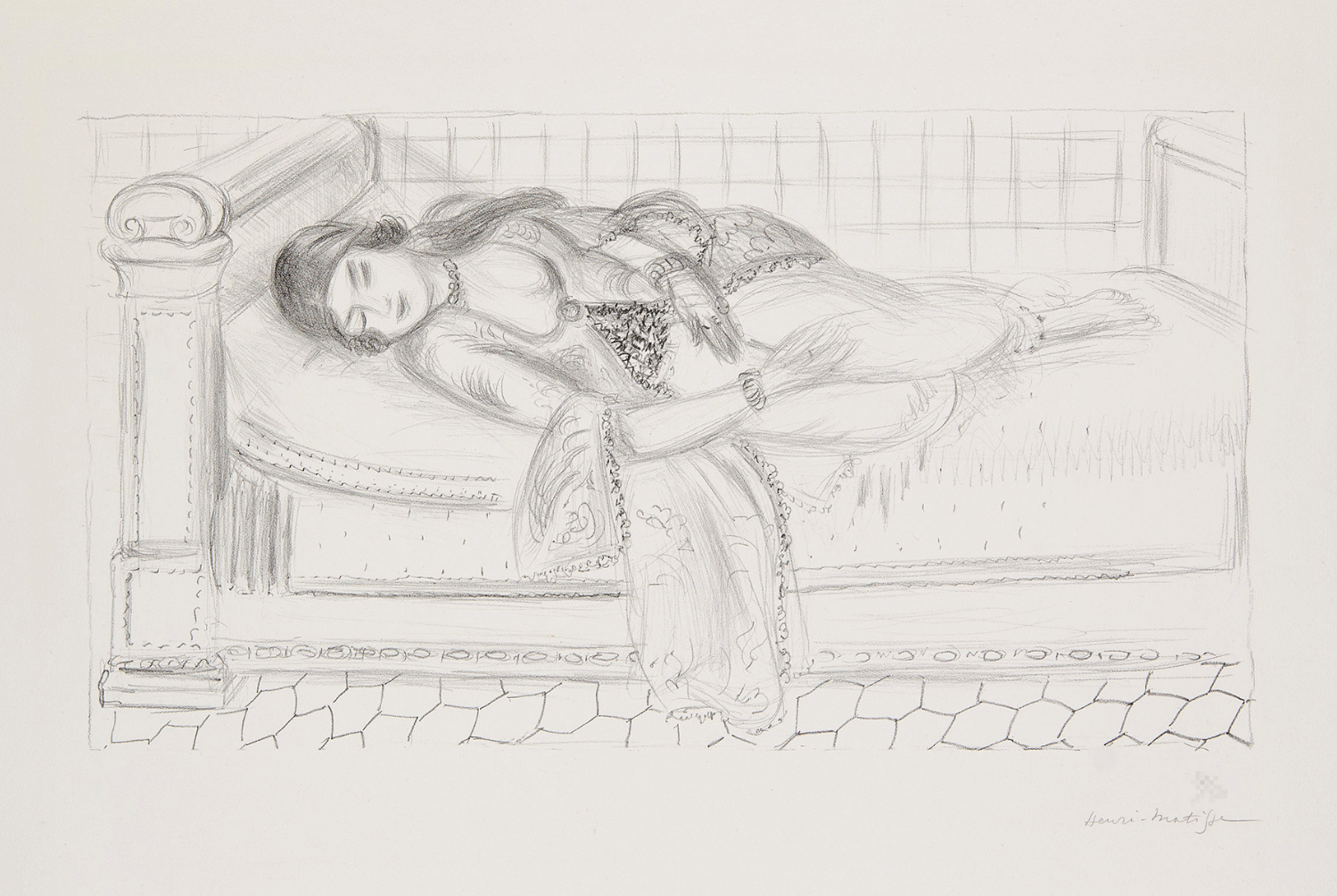
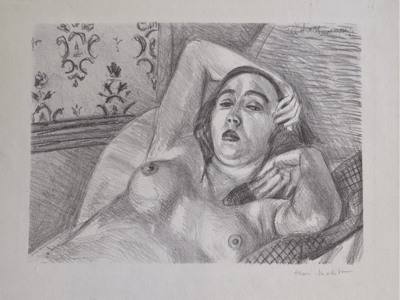
Henri MATISSE | Orientale sur lit de repos | Lithograph, 1929 — available on Composition Gallery

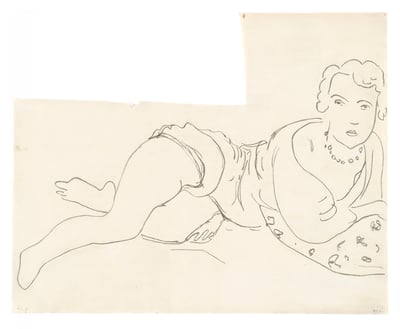
Original lithograph printed in black ink on Arches wove paper. Edition of 50, numbered in pencil lower right (plus 10 artist's proofs, 9 trial proofs, and 1 state proof; overall edition of 70). Sheet size: 50.5 x 66.0 cm (19 7/8 x 26 in) Image size: 25.7 x 47.3 cm (10 1/8 x 18 5/8 in) Frame size: 59.7 x 77.5 x 4.4 cm (23 1/2 x 30 1/2 x 1 3/4 in)// Orientale sur lit de repos is a sumptuous lithograph from Matisse's celebrated Nice period, depicting a reclining odalisque on a daybed in the flowing, assured line that defines his graphic genius. The figure lies in languid repose, her form described by sinuous contours that move from the curve of her shoulder through the drape of fabric with effortless grace. Rendered in rich black ink on Arches wove paper, the composition achieves an extraordinary balance between decorative plenitude and structural clarity. From an edition of just fifty, with ten artist's proofs and nine trial proofs, this is a rare and important example of Matisse's printmaking at the moment when his drawing reached its fullest maturity.

Artwork Copyright © Henri Matisse

Orientale sur lit de repos, 1929

form

Medium

Edition

Original lithograph printed in black ink on Arches wove paper. Edition of 50, numbered in pencil lower right (plus 10 artist's proofs, 9 trial proofs, and 1 state proof; overall edition of 70). Sheet size: 50.5 x 66.0 cm (19 7/8 x 26 in) Image size: 25.7 x 47.3 cm (10 1/8 x 18 5/8 in) Frame size: 59.7 x 77.5 x 4.4 cm (23 1/2 x 30 1/2 x 1 3/4 in)// Orientale sur lit de repos is a sumptuous lithograph from Matisse's celebrated Nice period, depicting a reclining odalisque on a daybed in the flowing, assured line that defines his graphic genius. The figure lies in languid repose, her form described by sinuous contours that move from the curve of her shoulder through the drape of fabric with effortless grace. Rendered in rich black ink on Arches wove paper, the composition achieves an extraordinary balance between decorative plenitude and structural clarity. From an edition of just fifty, with ten artist's proofs and nine trial proofs, this is a rare and important example of Matisse's printmaking at the moment when his drawing reached its fullest maturity.

Artwork Copyright © Henri Matisse

Henri Matisse

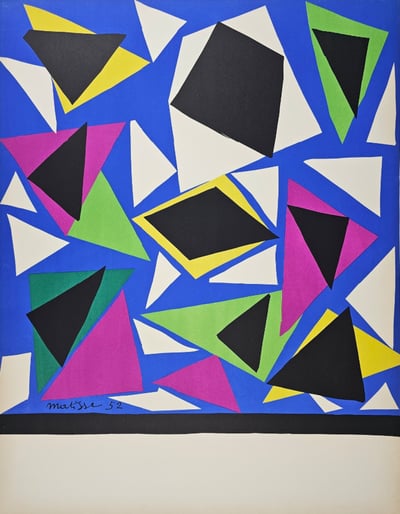
Centenaire De Mourlot, 1952

Limited Edition Print

Lithograph

USD 4,750
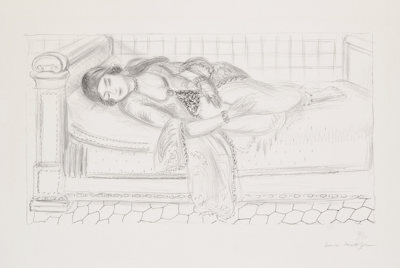
Henri Matisse

Orientale Sur Lit De Repos, 1929

Limited Edition Print

Lithograph

Inquire For Price
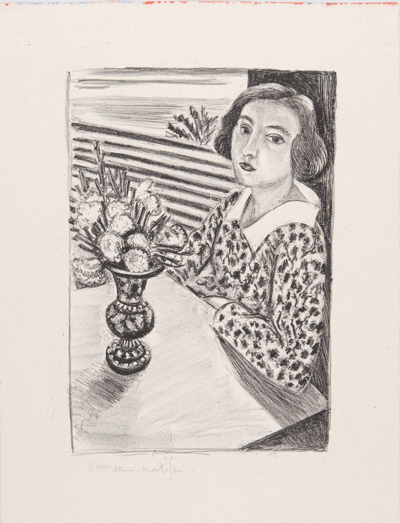
Henri Matisse

Young Woman Sitting With Bouquet Of Flower, 1923

Limited Edition Print

Lithograph

Inquire For Price
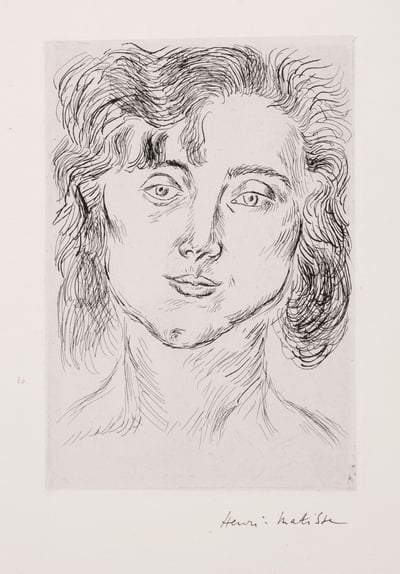
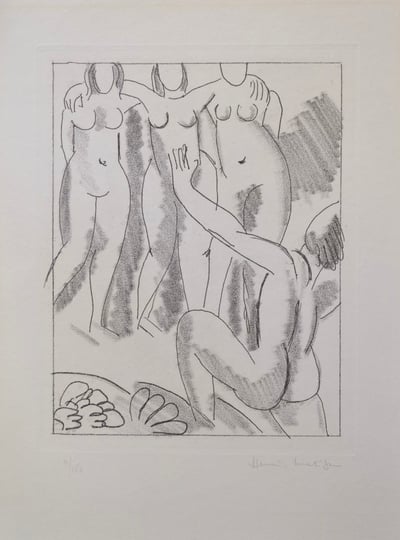
Henri Matisse

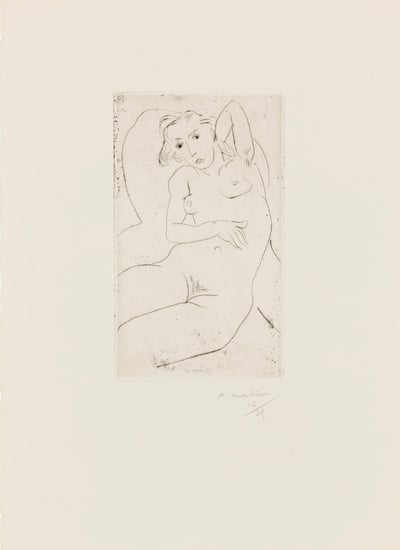
One Plate, From Cinquante Dessins (Duthuit Books 2), 1920

Limited Edition Print

Etching

Inquire For Price
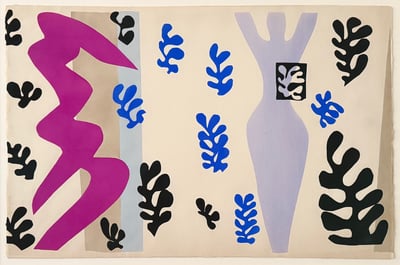
Henri Matisse

Le Lanceur De Couteaux, From Jazz, 1947

Limited Edition Print

Mixed Media

EUR 22,900
Henri Matisse

La Robe Jaune Au Ruban Noir, 1922

Limited Edition Print

Lithograph

USD 25,000 - 50,000

Henri Matisse

Espanol, c. 1925

Drawing / Watercolor

Mixed Media

Inquire For Price
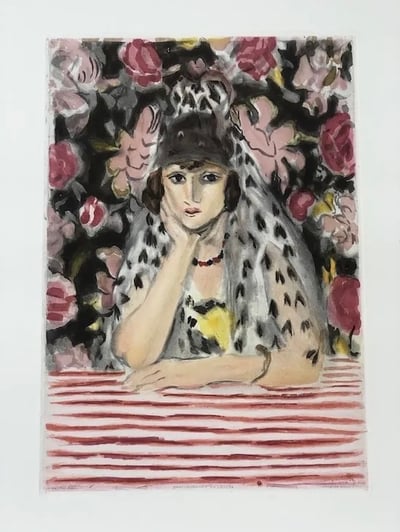
Henri Matisse

L'Espagnol à La Mantille, 1925

Limited Edition Print

Etching And Aquatint

EUR 3,100

Henri Matisse

D416 Le Repos Du Modele, 1922

Limited Edition Print

Lithograph

USD 8,600
Henri Matisse

D236 Nausicaa Ulyssess Pl202, 1935

Limited Edition Print

Lithograph

USD 10,500
Stay Updated on Henri Matisse

Subscribe to receive updates on new artworks, exhibitions and news about Henri Matisse.

We respect your privacy and protect your information.

What is Xiamen Dada?

Xiamen Dada was a Chinese artist group based in Xiamen, a city on China’s southeast coast. Emerging in the 1980s, the group explored the relationship between Chan Buddhism and European Dada, embracing absurdity and the use of chance in the creation of their artworks. Xiamen Dada sought to challenge conventional artistic norms, blending Eastern philosophy with the avant-garde practices of Dada, and became known for their provocative and unconventional approach to art.

RECENTLY VIEWED

-->