Details
Artist
Styles
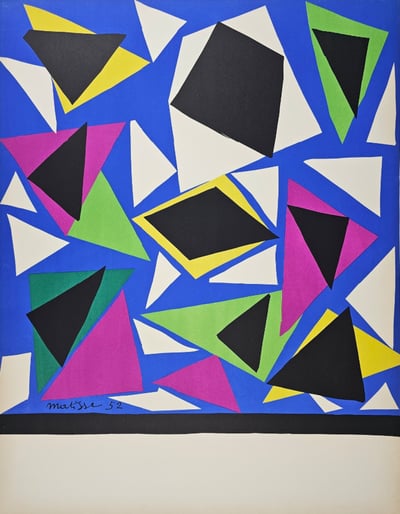
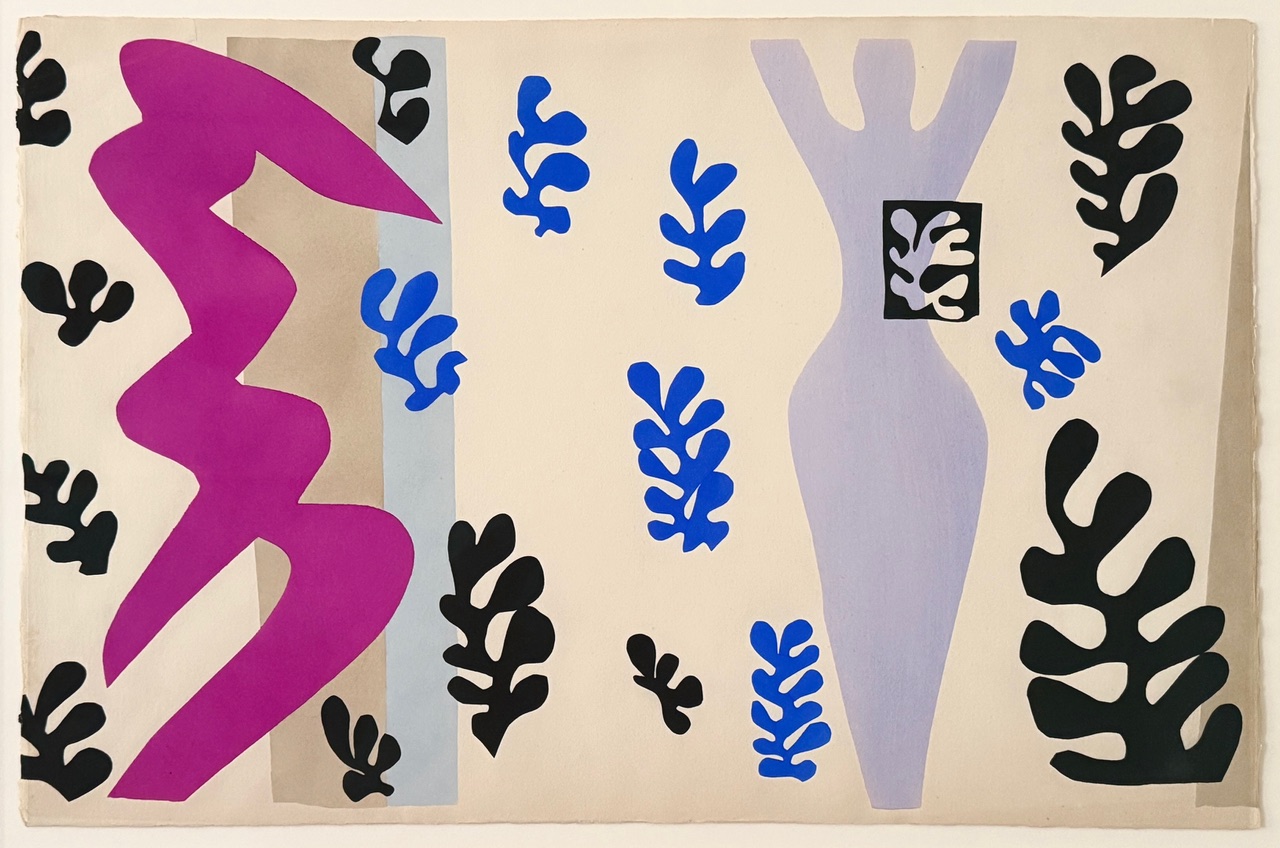
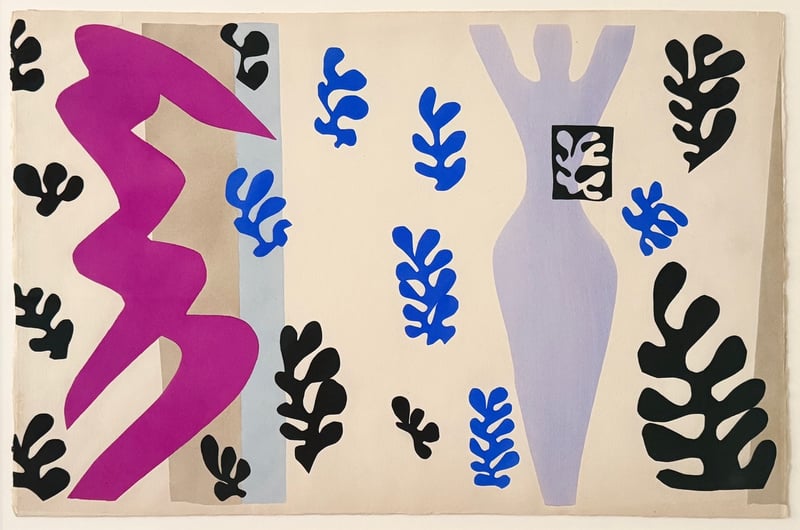
Original pochoir on Arches wove paper. - Edition:100 ex. without centerfold in the plates. Next to the regular edition of 250 copies with center fold. - Printed by Edmond Vaireland, Draeger Frères, Paris - Published by Teriade, Paris - In excellent condition. One small restored tear (1 cm) and crease in the upper left corner and some faint discoloration spots. - Claude Duthuit, Henri Matisse: catalogue raisonné des ouvrages illustrés, Paris, 1988, no. 22, pp. 177 (illustrated in color) Le lanceur de couteaux (The Knife Thrower) from Jazz (1947) by Henri Matisse exemplifies the artist’s late-career mastery of the pochoir technique. Using bold, organic cut-out forms in vibrant magenta, lavender, cobalt, and black, Matisse arranges silhouettes that suggest motion and duality—likely representing both the knife thrower and the target. The composition plays with symmetry and negative space, using stylized leaf-like shapes to create visual rhythm. Published by Tériade and printed by Draeger Frères, this pochoir was part of a rare edition of 100 impressions issued without the centerfold, unlike the standard version. Originally conceived as part of the Jazz portfolio—a landmark artist’s book—this work reflects Matisse’s interest in theatrical themes and the dynamism of performance. The poetic abstraction and color harmonies evoke joy, tension, and spectacle through visual metaphor, making it one of the most iconic images from Jazz.
Le lanceur de couteaux, from Jazz, 1947
form
Medium
Size
42 x 65 cm
- Inches
- Centimeters
Edition
Price
- USD
- EUR
- GBP
Details
Artist
Styles
Original pochoir on Arches wove paper. - Edition:100 ex. without centerfold in the plates. Next to the regular edition of 250 copies with center fold. - Printed by Edmond Vaireland, Draeger Frères, Paris - Published by Teriade, Paris - In excellent condition. One small restored tear (1 cm) and crease in the upper left corner and some faint discoloration spots. - Claude Duthuit, Henri Matisse: catalogue raisonné des ouvrages illustrés, Paris, 1988, no. 22, pp. 177 (illustrated in color) Le lanceur de couteaux (The Knife Thrower) from Jazz (1947) by Henri Matisse exemplifies the artist’s late-career mastery of the pochoir technique. Using bold, organic cut-out forms in vibrant magenta, lavender, cobalt, and black, Matisse arranges silhouettes that suggest motion and duality—likely representing both the knife thrower and the target. The composition plays with symmetry and negative space, using stylized leaf-like shapes to create visual rhythm. Published by Tériade and printed by Draeger Frères, this pochoir was part of a rare edition of 100 impressions issued without the centerfold, unlike the standard version. Originally conceived as part of the Jazz portfolio—a landmark artist’s book—this work reflects Matisse’s interest in theatrical themes and the dynamism of performance. The poetic abstraction and color harmonies evoke joy, tension, and spectacle through visual metaphor, making it one of the most iconic images from Jazz.
- Recently Added
- Price (low-high )
- Price (high-low )
- Year (low-high )
- Year (high-low )
Henri Matisse
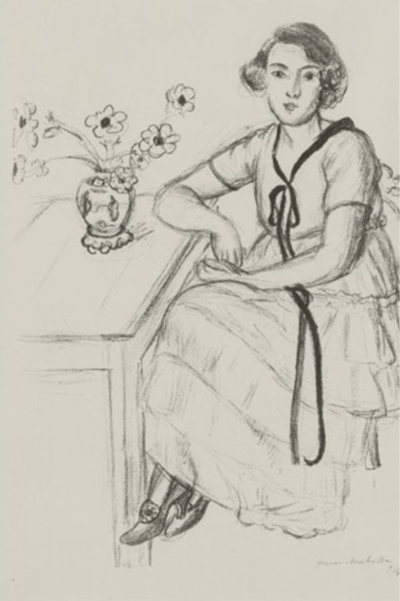
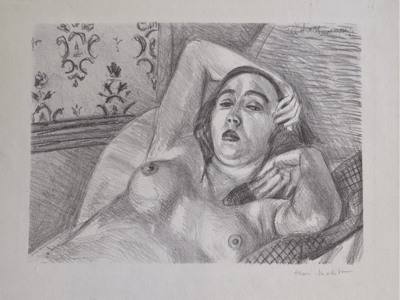
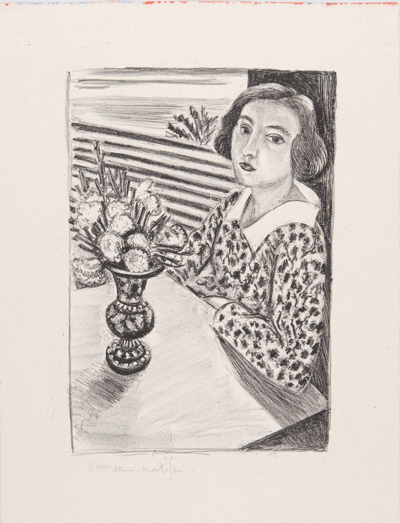
Young Woman Sitting With Bouquet Of Flower, 1923
Limited Edition Print
Lithograph
Inquire For Price
Henri Matisse
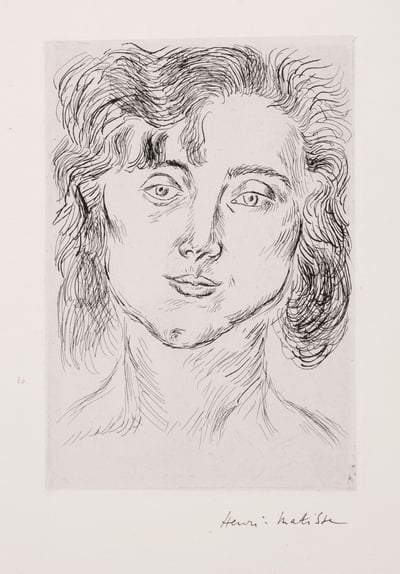
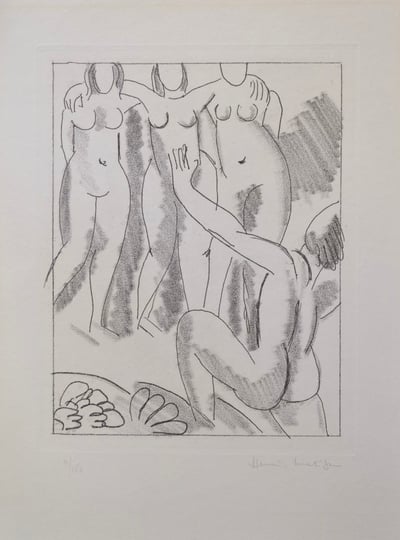
One Plate, From Cinquante Dessins (Duthuit Books 2), 1920
Limited Edition Print
Etching
Inquire For Price
Henri Matisse
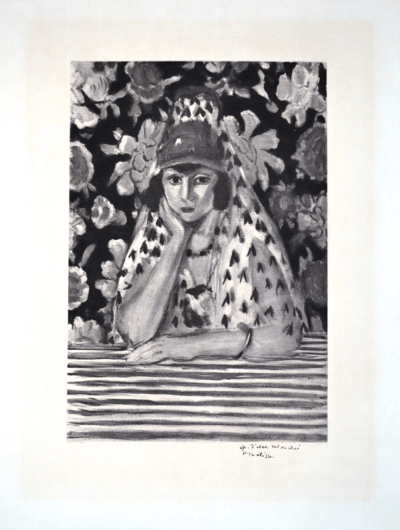
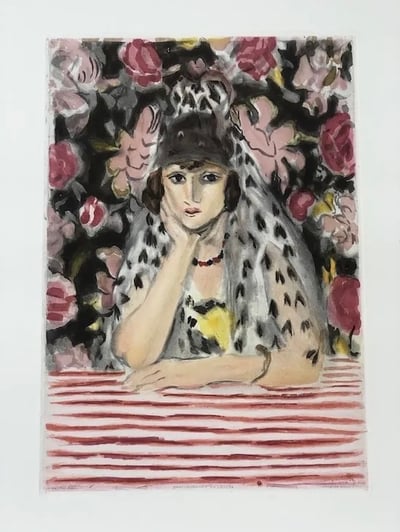
La Robe Jaune Au Ruban Noir, 1922
Limited Edition Print
Lithograph
USD 25,000 - 50,000
What is Happening?
A Happening is a term used to describe artistic and theatrical events held by artists in the 1950s and 60s. These events were typically staged in gallery installations or planned environments and often involved audience participation, along with elements like lighting, sounds, and slide projections. Happenings were a precursor to performance art, which later included the active participation of the artists themselves.