Details
Artist
Styles
Corneille’s La femme et l’oiseau rouge (1995) is a lithograph that exemplifies his vivid, symbolic visual language. A reclining female figure, rendered in warm ochres and soft contours, gazes toward a bold red bird hovering above her. The simplified forms and strong color contrasts create a dreamlike, almost mythical atmosphere. Influenced by his travels and engagement with African art, Corneille frequently explored the relationship between woman and bird—motifs that here suggest sensuality, vitality, and freedom. Produced in a signed edition of 99, the work reflects his transition from early abstraction to a more figurative, poetic style.
La femme et l’oiseau rouge, 1995
form
Medium
Size
65 x 50 cm
- Inches
- Centimeters
Edition
Price
- USD
- EUR
- GBP
Details
Artist
Styles
Corneille’s La femme et l’oiseau rouge (1995) is a lithograph that exemplifies his vivid, symbolic visual language. A reclining female figure, rendered in warm ochres and soft contours, gazes toward a bold red bird hovering above her. The simplified forms and strong color contrasts create a dreamlike, almost mythical atmosphere. Influenced by his travels and engagement with African art, Corneille frequently explored the relationship between woman and bird—motifs that here suggest sensuality, vitality, and freedom. Produced in a signed edition of 99, the work reflects his transition from early abstraction to a more figurative, poetic style.
- Recently Added
- Price (low-high )
- Price (high-low )
- Year (low-high )
- Year (high-low )

Guillaume Corneille
Composition Abstraite, 1952
Drawing / Watercolor
Mixed Media
EUR 11,500

Guillaume Corneille
Chats Champêtres, 2008
Limited Edition Print
Engraving
EUR 1,500

Guillaume Corneille
Plat, 1999
Ceramics
Plate
EUR 3,500

Guillaume Corneille
Femme Rose Aux Cheveux Bleus, 1999
Limited Edition Print
Mixed Media
EUR 1,500

Guillaume Corneille
La Femme Et L’oiseau Rouge, 1995
Limited Edition Print
Lithograph
EUR 1,500

Guillaume Corneille
Däumelinchen, 1999
Limited Edition Print
Lithograph
EUR 980

Guillaume Corneille
Blauer Stern, 1999
Limited Edition Print
Lithograph
EUR 1,800

Guillaume Corneille
Tête De Femme Et Oiseau Pensif, 1980
Limited Edition Print
Lithograph
EUR 570

Guillaume Corneille
Aurore Sur La Montagne, 1991
Limited Edition Print
Lithograph
EUR 1,980

Guillaume Corneille
Le Grand Oiseau Du Désert, 1999
Limited Edition Print
Lithograph
EUR 2,020

Guillaume Corneille
Esmeralda, 2002
Limited Edition Print
Etching
EUR 1,400

Guillaume Corneille
Liegender Akt, 1991
Limited Edition Print
Lithograph
EUR 3,800

Guillaume Corneille
Demi-Lune Dans Ciel Catalan, 1990
Limited Edition Print
Lithograph
EUR 1,200

Guillaume Corneille
Chat Exotique Des Iles Du Sud
Sculpture / Object
Metal
EUR 600

Guillaume Corneille
Woman And Bird
Sculpture / Object
Wood
EUR 1,400

Guillaume Corneille
Rêve D’été, 2004
Sculpture / Object
Wood
EUR 1,400

Guillaume Corneille
Big Bird (Grosser Vogel), 1991
Limited Edition Print
Lithograph
Currently Not Available
Related Artists
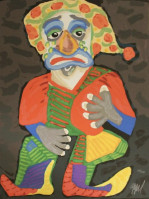


Related Articles

Artists - February 04, 2025
Pierre Alechinsky: Bridging East and West in Modern Art
Discover how Pierre Alechinsky fused European expressionism with Japanese calligraphy, pioneering a unique cross-cultural artistic language. Read More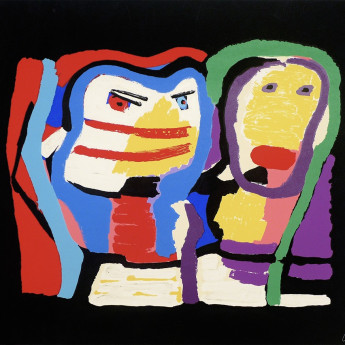
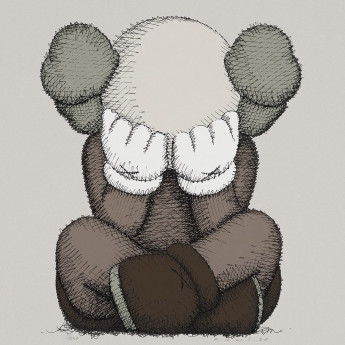
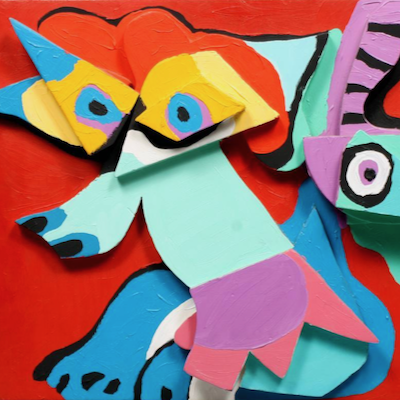
What is the CoBrA movement?
CoBrA stands for Copenhagen, Brussels, and Amsterdam; the group was formed with a desire to break away from the existing art movements of the time. Their critique of Western society led them to experiment and evolve into a significant international movement. CoBrA was founded on November 8, 1948, at the Notre Dame Café in Paris, where its manifesto was signed by Karel Appel, Joseph Noiret, Corneille, Christian Dotremont, Constant, and Asger Jorn. The group was united by a shared commitment to freedom in both form and color, and their work emphasized experimentation and spontaneity.