Details
Artist
Styles
18-colour Silkscreen with pressings on white file paper from the Galvani Paper-Mill - From the portfolio: "Counterpoints - 7 visual notations by Accardi, Boetti, Buren, Kounellis, LeWitt, Paolini and Pistoletto" published by A.E.I.O.U Edizioni d'arte (Rome) edited by Bruno Corà. - Bibliography: Graphic impressions. The graphic work 1967-1992 by Giulio Paolini, Marco Noire Editore, Turin 1992, cat. n. 68.. // Giulio Paolini's Signore e Signori… is a striking silkscreen print that plays with notions of perspective, space, and historical imagery. The composition depicts a mirrored architectural interior, complete with ornate walls, arches, and an intricately detailed ceiling. Two figures, dressed in classical attire, are centrally positioned, their reflections further enhancing the symmetrical layout. The inclusion of two small, brightly colored elements—a blue window at the top and an orange window below—contrasts sharply with the otherwise monochromatic, historical setting. These vivid accents draw the eye and suggest a disruption or anomaly within the otherwise orderly environment. Published as part of a portfolio titled Counterpoints, this print is an exploration of visual dualities, inviting viewers to reflect on the interplay between past and present, real and imagined. Paolini’s work challenges perceptions of space and time, offering a poetic meditation on the nature of reality.
Signore e Signori…, 1988
form
Medium
Size
100 x 70 cm
- Inches
- Centimeters
Edition
Price
- USD
- EUR
- GBP
Details
Artist
Styles
18-colour Silkscreen with pressings on white file paper from the Galvani Paper-Mill - From the portfolio: "Counterpoints - 7 visual notations by Accardi, Boetti, Buren, Kounellis, LeWitt, Paolini and Pistoletto" published by A.E.I.O.U Edizioni d'arte (Rome) edited by Bruno Corà. - Bibliography: Graphic impressions. The graphic work 1967-1992 by Giulio Paolini, Marco Noire Editore, Turin 1992, cat. n. 68.. // Giulio Paolini's Signore e Signori… is a striking silkscreen print that plays with notions of perspective, space, and historical imagery. The composition depicts a mirrored architectural interior, complete with ornate walls, arches, and an intricately detailed ceiling. Two figures, dressed in classical attire, are centrally positioned, their reflections further enhancing the symmetrical layout. The inclusion of two small, brightly colored elements—a blue window at the top and an orange window below—contrasts sharply with the otherwise monochromatic, historical setting. These vivid accents draw the eye and suggest a disruption or anomaly within the otherwise orderly environment. Published as part of a portfolio titled Counterpoints, this print is an exploration of visual dualities, inviting viewers to reflect on the interplay between past and present, real and imagined. Paolini’s work challenges perceptions of space and time, offering a poetic meditation on the nature of reality.
- Recently Added
- Price (low-high )
- Price (high-low )
- Year (low-high )
- Year (high-low )

Giulio Paolini
Elea, 2009
Sculpture / Object
Assemblage
EUR 2,300

Giulio Paolini
Signore E Signori…, 1988
Limited Edition Print
Silkscreen
EUR 1,250

Giulio Paolini
Senza Titolo, 1973
Drawing / Watercolor
Collage
EUR 23,680
Related Artists


Related Articles

Artists - November 11, 2024
25 Living Icons: A Generation of Artists Defying Time
Celebrate 25 living legends redefining art! From Kusama to Hockney, explore their enduring creativity and groundbreaking contributions to modern art. Read More

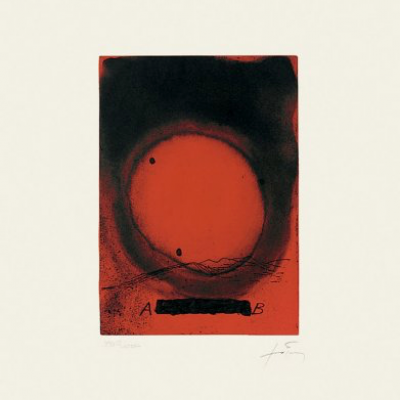
Artwork by Antoni Tapies
What is Arte Povera?
A movement and style in art that originated in Italy during the 1960s. It integrates elements of minimalism, performance art, and conceptual art by using everyday or seemingly worthless materials, such as newspapers, stones, or rags. The goal was to challenge and subvert the commercialization of art.
RECENTLY VIEWED
-->