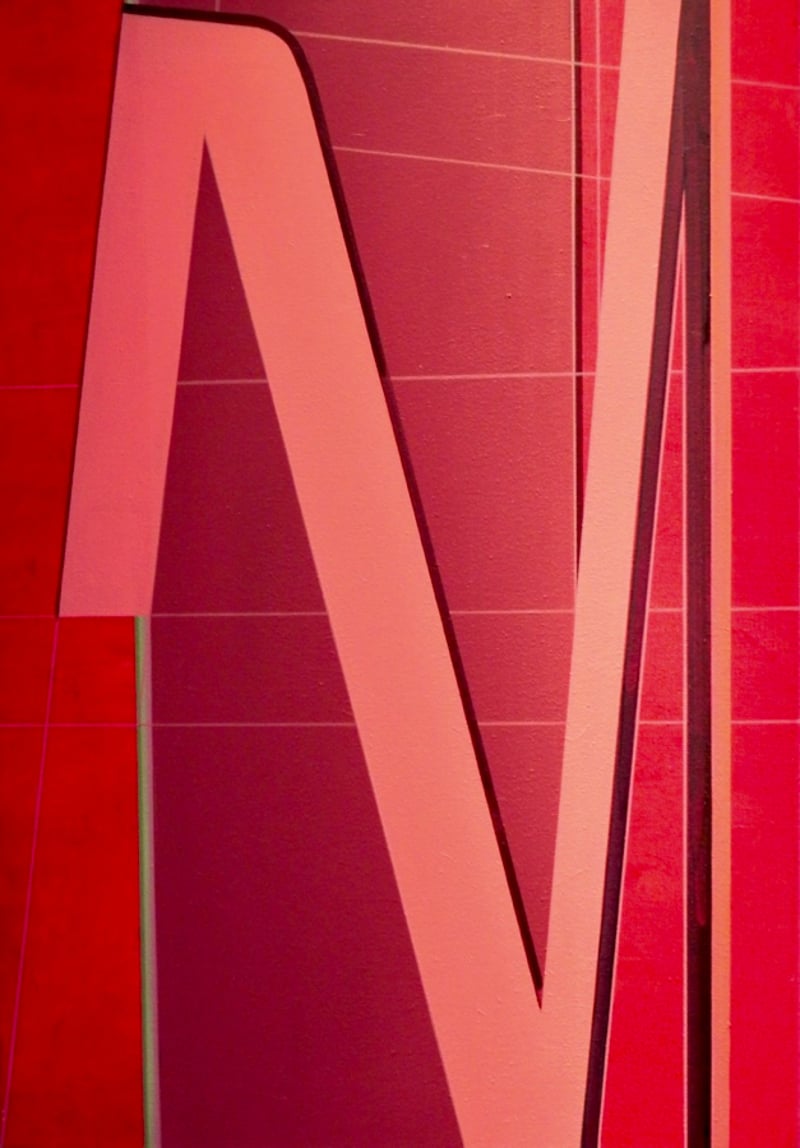
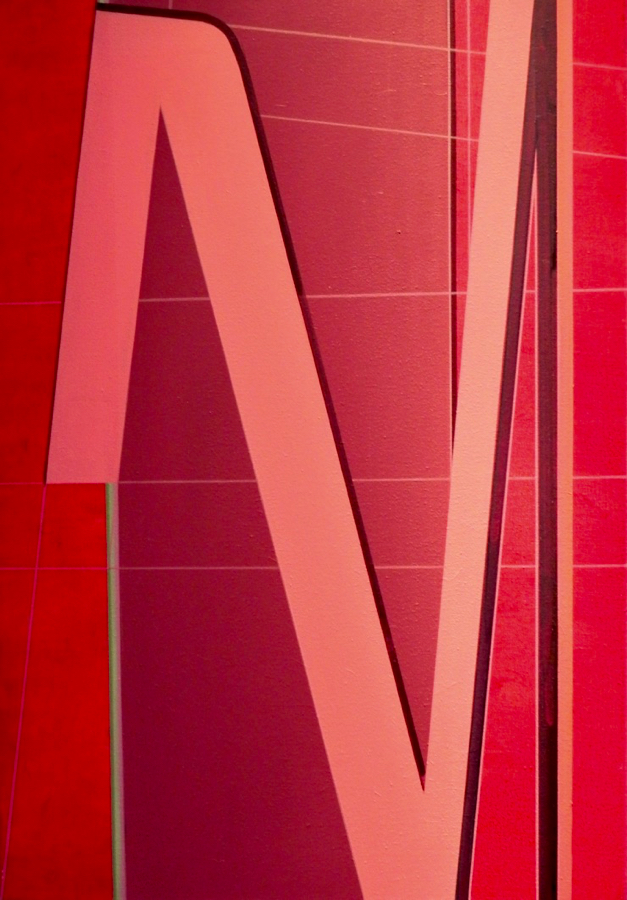
Frank Nitsche's Nek-31 is an oil painting on canvas created in 2005. This work exemplifies Nitsche’s signature style, blending geometric abstraction with a sense of architectural layering. Dominated by bold pink and red tones, the composition is structured around angular forms and sharp lines, creating an interplay of depth and surface. The dynamic, overlapping shapes evoke an abstract form that suggests both mechanical and organic influences, typical of Nitsche's explorations of modern visual culture. The painting’s flat planes and precise line work generate a sense of movement, guiding the viewer’s eye across the structured yet vibrant canvas.
Artwork Copyright © Frank NitscheFrank Nitsche (Germany, 1964) is a contemporary painter known for his geometric abstractions. His works feature overlapping layers, intersecting lines, and specific forms reminiscent of construction plans, technical models, and computer programs. Nitsche draws inspiration from a vast visual archive of media, pop, and consumer culture, which he arranges and condenses into his unique pictorial idiom.
Artwork Copyright © Frank NitscheNek-31, 2005
Form
Medium
Size
- Inches
- Centimeters
Edition
Price
- USD
- EUR
- GBP
- CHF
- Authenticity Guaranteed
- Insured Shipping
- Online Since 2005
●Inventory 5513
●Signed
●Comes with gallery invoice and certificate
●Sell Us a Similar Artwork. Learn more.
Frank Nitsche's Nek-31 is an oil painting on canvas created in 2005. This work exemplifies Nitsche’s signature style, blending geometric abstraction with a sense of architectural layering. Dominated by bold pink and red tones, the composition is structured around angular forms and sharp lines, creating an interplay of depth and surface. The dynamic, overlapping shapes evoke an abstract form that suggests both mechanical and organic influences, typical of Nitsche's explorations of modern visual culture. The painting’s flat planes and precise line work generate a sense of movement, guiding the viewer’s eye across the structured yet vibrant canvas.
Artwork Copyright © Frank NitscheFrank Nitsche (Germany, 1964) is a contemporary painter known for his geometric abstractions. His works feature overlapping layers, intersecting lines, and specific forms reminiscent of construction plans, technical models, and computer programs. Nitsche draws inspiration from a vast visual archive of media, pop, and consumer culture, which he arranges and condenses into his unique pictorial idiom.
Artwork Copyright © Frank Nitsche- Recently Added
- Price (Low-High)
- Price (High-Low)
- Year (Low-High)
- Year (High-Low)
Frank Nitsche
Nek-31, 2005
Painting
Oil on canvas
EUR 6,000
Related Artists
Related Articles

Popular, Artists, Collecting - August 25, 2026
Banksy’s Girl with Balloon, 2004: Signed vs Unsigned Prints
Compare Banksy’s 2004 Girl with Balloon signed and unsigned screenprints, edition sizes, Pest Control authentication, rare proofs and auction history.Read More


Artwork by Francois Morellet
What is geometric abstract art?
Geometric abstraction is a form of abstract art that uses geometric shapes arranged in a non-illusionistic space (though not always) and combined into non-representational (non-objective) compositions. Based on years of artistic research, some artists have proposed that geometric abstraction offers a solution to modern challenges by rejecting traditional illusionistic practices in favor of clarity and simplicity.
Frank Nitsche
Nek-31, 2005
65 x 45.5 cm


