Details
Artist
Styles
// This untitled informal drawing by Bram Bogart, created in 1958 using East Indian ink, is an abstract composition that showcases the artist’s expressive, spontaneous line work. The piece consists of a series of dynamic strokes and splashes, with bold marks contrasting against finer, sketch-like lines. Bogart’s use of negative space and minimalism imbues the drawing with a sense of movement and openness, allowing viewers to interpret the abstract forms freely. The interplay of textures and the fluidity of the ink strokes highlight Bogart’s focus on gesture and abstraction, capturing a raw, momentary expression on paper.
Untitled - informal drawing, 1958
form
Medium
Size
20 x 27 cm
- Inches
- Centimeters
Edition
Price
- USD
- EUR
- GBP
Details
Artist
Styles
// This untitled informal drawing by Bram Bogart, created in 1958 using East Indian ink, is an abstract composition that showcases the artist’s expressive, spontaneous line work. The piece consists of a series of dynamic strokes and splashes, with bold marks contrasting against finer, sketch-like lines. Bogart’s use of negative space and minimalism imbues the drawing with a sense of movement and openness, allowing viewers to interpret the abstract forms freely. The interplay of textures and the fluidity of the ink strokes highlight Bogart’s focus on gesture and abstraction, capturing a raw, momentary expression on paper.
- Recently Added
- Price (low-high )
- Price (high-low )
- Year (low-high )
- Year (high-low )

Bram Bogart
Composition No. 7, 1992
Painting
Mixed Media
EUR 8,500 - 12,000

Bram Bogart
Extase, 1958 - 59
Painting
Mixed Media
Make Your Offer

Bram Bogart
Untitled - Informal Drawing, 1958
Drawing / Watercolor
East Indian Ink
EUR 1,900
Related Artists


Related Articles

Popular, Art Movements - November 20, 2024
Understanding Abstract Expressionism: Emotion and Gesture
Explore the emotional depth of Abstract Expressionism! Discover how artists like Pollock and Rothko used gesture and color to convey human complexity. Read More

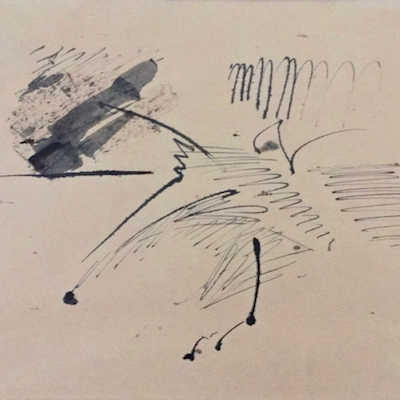
What is Art Informel?
Art Informel is a French term referring to the gestural and improvisational techniques common in abstract painting during the 1940s and 50s. It encompasses various styles that dominated these decades, characterized by informal, spontaneous methods. Artists used this term to describe approaches that moved away from traditional structures and embraced more expressive, unstructured techniques.