Screen Print on Arches paper.
Hand-signed by the artist.
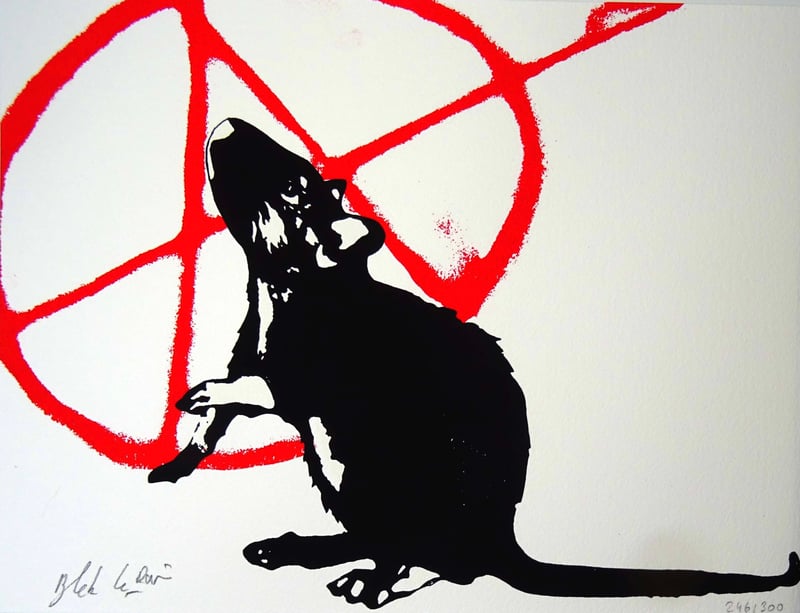
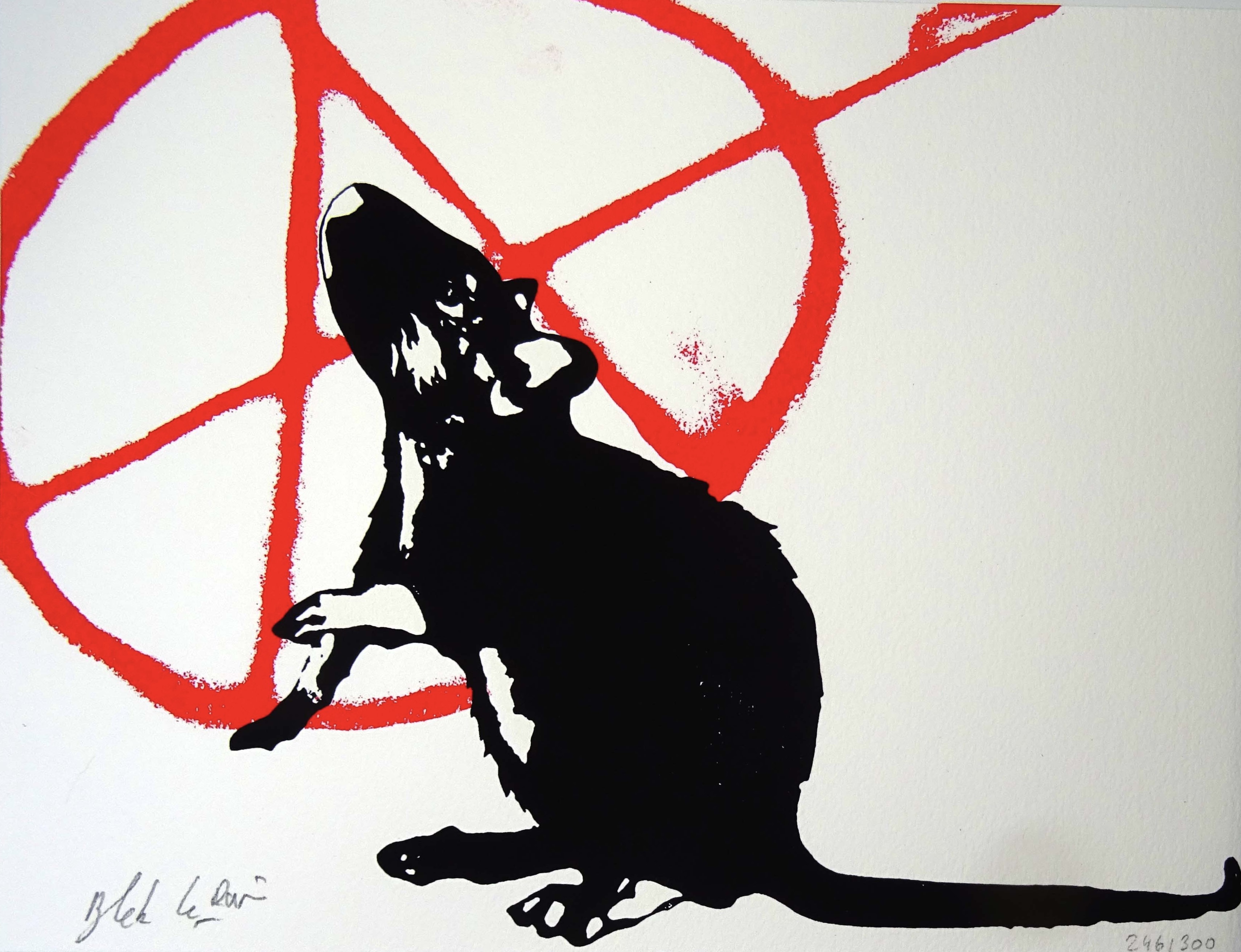
Blek Le Rat’s L’anarchiste (2020) is a screen print on Arches paper that exemplifies the artist’s iconic stencil-based visual language and his engagement with themes of rebellion and subversion. The composition features a sharply defined black rat, rendered in bold contrast against a white background, standing upright in a poised, almost defiant posture. Behind it, a vivid red anarchist symbol—sprayed in loose, gestural lines—introduces a sense of urgency and political charge. The rat, a recurring emblem in Blek Le Rat’s work, signifies marginality, resistance, and the overlooked presence within urban space. The tension between the controlled stencil figure and the spontaneous spray-painted backdrop reflects the dynamic interplay between order and disorder, authority and dissent.
Artwork Copyright © Blek Le RatBlek le Rat (France, 1951) is a pioneering street artist, often hailed as the 'Father of stencil graffiti.' He began stenciling rats on Parisian walls in 1981, symbolizing freedom and the spread of art. His innovative techniques have profoundly influenced urban art, notably inspiring artists like Banksy.
Artwork Copyright © Blek Le RatL'anarchiste, 2020
Form
Medium
Size
- Inches
- Centimeters
Edition
Price
- USD
- EUR
- GBP
- CHF
- Authenticity Guaranteed
- Insured Shipping
- Online Since 2005
●Inventory 16752
●Signed
●Comes with gallery invoice and certificate
●Sell Us a Similar Artwork. Learn more.
Screen Print on Arches paper.
Hand-signed by the artist.
Blek Le Rat’s L’anarchiste (2020) is a screen print on Arches paper that exemplifies the artist’s iconic stencil-based visual language and his engagement with themes of rebellion and subversion. The composition features a sharply defined black rat, rendered in bold contrast against a white background, standing upright in a poised, almost defiant posture. Behind it, a vivid red anarchist symbol—sprayed in loose, gestural lines—introduces a sense of urgency and political charge. The rat, a recurring emblem in Blek Le Rat’s work, signifies marginality, resistance, and the overlooked presence within urban space. The tension between the controlled stencil figure and the spontaneous spray-painted backdrop reflects the dynamic interplay between order and disorder, authority and dissent.
Artwork Copyright © Blek Le RatBlek le Rat (France, 1951) is a pioneering street artist, often hailed as the 'Father of stencil graffiti.' He began stenciling rats on Parisian walls in 1981, symbolizing freedom and the spread of art. His innovative techniques have profoundly influenced urban art, notably inspiring artists like Banksy.
Artwork Copyright © Blek Le RatAvailability
Size
Medium
SORT BY
Blek Le Rat
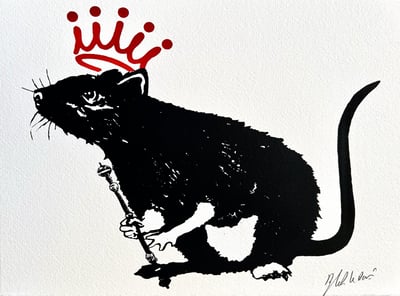
The king, 2023
Limited Edition Print
Screen-print
EUR 1,850
Blek Le Rat
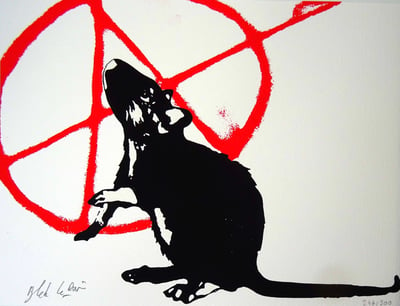
L'anarchiste, 2020
Limited Edition Print
Screen-print
EUR 3,600
Blek Le Rat
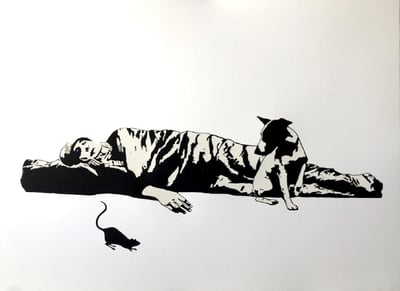
The Homeless, 2022
Limited Edition Print
Screen-print
EUR 2,400
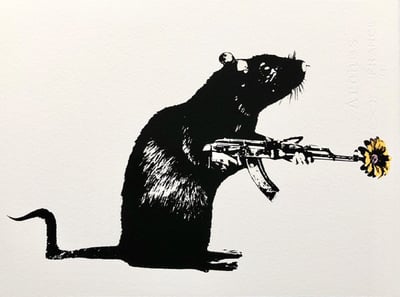
Blek Le Rat
Le Guerrier – édition spéciale, 2020
Limited Edition Print
Silkscreen
EUR 5,500
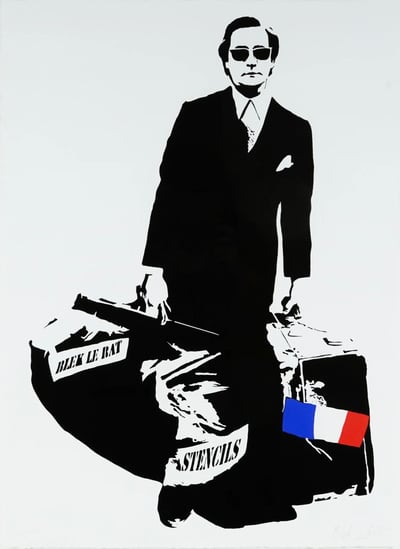
Blek Le Rat
Man Who Walks Through Walls, 2007
Limited Edition Print
Silkscreen
EUR 2,250
Related Artists
Related Articles
Popular, Artists, Art Movements - February 29, 2024
The World's 10 Most Influential Street Artists: Urban Canvases
Explore the world’s most influential street artists who transformed urban landscapes. Discover their iconic works and lasting impact on contemporary art.Read More

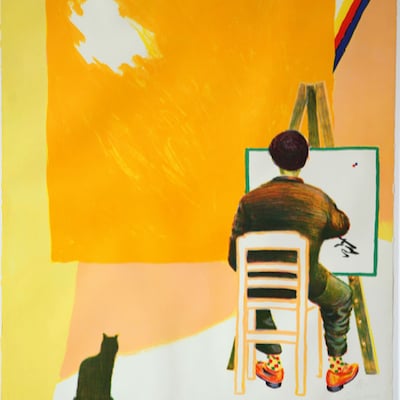
Artwork by Roger Raveel
What is new figuration?
Neo-Figurative Art is a collective term that refers to the revival of figurative art in America and Europe during the 1960s, following a period dominated by abstraction. Michel Ragon, a French art critic, argued that this resurgence of figuration occurred during a critical time of social and political upheaval in both regions.

Blek Le Rat
L'anarchiste, 2020
23 x 31 cm


