Screenprint in colours on 300gsm Somerset Satin white paper
- Published by Black Rat Press
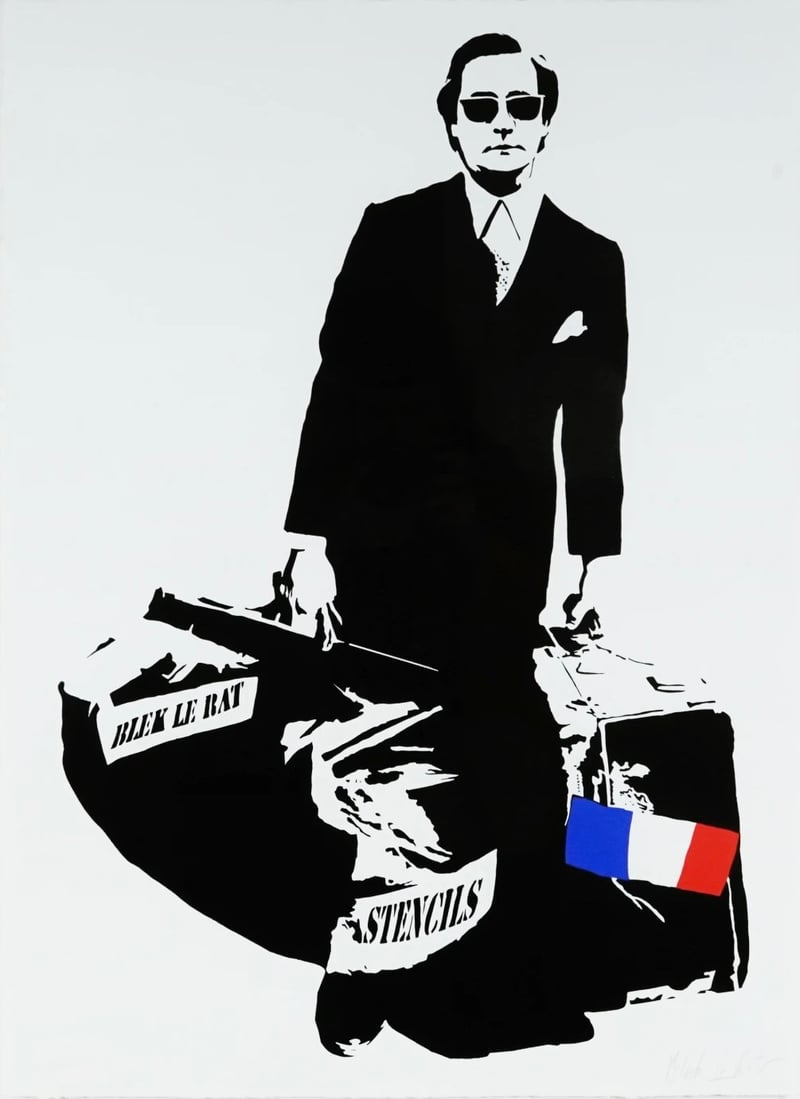
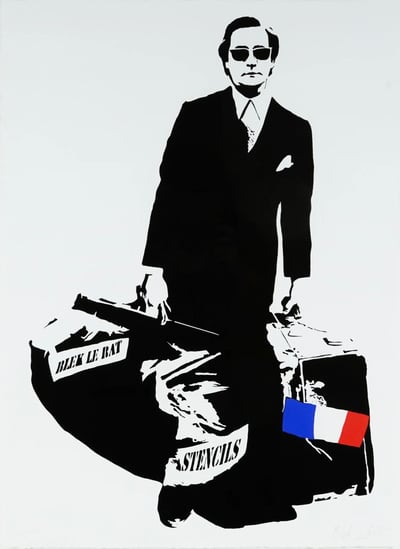
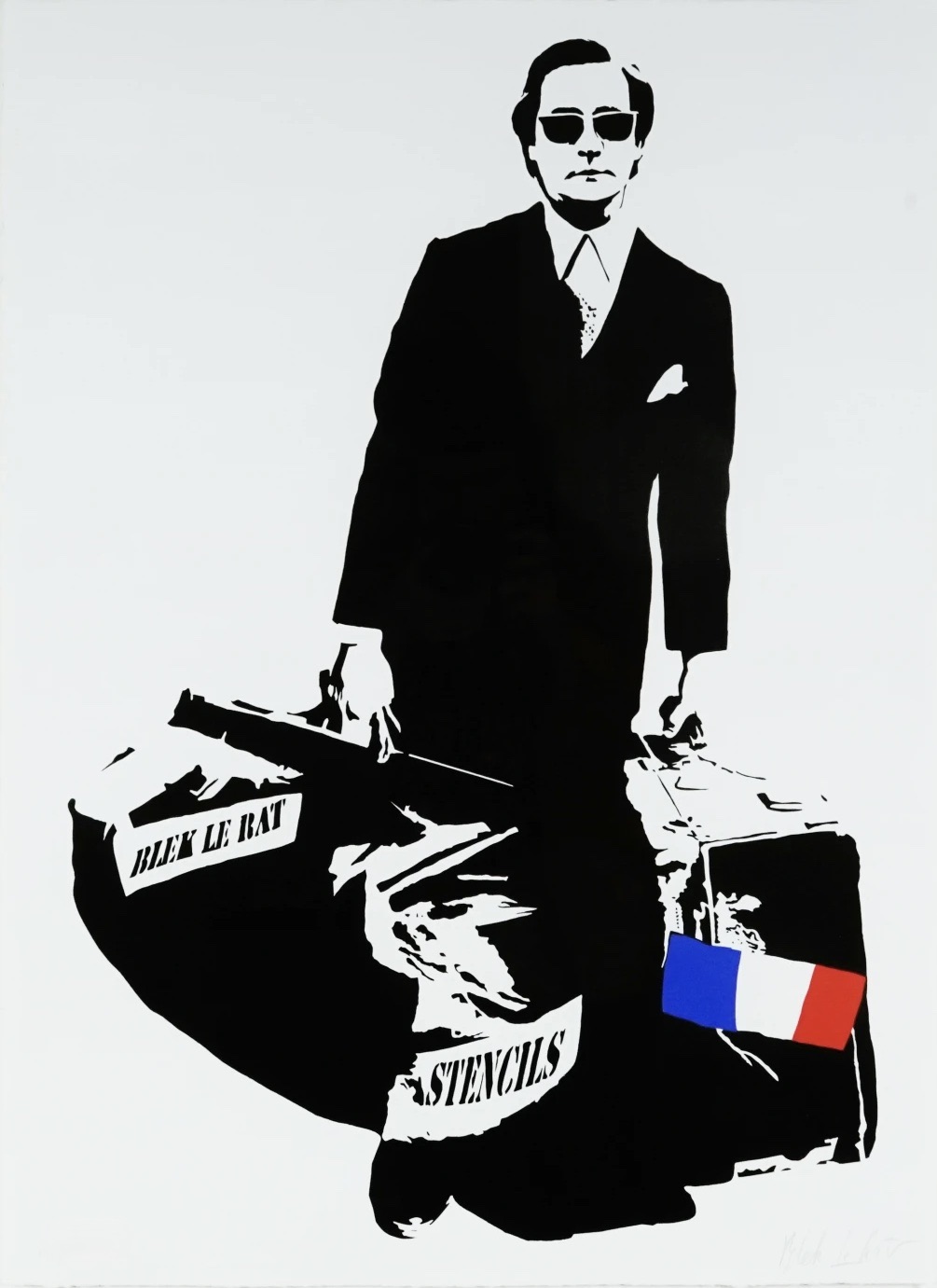
Man Who Walks Through Walls by Blek Le Rat, created in 2007, is a striking silkscreen print that showcases the artist's signature stencil style. The piece, printed on 300gsm Somerset Satin white paper and published by Black Rat Press, depicts a sharply dressed man carrying two large suitcases labeled Blek Le Rat and Stencils, with the French flag subtly included on one of the bags. The monochromatic palette, combined with the bold lines and minimal use of color, emphasizes the figure’s mysterious and authoritative presence. This artwork reflects Blek Le Rat’s influence in the street art scene, highlighting his role as a pioneer in stencil graffiti and his identity as a French artist.
Artwork Copyright © Blek Le RatBlek le Rat (France, 1951) is a pioneering street artist, often hailed as the 'Father of stencil graffiti.' He began stenciling rats on Parisian walls in 1981, symbolizing freedom and the spread of art. His innovative techniques have profoundly influenced urban art, notably inspiring artists like Banksy.
Artwork Copyright © Blek Le RatMan Who Walks Through Walls, 2007
Form
Medium
Size
- Inches
- Centimeters
Edition
Price
- USD
- EUR
- GBP
- CHF
- Authenticity Guaranteed
- Insured Shipping
- Online Since 2005
●Inventory 13256
●Hand signed
●Comes with gallery invoice and certificate
●Sell Us a Similar Artwork. Learn more.
Screenprint in colours on 300gsm Somerset Satin white paper
- Published by Black Rat Press
Man Who Walks Through Walls by Blek Le Rat, created in 2007, is a striking silkscreen print that showcases the artist's signature stencil style. The piece, printed on 300gsm Somerset Satin white paper and published by Black Rat Press, depicts a sharply dressed man carrying two large suitcases labeled Blek Le Rat and Stencils, with the French flag subtly included on one of the bags. The monochromatic palette, combined with the bold lines and minimal use of color, emphasizes the figure’s mysterious and authoritative presence. This artwork reflects Blek Le Rat’s influence in the street art scene, highlighting his role as a pioneer in stencil graffiti and his identity as a French artist.
Artwork Copyright © Blek Le RatBlek le Rat (France, 1951) is a pioneering street artist, often hailed as the 'Father of stencil graffiti.' He began stenciling rats on Parisian walls in 1981, symbolizing freedom and the spread of art. His innovative techniques have profoundly influenced urban art, notably inspiring artists like Banksy.
Artwork Copyright © Blek Le RatAvailability
Size
Medium
SORT BY
Blek Le Rat
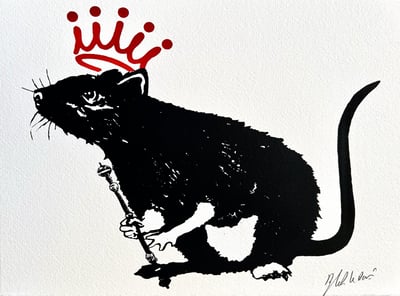
The king, 2023
Limited Edition Print
Screen-print
EUR 1,850
Blek Le Rat
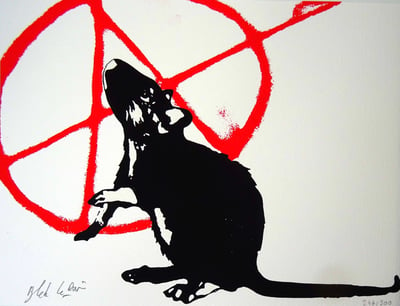
L'anarchiste, 2020
Limited Edition Print
Screen-print
EUR 3,600
Blek Le Rat
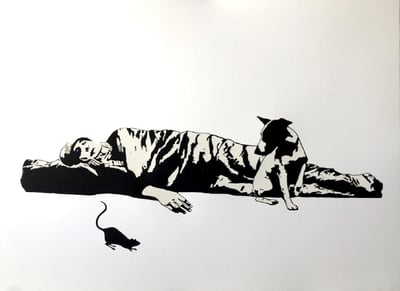
The Homeless, 2022
Limited Edition Print
Screen-print
EUR 2,400
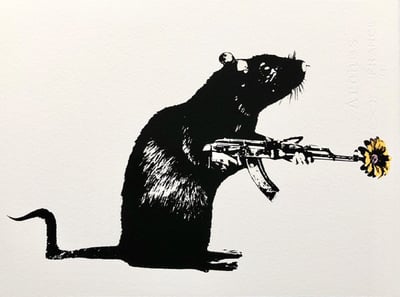
Blek Le Rat
Le Guerrier – édition spéciale, 2020
Limited Edition Print
Silkscreen
EUR 5,500
Blek Le Rat
Man Who Walks Through Walls, 2007
Limited Edition Print
Silkscreen
EUR 2,250
Related Artists
Related Articles

Popular, Art Movements - November 25, 2025
Trash to Treasure: Eco-Art and the Beauty of Recycled Materials
Discover how artists turn trash into treasure—transforming e-waste, scrap, and textiles into powerful, sustainable eco-art with global impact.Read More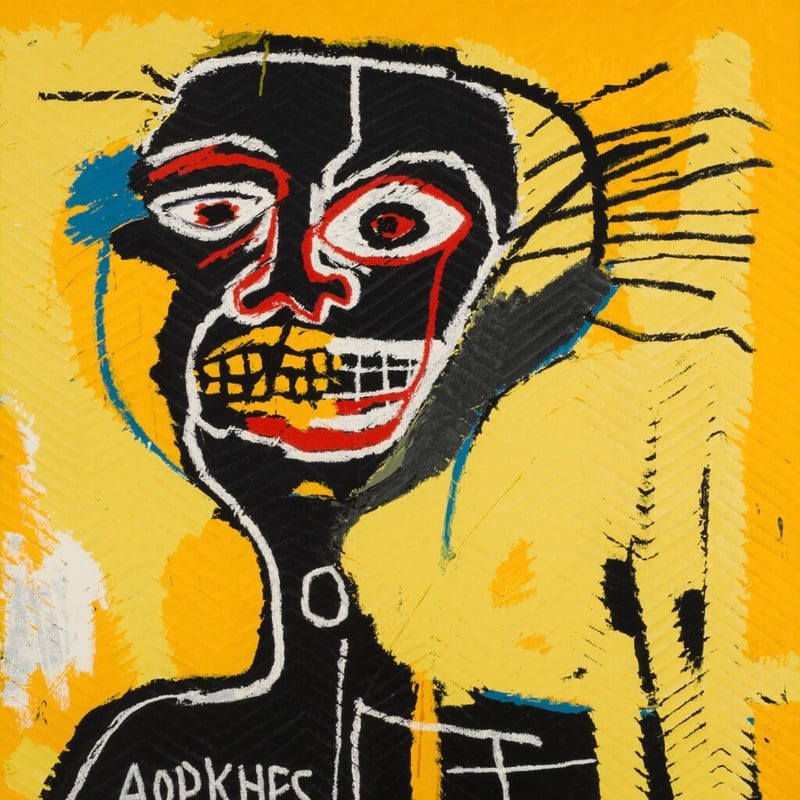

Artwork by Roger Raveel
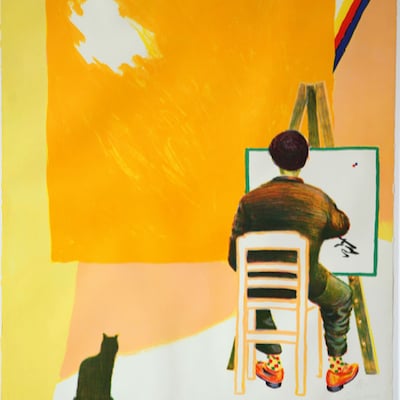
What is new figuration?
Neo-Figurative Art is a collective term that refers to the revival of figurative art in America and Europe during the 1960s, following a period dominated by abstraction. Michel Ragon, a French art critic, argued that this resurgence of figuration occurred during a critical time of social and political upheaval in both regions.

Blek Le Rat
Man Who Walks Through Walls, 2007
73 x 53 cm


