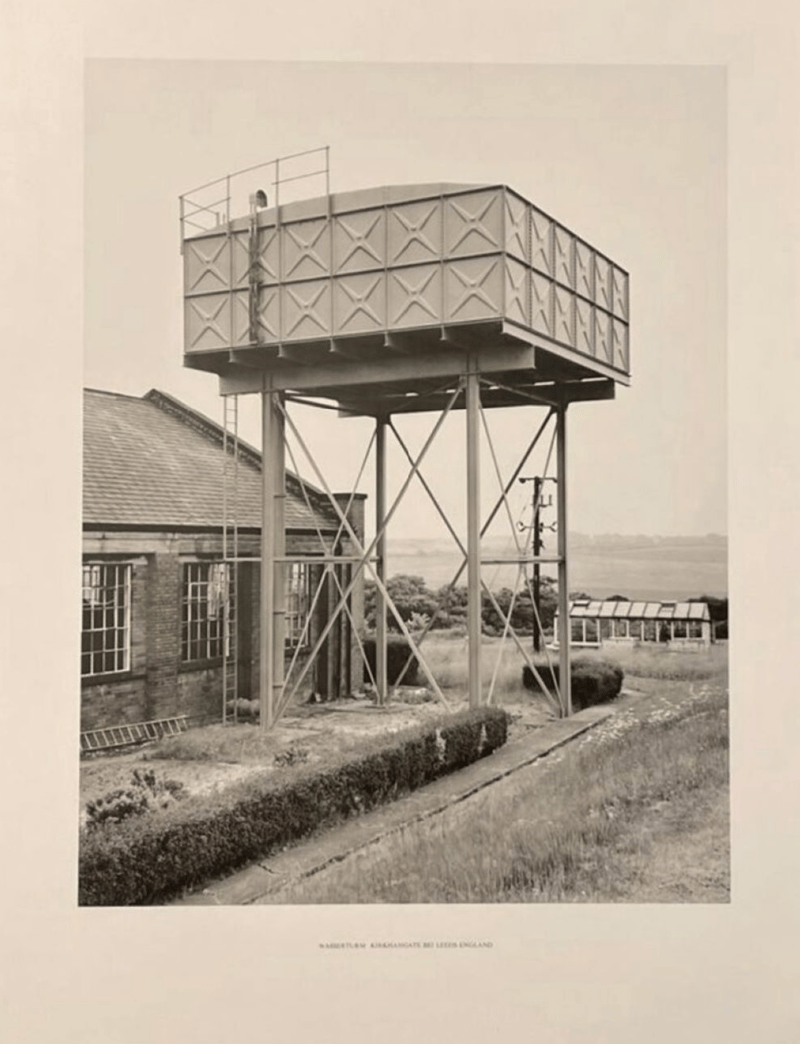
Offset Lithograph; Hand signed and dated.
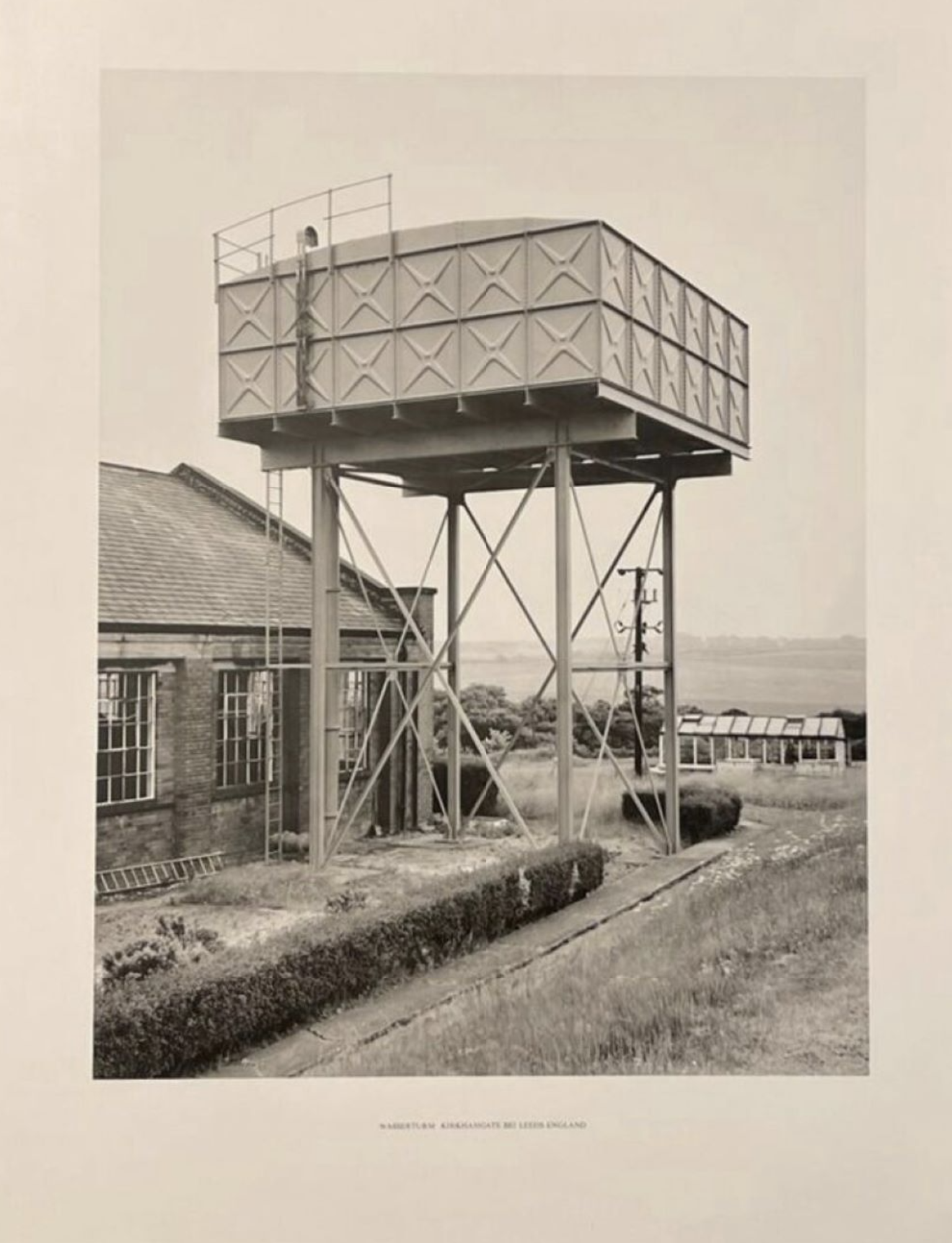
Wasserturm Kirkhamgate by Bernd and Hilla Becher, created in 1974, is an offset lithograph measuring 52 x 40 cm, and a unique work within their broader typological series on industrial architecture. This black-and-white photograph captures a water tower near Leeds, England, standing on spindly support legs with its stark, geometric form rendered with clinical precision. Known for their systematic documentation of utilitarian structures, the Bechers elevate anonymous industrial forms to objects of sculptural beauty. Their work is central to conceptual photography and influenced generations of artists with its rigorous, objective style. This particular print is hand-signed and dated by the artists.
Artwork Copyright © Bernd & Hilla BecherBernd and Hilla Becher (Germany, 1931–2007; 1934–2015) were pioneering photographers known for their typological studies of industrial architecture. Their stark black-and-white images of water towers, factories, and silos captured structural precision and uniformity. Founders of the Düsseldorf School of Photography, their work profoundly influenced generations of artists and shaped the visual language of modern photography.
Artwork Copyright © Bernd & Hilla BecherWasserturm Kirkhamgate, 1974
Form
Medium
Size
- Inches
- Centimeters
Edition
Price
- USD
- EUR
- GBP
- CHF
- Authenticity Guaranteed
- Insured Shipping
- Online Since 2005
●Inventory 16266
●Signed
●Comes with gallery invoice and certificate
●Sell Us a Similar Artwork. Learn more.
Offset Lithograph; Hand signed and dated.
Wasserturm Kirkhamgate by Bernd and Hilla Becher, created in 1974, is an offset lithograph measuring 52 x 40 cm, and a unique work within their broader typological series on industrial architecture. This black-and-white photograph captures a water tower near Leeds, England, standing on spindly support legs with its stark, geometric form rendered with clinical precision. Known for their systematic documentation of utilitarian structures, the Bechers elevate anonymous industrial forms to objects of sculptural beauty. Their work is central to conceptual photography and influenced generations of artists with its rigorous, objective style. This particular print is hand-signed and dated by the artists.
Artwork Copyright © Bernd & Hilla BecherBernd and Hilla Becher (Germany, 1931–2007; 1934–2015) were pioneering photographers known for their typological studies of industrial architecture. Their stark black-and-white images of water towers, factories, and silos captured structural precision and uniformity. Founders of the Düsseldorf School of Photography, their work profoundly influenced generations of artists and shaped the visual language of modern photography.
Artwork Copyright © Bernd & Hilla Becher- Recently Added
- Price (Low-High)
- Price (High-Low)
- Year (Low-High)
- Year (High-Low)
Bernd & Hilla Becher
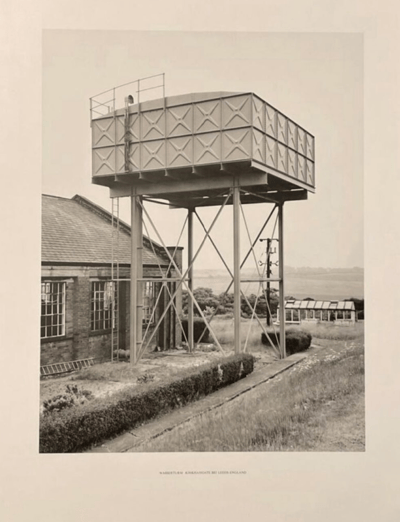
Wasserturm Kirkhamgate, 1974
Photography
Offset Print
GBP 4,200
Bernd & Hilla Becher
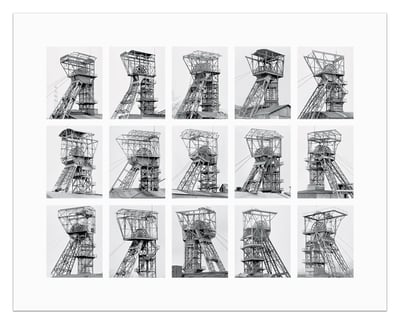
Fördertürme, 2006
Limited Edition Print
Digital Print on paper
Currently Not Available
Related Artists


Related Articles
Popular, News, Collecting - December 18, 2025
20 Years of Composition Gallery - A Conversation with the Founder
Celebrating 20 years of digital art excellence: Discover how Composition Gallery built global trust in online collecting through curation and integrity.Read More
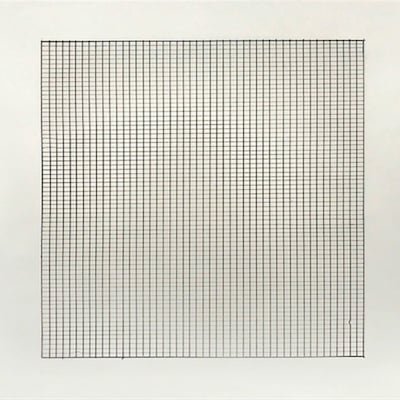
Artwork by Agnes Martin
What is minimalism?
Minimalism is a style in music and visual arts characterized by pared-down designs and simplicity. It began in Western art after World War II, gaining prominence particularly in American visual arts. Minimalism draws heavily on aspects of modernism and is often viewed as a reaction against Abstract Expressionism, as well as a precursor to post-minimal art practices. Prominent minimalist artists include Agnes Martin, Donald Judd, Robert Morris, Frank Stella, and Dan Flavin.

Bernd & Hilla Becher
Wasserturm Kirkhamgate, 1974
52 x 40 cm


