Details
Artist
Styles
Emblemas 5 by Antonio Saura is a 1979 serigraph that exemplifies the artist’s powerful graphic exploration of the human face. The composition presents a distorted, mask-like head rendered in layered tones of black, grey, and white, contained within a rectangular frame. Multiple overlapping eyes and fragmented facial features create an intense, almost emblematic presence, suggesting both identity and psychological tension. Saura’s energetic, gestural lines evoke the immediacy of drawing while maintaining a strong graphic structure typical of his printmaking. Associated with the Spanish postwar avant-garde and the El Paso group, Saura frequently used the face as a symbol of existential struggle and collective memory.
Emblemas 5, 1979
form
Medium
Size
50 x 36 cm
- Inches
- Centimeters
Edition
Price
- USD
- EUR
- GBP
Details
Artist
Styles
Emblemas 5 by Antonio Saura is a 1979 serigraph that exemplifies the artist’s powerful graphic exploration of the human face. The composition presents a distorted, mask-like head rendered in layered tones of black, grey, and white, contained within a rectangular frame. Multiple overlapping eyes and fragmented facial features create an intense, almost emblematic presence, suggesting both identity and psychological tension. Saura’s energetic, gestural lines evoke the immediacy of drawing while maintaining a strong graphic structure typical of his printmaking. Associated with the Spanish postwar avant-garde and the El Paso group, Saura frequently used the face as a symbol of existential struggle and collective memory.
- Recently Added
- Price (low-high )
- Price (high-low )
- Year (low-high )
- Year (high-low )

Antonio Saura
Felipe II, 1971
Limited Edition Print
Serigraph
EUR 3,000

Antonio Saura
Remembrandt, 1973
Limited Edition Print
Serigraph
EUR 1,350

Antonio Saura
Aphorismen V, 1973
Limited Edition Print
Serigraph
EUR 1,350

Antonio Saura
Emblemas 3, 1979
Limited Edition Print
Serigraph
EUR 1,350

Antonio Saura
Obispo, 1983
Limited Edition Print
Mixed Media
EUR 1,350

Antonio Saura
Serie Abierta IV, 1989
Limited Edition Print
Lithograph
EUR 1,350

Antonio Saura
Emblemas 5, 1979
Limited Edition Print
Serigraph
EUR 1,350

Antonio Saura
Triptico De Amsterdam 2, 1975
Limited Edition Print
Serigraph
EUR 1,350

Antonio Saura
Triptico De Amsterdam 3, 1975
Limited Edition Print
Serigraph
EUR 1,350

Antonio Saura
Don I, 1984
Limited Edition Print
Serigraph
EUR 1,850

Antonio Saura
Dama En Tecnicolor II, 1970
Limited Edition Print
Serigraph
EUR 2,050

Antonio Saura
El Perro De Goya II, 1988
Drawing / Watercolor
Mixed Media
Inquire For Price

Antonio Saura
Crucifixión, 1981
Drawing / Watercolor
Mixed Media
EUR 22,500

Antonio Saura
Personaje, 1998
Drawing / Watercolor
Mixed Media
EUR 23,500

Antonio Saura
El Perro De Goya I, 1988
Drawing / Watercolor
Mixed Media
Inquire For Price

Antonio Saura
Serie Abierta (Crowded Faces), 1989
Limited Edition Print
Lithograph
EUR 2,950

Antonio Saura
Serie Abierta (Vibrant Eyes And Abstract Shapes, 1989
Limited Edition Print
Lithograph
EUR 2,950

Antonio Saura
Tu Cabello Es Amarillo, 1962
Limited Edition Print
Serigraph
EUR 2,250

Antonio Saura
7, Moi, Planche 7, 1976
Limited Edition Print
Serigraph
EUR 1,875

Antonio Saura
El Perro De Goya I, 1972
Limited Edition Print
Serigraph
EUR 1,875

Antonio Saura
Rompecabezas, 1984
Limited Edition Print
Mixed Media
EUR 3,100

Antonio Saura
L'Envie, 1994
Limited Edition Print
Mixed Media
EUR 1,150

Antonio Saura
1. Crucifixion, 1991
Limited Edition Print
Mixed Media
EUR 1,875

Antonio Saura
Moi, Planche 10, 1976
Limited Edition Print
Serigraph
EUR 1,880

Antonio Saura
Moi, Planche 13, 1976
Limited Edition Print
Serigraph
EUR 1,880

Antonio Saura
Doña Jerónima De La Fuente (Velázquez), 1991
Limited Edition Print
Lithograph
EUR 1,880

Antonio Saura
Moi, Planche 1, 1976
Limited Edition Print
Serigraph
EUR 1,880

Antonio Saura
Moi, Planche 12, 1976
Limited Edition Print
Serigraph
EUR 1,880

Antonio Saura
Moi, Planche 14, 1976
Limited Edition Print
Serigraph
EUR 2,650

Antonio Saura
Atal, 1983
Limited Edition Print
Silkscreen
EUR 2,100

Antonio Saura
Moi, Planche 2, 1976
Limited Edition Print
Serigraph
EUR 1,880

Antonio Saura
Moi, Planche 4, 1976
Limited Edition Print
Serigraph
EUR 1,875

Antonio Saura
Moi, Planche 5, 1976
Limited Edition Print
Serigraph
EUR 2,650

Antonio Saura
Moi, Planche 6, 1976
Limited Edition Print
Serigraph
EUR 1,875

Antonio Saura
Moi, Planche 8, 1976
Limited Edition Print
Serigraph
EUR 2,650

Antonio Saura
Retrato De Felipe II, 1991
Limited Edition Print
Lithograph
Currently Not Available

Antonio Saura
Poste Restante Nº 1: Ailleurs, 1984
Limited Edition Print
Mixed Media
Currently Not Available

Antonio Saura
Danse Du Soleil, 1996
Limited Edition Print
Lithograph
Currently Not Available
Related Artists


Related Articles

News, Art Movements - July 28, 2023
The Conundrum of Technology's Experiment with Contemporary Art: A Mercurial Maiden Voyage
Discover how technology transforms contemporary art, blending innovation with creativity. Explore challenges of authenticity, access, and digital expression. Read More

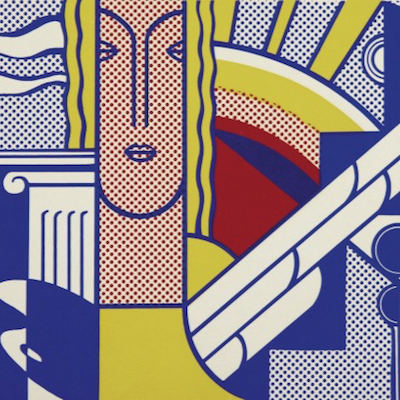
What is late modernism?
Late Modernism refers to the continuation and evolution of Modernist principles in art, architecture, and literature from the mid-20th century into the late 20th century. This movement maintains a focus on form, abstraction, and the rejection of traditional styles, but it often incorporates more complexity and ambiguity compared to early Modernism. Late Modernism explores themes such as alienation, identity, and the fragmentation of reality, reflecting the social and cultural shifts of the post-war period. It is seen in the works of architects like Louis Kahn and artists like Francis Bacon, who pushed the boundaries of Modernism while responding to the changing world around them.