Details
Artist
Styles
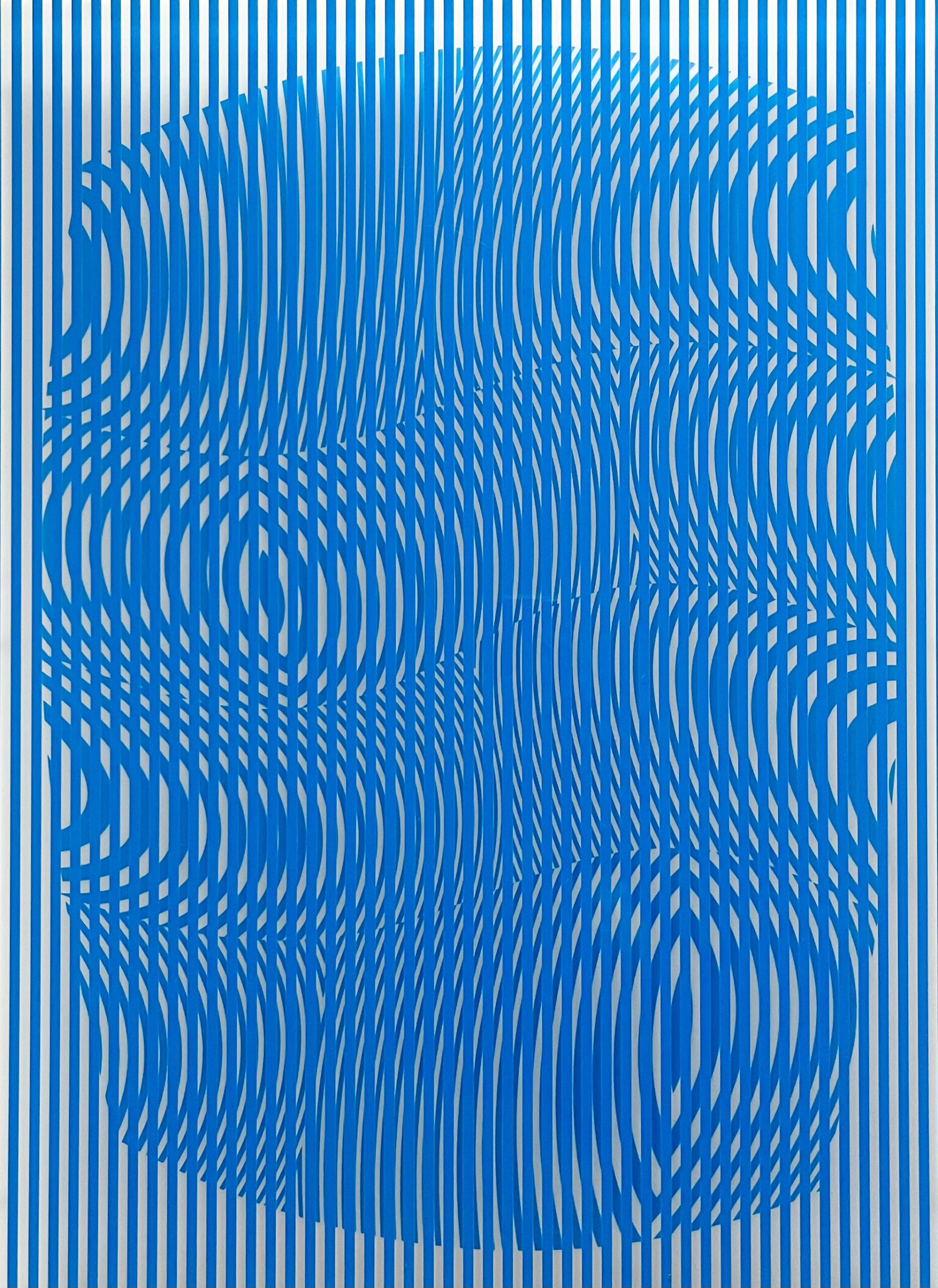
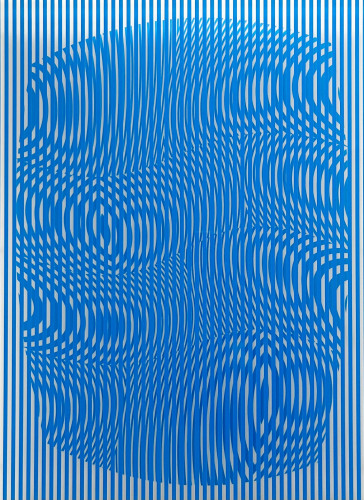
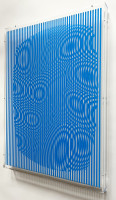
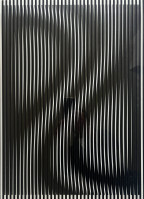
Plexiglass box and printed matter on different layers. Signed by the artist on the back. Gocce Celesti (2024) by Alberto Biasi is a kinetic-optical work composed of printed matter on multiple layers within a plexiglass box, measuring 60 × 44 × 4 cm. The artwork features a field of vertical blue and white stripes, overlaid with undulating wave-like patterns that create the illusion of rippling water. As the viewer moves, the layered construction generates moiré effects, making the “celestial drops” shimmer and shift in rhythm. Signed by the artist on the reverse and produced in an edition of 20 + X, the piece exemplifies Biasi’s refined exploration of movement, perception, and optical harmony.
Gocce Celesti, 2024
form
Medium
Size
60 x 44 X 4 cm
- Inches
- Centimeters
Edition
Price
- USD
- EUR
- GBP
Details
Artist
Styles
Plexiglass box and printed matter on different layers. Signed by the artist on the back. Gocce Celesti (2024) by Alberto Biasi is a kinetic-optical work composed of printed matter on multiple layers within a plexiglass box, measuring 60 × 44 × 4 cm. The artwork features a field of vertical blue and white stripes, overlaid with undulating wave-like patterns that create the illusion of rippling water. As the viewer moves, the layered construction generates moiré effects, making the “celestial drops” shimmer and shift in rhythm. Signed by the artist on the reverse and produced in an edition of 20 + X, the piece exemplifies Biasi’s refined exploration of movement, perception, and optical harmony.
- Recently Added
- Price (low-high )
- Price (high-low )
- Year (low-high )
- Year (high-low )
Alberto Biasi
Gocce Celesti, 2024
Sculpture / Object
Mixed Media
EUR 3,000
Alberto Biasi
Break Dance, 2024
Sculpture / Object
Mixed Media
EUR 3,000

Alberto Biasi
Cromodinamiche, 2022
Sculpture / Object
Mixed Media
EUR 3,000

Alberto Biasi
Red Rain, 2022
Sculpture / Object
Mixed Media
EUR 3,000

Alberto Biasi
Rilievo Ottico Cinetico, 1972
Limited Edition Print
Screen-print
EUR 1,900

Alberto Biasi
Torsioni Sovrapposte Noir, 2017
Sculpture / Object
Mixed Media
EUR 3,000

Alberto Biasi
Piccole Gocce, 2013
Sculpture / Object
Acrylic Sculpture
EUR 1,200
Related Artists


Related Articles

Collecting - March 25, 2025
Understanding Editioned Sculptures: What Collectors Need to Know
Explore the value of editioned sculptures, from bronze to electric art. Learn how edition size, material, and artist impact collectability. Read More
Collecting - August 23, 2024
Catalogues Raisonnés of Contemporary Artists: Essential Reference Works for Art Collectors and Enthusiasts
Explore the importance of catalogues raisonnés in art collecting! Uncover how these comprehensive guides authenticate, document, and preserve artists' legacies. Read More
What is the Zero Movement?
ZERO was an art movement founded by Otto Piene and Heinz Mack, aiming to develop into a large international and cross-border movement. The name ZERO originated from a magazine founded by Heinz Mack in 1957, which became a platform for the group's ideas. The magazine was published for several years before ceasing in 1967. The ZERO movement sought to create a new beginning in art, emphasizing light, space, and movement, and became influential in post-war European art.