Details
Artist
Styles
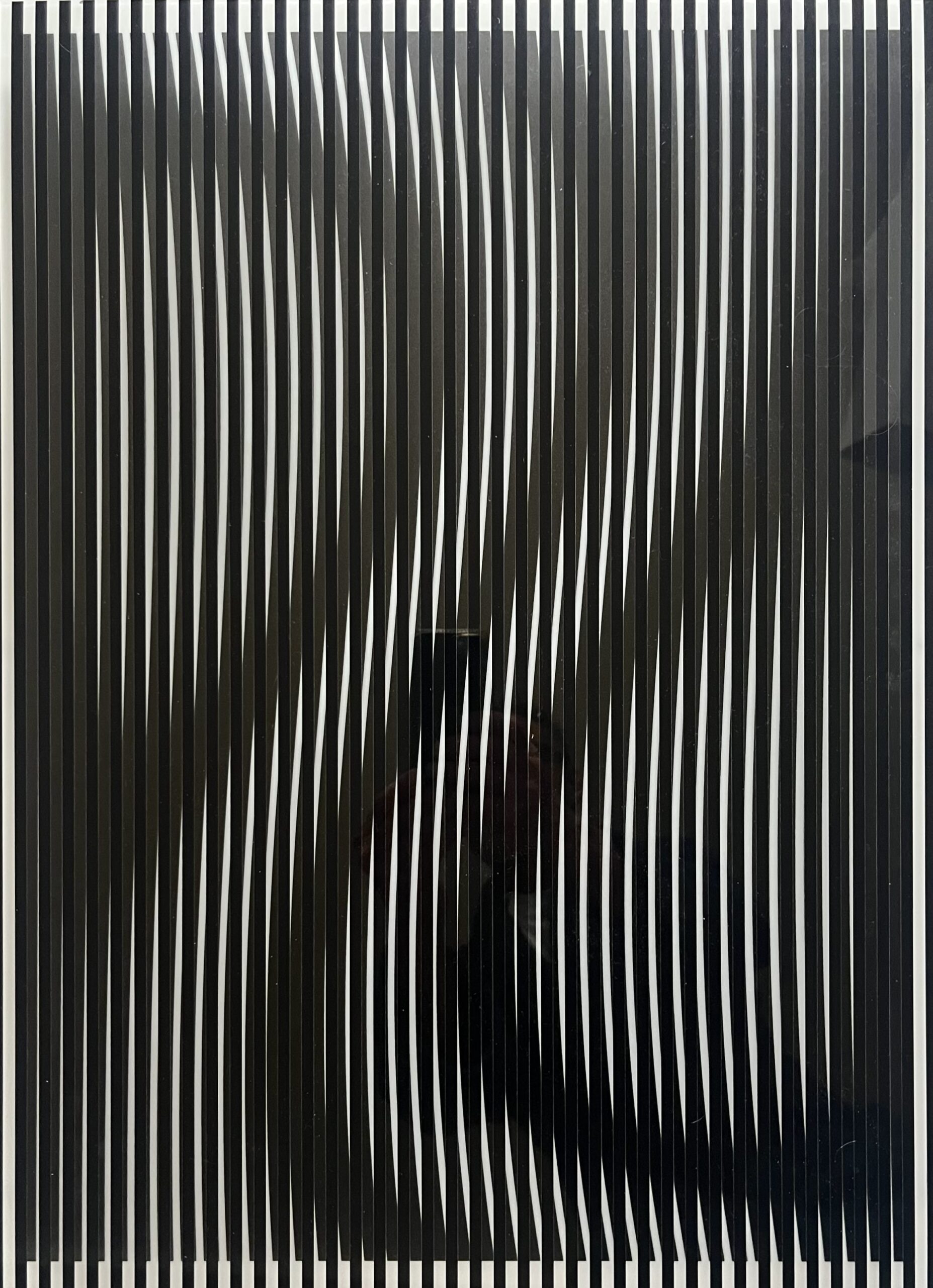
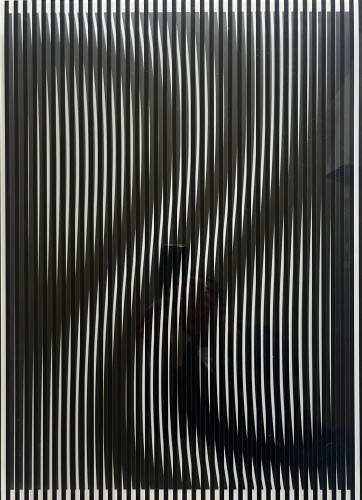
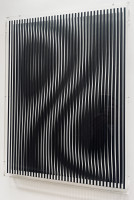
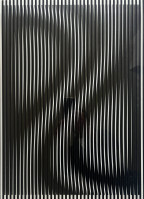
Plexiglass box and printed matter on different layers. Signed by the artist on the back. Break Dance (2024) by Alberto Biasi is a kinetic-optical artwork composed of printed matter on multiple layers within a plexiglass box, measuring 60 × 44 × 4 cm. The piece features a field of parallel black and white lines that subtly warp and shift, creating a sense of rhythmic motion reminiscent of dance. As the viewer moves, the layered construction produces moiré effects, making the lines appear to ripple and twist. Signed by the artist on the back and issued in an edition of 20 + X, the work exemplifies Biasi’s mastery in blending perceptual play with precise geometric design.
Break Dance, 2024
form
Medium
Size
60 x 44 X 4 cm
- Inches
- Centimeters
Edition
Price
- USD
- EUR
- GBP
Details
Artist
Styles
Plexiglass box and printed matter on different layers. Signed by the artist on the back. Break Dance (2024) by Alberto Biasi is a kinetic-optical artwork composed of printed matter on multiple layers within a plexiglass box, measuring 60 × 44 × 4 cm. The piece features a field of parallel black and white lines that subtly warp and shift, creating a sense of rhythmic motion reminiscent of dance. As the viewer moves, the layered construction produces moiré effects, making the lines appear to ripple and twist. Signed by the artist on the back and issued in an edition of 20 + X, the work exemplifies Biasi’s mastery in blending perceptual play with precise geometric design.
- Recently Added
- Price (low-high )
- Price (high-low )
- Year (low-high )
- Year (high-low )
Alberto Biasi
Gocce Celesti, 2024
Sculpture / Object
Mixed Media
EUR 3,000
Alberto Biasi
Break Dance, 2024
Sculpture / Object
Mixed Media
EUR 3,000

Alberto Biasi
Cromodinamiche, 2022
Sculpture / Object
Mixed Media
EUR 3,000

Alberto Biasi
Red Rain, 2022
Sculpture / Object
Mixed Media
EUR 3,000

Alberto Biasi
Rilievo Ottico Cinetico, 1972
Limited Edition Print
Screen-print
EUR 1,900

Alberto Biasi
Torsioni Sovrapposte Noir, 2017
Sculpture / Object
Mixed Media
EUR 3,000

Alberto Biasi
Piccole Gocce, 2013
Sculpture / Object
Acrylic Sculpture
EUR 1,200
Related Artists


Related Articles

Collecting - March 25, 2025
Understanding Editioned Sculptures: What Collectors Need to Know
Explore the value of editioned sculptures, from bronze to electric art. Learn how edition size, material, and artist impact collectability. Read More

What is late modernism?
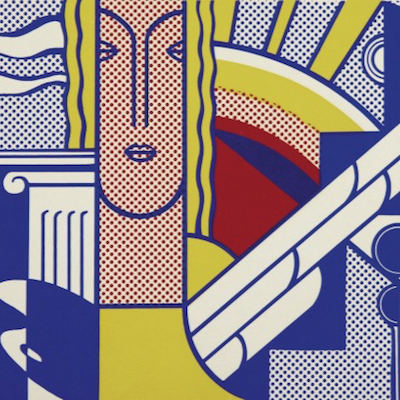
Late Modernism refers to the continuation and evolution of Modernist principles in art, architecture, and literature from the mid-20th century into the late 20th century. This movement maintains a focus on form, abstraction, and the rejection of traditional styles, but it often incorporates more complexity and ambiguity compared to early Modernism. Late Modernism explores themes such as alienation, identity, and the fragmentation of reality, reflecting the social and cultural shifts of the post-war period. It is seen in the works of architects like Louis Kahn and artists like Francis Bacon, who pushed the boundaries of Modernism while responding to the changing world around them.