
Details
Artist
Styles
Tella Estrofelessa and Acrylic // Rosso by Agostino Bonalumi, created in 1999, is a striking example of the artist's exploration of form and dimension through mixed media. Measuring 100 x 100 cm, this piece employs a unique combination of Tela Estrofelessa and acrylic, which allows Bonalumi to push the boundaries of traditional painting. The vivid red surface is subtly sculpted to create three-dimensional undulations, giving the impression that the canvas is both flat and in motion. The interplay of light and shadow across the textured surface evokes a sense of depth and dynamism, characteristic of Bonalumi's signature approach to shaping canvases. Rosso is a testament to his dedication to transforming flat planes into sculptural spaces, challenging viewers to reconsider the boundaries between painting and relief sculpture.
Details
Artist
Styles
Tella Estrofelessa and Acrylic // Rosso by Agostino Bonalumi, created in 1999, is a striking example of the artist's exploration of form and dimension through mixed media. Measuring 100 x 100 cm, this piece employs a unique combination of Tela Estrofelessa and acrylic, which allows Bonalumi to push the boundaries of traditional painting. The vivid red surface is subtly sculpted to create three-dimensional undulations, giving the impression that the canvas is both flat and in motion. The interplay of light and shadow across the textured surface evokes a sense of depth and dynamism, characteristic of Bonalumi's signature approach to shaping canvases. Rosso is a testament to his dedication to transforming flat planes into sculptural spaces, challenging viewers to reconsider the boundaries between painting and relief sculpture.
- Recently Added
- Price (low-high )
- Price (high-low )
- Year (low-high )
- Year (high-low )

Agostino Bonalumi
Senza Titolo, 1990
Sculpture / Object
Bronze
EUR 3,750

Agostino Bonalumi
Senza Titolo, 1993
Limited Edition Print
Mixed Media
Currently Not Available
Related Artists


Related Articles
Popular, Collecting - July 23, 2025
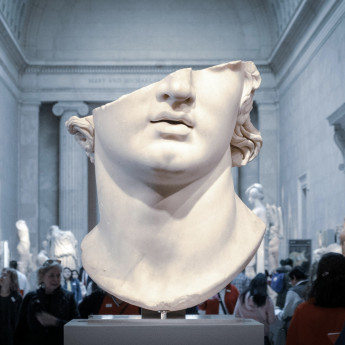
Sculpture Care and Display: From Plinths to Pedestals in Your Home
Learn how to display and care for sculpture at home—from lighting tips to material care—so your art can truly shine in any space. Read More


Artwork by Lucio Fontana
What is Spatialism?
Spatialism is an art movement that originated in Italy in 1947, founded by Lucio Fontana with the intention of synthesizing sound, color, movement, and space into a new form of art. The movement's central ideas were outlined in Fontana's first manifesto, published in 1947, where he introduced the concept of spatial art to capture the spirit of the post-war era. His ideas were further developed in five subsequent manifestos. Although Fontana's ideas were sometimes considered vague, his influence was significant, as he was one of the first European artists to emphasize art as a performance and gesture.
RECENTLY VIEWED
-->