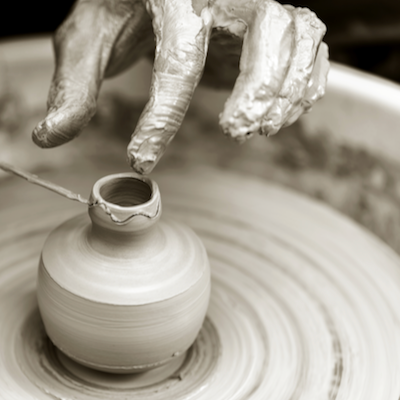
What are ceramics?
Ceramics is an art form that involves creating objects from clay. The clay is shaped, molded, and formed by hand or with specialized tools, then baked (or fired) in a high-temperature oven called a kiln. Decorative colors and special glazes can be applied to the surface, which are then fired again to finish the piece.
Show All
- Show All
- Established
- Discoveries
Show All
ARTWORKS RELATED TO CERAMICS

Lisa Yuskavage
Greengrapes, 2008 / 2020
Ceramics
Plate
GBP 2,400

Pablo Picasso
Angler, 1955
Ceramics
Clay
EUR 7,800

Sonia Delaunay
Signal, 1979
Ceramics
Porcelain
USD 2,000

Pablo Picasso
Visage de Face, 1960
Ceramics
Ceramic
Inquire For Price

Guillaume Corneille
Plat, 1999
Ceramics
Plate
EUR 3,500

Pablo Picasso
Visage de Faune Tourmente, 1956
Ceramics
Plate
USD 18,000

Pablo Picasso
Visage No. 54, 1963
Ceramics
Plate
EUR 9,800

Pablo Picasso
Bulls, 1952
Ceramics
Plate
EUR 4,800

Invader
Mission Miami, 2012
Ceramics
Mosaic
Inquire For Price
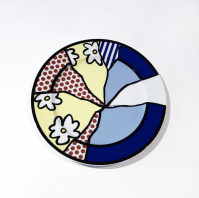
Roy Lichtenstein
Untitled Plate (Waterlily), 1990
Ceramics
Plate
USD 2,500
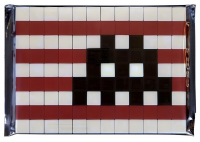
Invader
Invasion Tile Kit #18 L.A, 2018
Ceramics
Ceramic
Inquire For Price

Pablo Picasso
Sujet poule (A.R. 250), 1954
Ceramics
Ceramic
EUR 9,600

Pablo Picasso
Deux oiseaux no. 95 (A.R. 487), 1963
Ceramics
Plate
EUR 9,600

Pablo Picasso
Face No 0 Round Plate, 1963
Ceramics
Plate
USD 15,200

Pablo Picasso
Face with palm-leaves #366, 1956
Ceramics
Plate
USD 17,900

Pablo Picasso
Face With Circles R140, 1969
Ceramics
Ceramic
USD 15,500
Related Articles

Popular, Collecting - February 21, 2025
Sculpture 101: From Clay to Bronze – How Sculptures Are Made
Discover the art of sculpture! Explore traditional techniques like carving and bronze casting, plus modern innovations like 3D printing. A journey in creativity! Read More

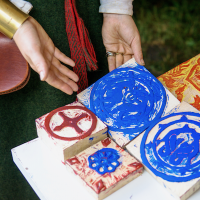
Woodblock printing is a technique that uses a carved wooden surface to create an image on materials such as paper or cloth. Ink or paint is applied thinly to the carved surface, which is then pressed against the material to transfer the image. This method has been historically significant in various cultures for producing prints and textiles.

Conté is a vivid, waxy crayon invented by Nicolas-Jacques Conté in 1795. Artists use Conté crayons for detailed drawing, shading large areas, and blending colors. The tips can be sharpened with sanding pads for precision, or the sides can be dragged flat for broad shading.