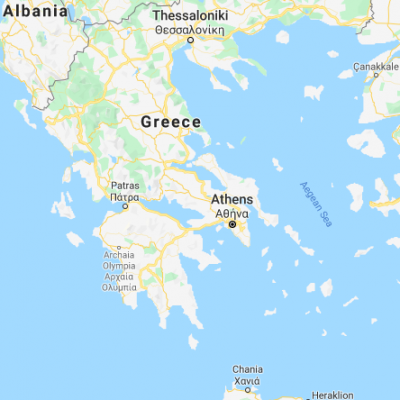
Greece
Greece's vibrant contemporary art scene is a fusion of ancient heritage and modern perspectives. Institutions like the National Museum of Contemporary Art in Athens echo this dynamic. Famed artist Takis, known for his kinetic sculptures, embodies Greece's innovative spirit. Modern creators continue to weave Greece's complex history into forward-thinking expressions. Experience Greek contemporary art at Composition Gallery's website.
Show All
- Show All
- Established
- Discoveries
Show All
ARTWORKS RELATED TO GREECE

Jannis Kounellis
Opera in ricordo di Mauro Rostagno, 2000
Limited Edition Print
Screen-print
EUR 850

Jannis Kounellis
Homage to Federico Garcia Lorca, 2001
Limited Edition Print
Silkscreen
Currently Not Available

Takis
Insectes, 1981
Limited Edition Print
Lithograph
Currently Not Available

Jannis Kounellis
Composition , 2004
Limited Edition Print
Silkscreen
EUR 1,375

Jannis Kounellis
Untitled from the Lettre International portfolio, 1992
Limited Edition Print
Lithograph
EUR 2,200

Jannis Kounellis
Barcelona II ( N8 ), 2003
Drawing / Watercolor
Mixed Media
Inquire For Price

Jannis Kounellis
Against torture,
Limited Edition Print
Lithograph
Currently Not Available
Related Articles

Popular, Art Movements - March 06, 2024
Art in Public Spaces: Transforming Urban Environments
Discover how public art transforms urban spaces into vibrant hubs of creativity and reflection. Explore iconic projects that redefine our cities. Read More
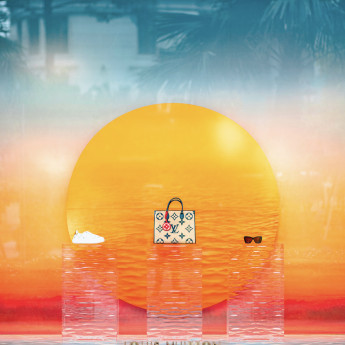

Superflat is an art movement founded by Takashi Murakami, heavily influenced by anime and manga. The term Superflat refers to the flattened forms found in Japanese animation, graphic art, fine arts, and pop culture, as well as the perceived superficiality of Japanese culture. Murakami's movement, which he self-proclaimed, is considered postmodern and critiques both the depth and shallowness of contemporary Japanese society. Superflat has been highly influential in bridging the gap between high art and popular culture.
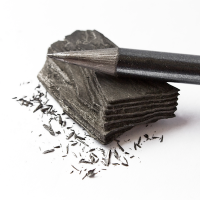
Graphite is a form of carbon commonly used as the core material in pencils. It can be compressed to various levels of hardness, allowing for different shading effects in drawing. In powdered form, graphite can be applied with a brush for broader, softer applications. Graphite erases easily and was first discovered in the 1500s in England's Lake District.