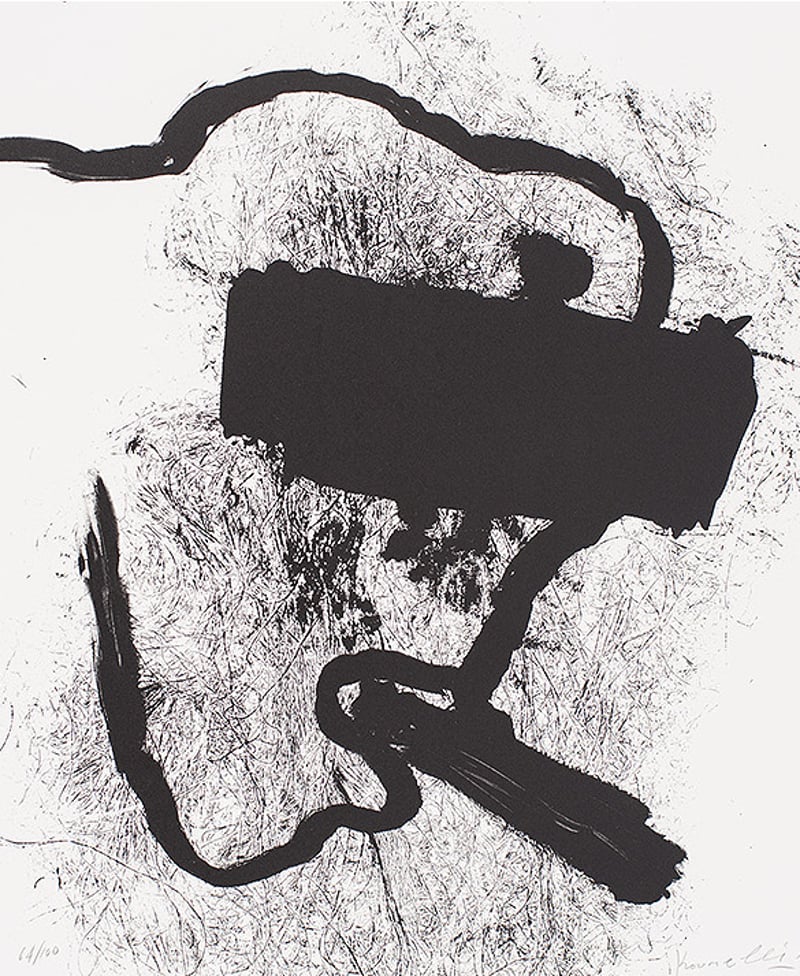
Silkscreen on paper, hand signed and numbered by the arist
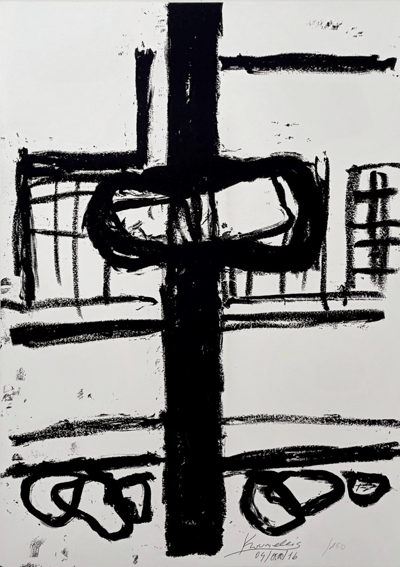
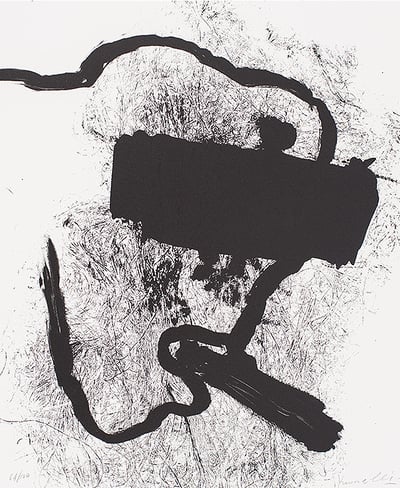
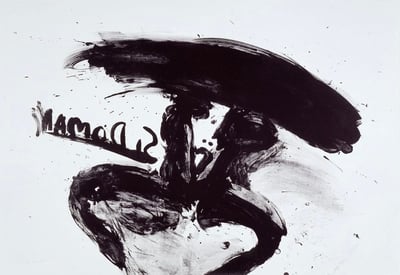
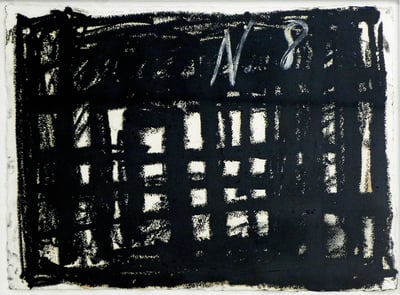
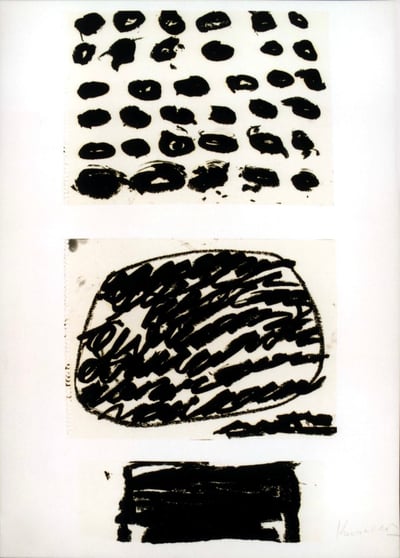
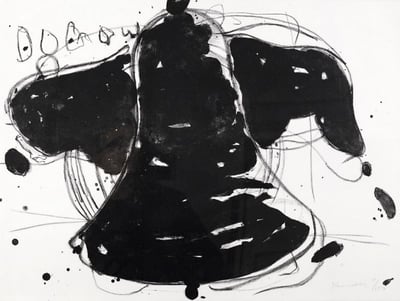
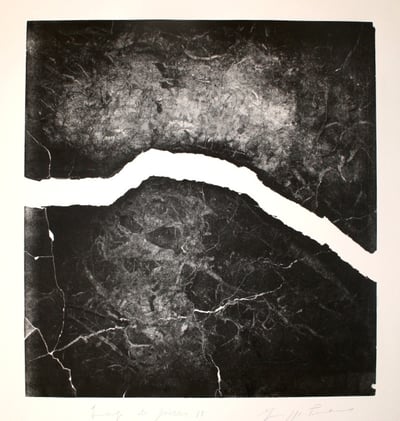
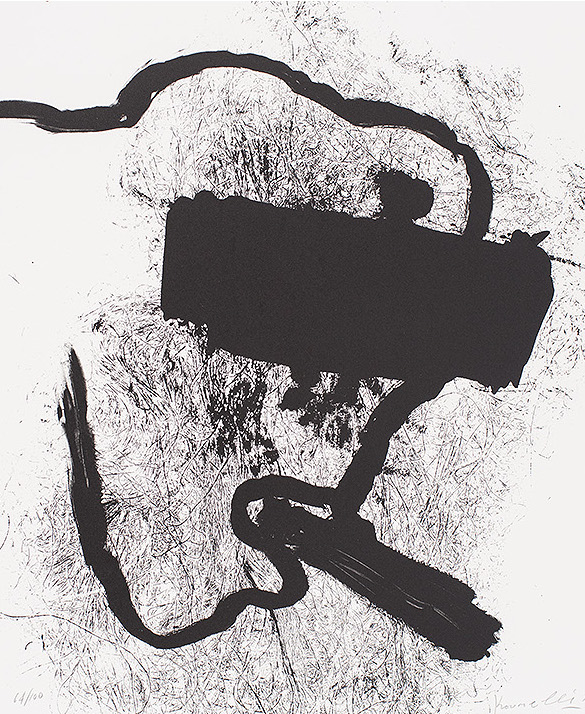
Composition by Jannis Kounellis is an evocative silkscreen print that embodies the artist’s exploration of abstract forms and textures. Created in 2004 and signed by the artist, this limited edition print (from an edition of 100) demonstrates Kounellis’s mastery of visual tension through contrasting textures and bold, black shapes. The central dark form, irregular and almost tool-like, is surrounded by dynamic lines that suggest movement, as if capturing a moment of energy frozen on paper. Kounellis, known for his role in the Arte Povera movement, often engaged with materials and images that evoke a tactile, raw aesthetic. This work, measuring 47.5 cm by 40 cm, is not just an image but an invitation to experience form and texture in a way that goes beyond traditional representation.
Jannis Kounellis (Greece, 1936–2017) was a pivotal figure in the Arte Povera movement, known for his innovative use of unconventional materials like coal, steel, burlap, and live animals. His installations and sculptures explored themes of history, memory, and industrialization, blending the poetic with the political in powerful visual narratives.
SilkscreenSilkscreen is a printmaking method that uses a screen made of silk or other mesh fabric. The screen is treated with a substance that blocks ink in certain areas, allowing ink to pass through only in the desired sections. Each color in the print requires a separate screen.
Silkscreen on paper, hand signed and numbered by the arist
Composition by Jannis Kounellis is an evocative silkscreen print that embodies the artist’s exploration of abstract forms and textures. Created in 2004 and signed by the artist, this limited edition print (from an edition of 100) demonstrates Kounellis’s mastery of visual tension through contrasting textures and bold, black shapes. The central dark form, irregular and almost tool-like, is surrounded by dynamic lines that suggest movement, as if capturing a moment of energy frozen on paper. Kounellis, known for his role in the Arte Povera movement, often engaged with materials and images that evoke a tactile, raw aesthetic. This work, measuring 47.5 cm by 40 cm, is not just an image but an invitation to experience form and texture in a way that goes beyond traditional representation.
Jannis Kounellis (Greece, 1936–2017) was a pivotal figure in the Arte Povera movement, known for his innovative use of unconventional materials like coal, steel, burlap, and live animals. His installations and sculptures explored themes of history, memory, and industrialization, blending the poetic with the political in powerful visual narratives.
The vertical line is the only way to communicate with the universe.
- Jannis Kounellis
Greek painter and sculptor Jannis Kounellis was synonymous with the Arte Povera — Poor Art movement. After attending an art college in Athens, Kounellis relocated to Rome and studied at the Italian capital's Academia di Bella Art. Jannis Kounellis's early career was as a painter who created works inspired by simple images like street advertisements. However as he became immersed in Arte Povera, an artistic realm which challenged conventional political, societal and artistic norms Kounellis also branched out into sculpture and installation art. Jannis Kounellis’s public collections have been displayed in famous museums like the Tate in London, the Museum of Modern Art (MoMA) in New York City, the Solomon R. Guggenheim Museum, also in New York and the Centre Pompidou in Paris, France. Group displays of his Kounellis and other artists involved with the Arte Povera movement were seen in shows across Europe from the late 1960s through the mid-1980s. Jannis Kounellis, along with Alighiero Boetti, Luciano Fabro, Giulio Paolini, Pino Pascali and Emilio Prini were charter members of the Arte Povera movement.
A movement and style in art that originated in Italy during the 1960s. It integrates elements of minimalism, performance art, and conceptual art by using everyday or seemingly worthless materials, such as newspapers, stones, or rags. The goal was to challenge and subvert the commercialization of art.