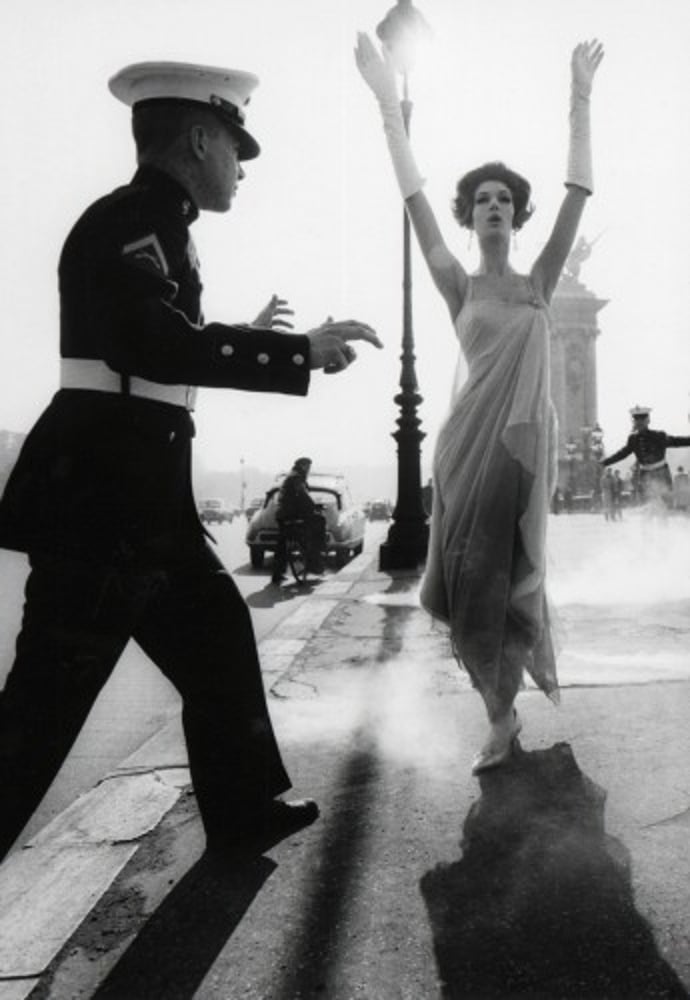
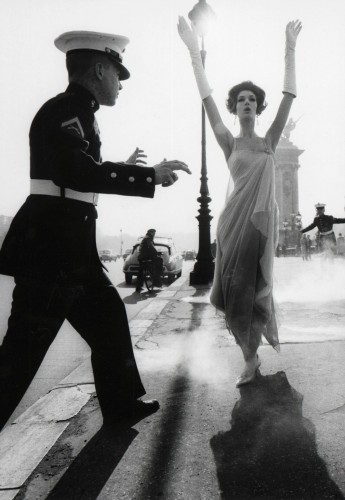
Simone + Marines, Pont Alexander II, Paris (Vogue), 1960 - Gelatin silver print
Simone + Marines by William Klein, photographed in 1960, captures an iconic and theatrical moment on the streets of Paris at Pont Alexandre III. This gelatin silver print showcases a model, dressed elegantly in a sheer gown and long gloves, posing with her arms raised dramatically, embodying a blend of grace and boldness. A Marine stands beside her, caught mid-action, adding an unexpected, almost cinematic tension to the scene. Known for his boundary-pushing fashion photography, Klein integrates elements of spontaneity and street culture, challenging conventional poses and settings. Part of a limited edition of 30, this photograph was originally shot for Vogue, highlighting Klein’s avant-garde approach to fashion photography and his unique ability to blend high fashion with urban realism.
Artwork Copyright © William KleinWilliam Klein (USA, 1926–2022) was a revolutionary photographer and filmmaker known for his bold, unconventional street and fashion photography. His innovative use of wide-angle lenses, natural light, and dynamic compositions captured urban life’s raw energy. A key figure in modern visual culture, Klein’s work continues to inspire generations.
Artwork Copyright © William KleinSimone + Marines, 1960
Form
Medium
Size
- Inches
- Centimeters
Edition
Price
Available works →
- Authenticity Guaranteed
- Insured Shipping
- Online Since 2005
●
●Inventory 6882
●Signed
●Comes with gallery invoice and certificate
●Sell Us a Similar Artwork. Learn more.
Simone + Marines, Pont Alexander II, Paris (Vogue), 1960 - Gelatin silver print
Simone + Marines by William Klein, photographed in 1960, captures an iconic and theatrical moment on the streets of Paris at Pont Alexandre III. This gelatin silver print showcases a model, dressed elegantly in a sheer gown and long gloves, posing with her arms raised dramatically, embodying a blend of grace and boldness. A Marine stands beside her, caught mid-action, adding an unexpected, almost cinematic tension to the scene. Known for his boundary-pushing fashion photography, Klein integrates elements of spontaneity and street culture, challenging conventional poses and settings. Part of a limited edition of 30, this photograph was originally shot for Vogue, highlighting Klein’s avant-garde approach to fashion photography and his unique ability to blend high fashion with urban realism.
Artwork Copyright © William KleinWilliam Klein (USA, 1926–2022) was a revolutionary photographer and filmmaker known for his bold, unconventional street and fashion photography. His innovative use of wide-angle lenses, natural light, and dynamic compositions captured urban life’s raw energy. A key figure in modern visual culture, Klein’s work continues to inspire generations.
Artwork Copyright © William Klein- Recently Added
- Price (Low-High)
- Price (High-Low)
- Year (Low-High)
- Year (High-Low)
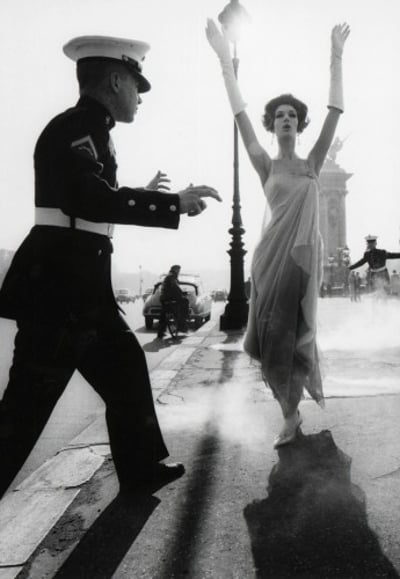
William Klein
Simone + Marines, 1960
Photography
Photograph
Currently Not Available
Related Artists
Related Articles
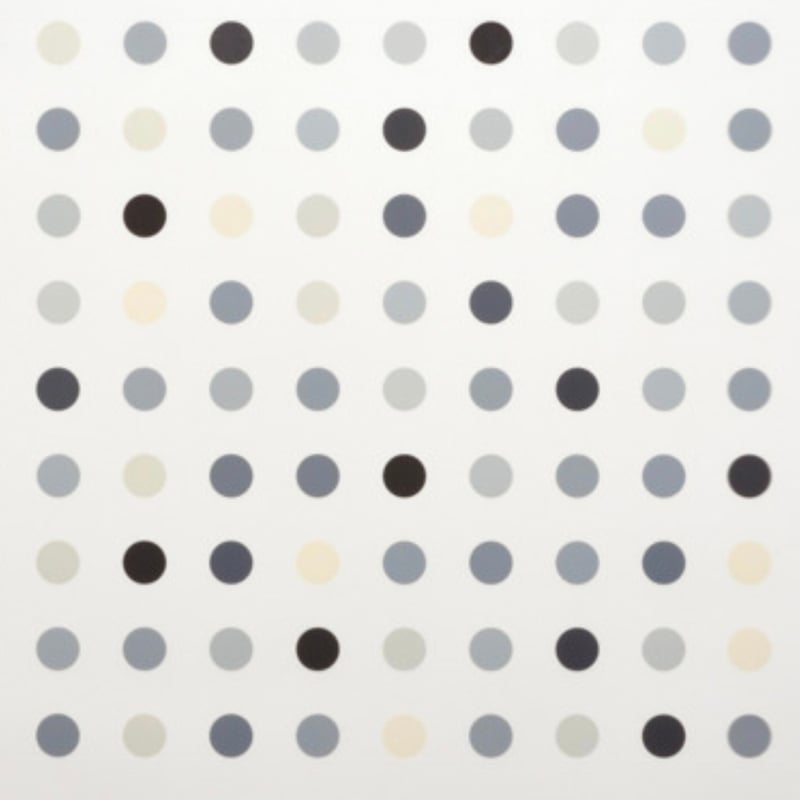
Popular, Artists, Collecting - September 8, 2026
Damien Hirst’s Spot Prints and the Language of Pharmaceuticals
Explore Damien Hirst Spot prints, from pharmaceutical etchings and woodcuts to later editions, with guidance on titles, edition sizes and signatures.Read More
Artwork by Eduardo Chillida
What is abstract art?
Abstract art uses form, shape, line, and color to create a visual experience without attempting to represent external reality. The composition exists independently of the world's visual references, focusing on expressing ideas and emotions through non-representational means.

William Klein
Simone + Marines, 1960
152 x 127 cm


