
Details
Artist
Styles
Original lithograph in colors on Rives BFK paper - Signed in pencil, dated and numbered - From the Presidential Portfolio // Glassed Candy by Wayne Thiebaud is a 1980 limited edition lithograph that exemplifies the artist's fascination with everyday objects. The artwork features three striped candy sticks in orange, blue, and black, placed in a clear glass jar. The simple, yet detailed depiction of the candy and the glass container highlights Thiebaud’s mastery of texture and light. His characteristic use of bold, vibrant colors and clean lines brings life to this still-life composition, while the subtle play of shadows and reflections adds a sense of depth. This print, part of the Presidential Portfolio, is hand-signed, dated, and numbered by the artist, showcasing his signature style of transforming mundane objects into iconic imagery.
Details
Artist
Styles
Original lithograph in colors on Rives BFK paper - Signed in pencil, dated and numbered - From the Presidential Portfolio // Glassed Candy by Wayne Thiebaud is a 1980 limited edition lithograph that exemplifies the artist's fascination with everyday objects. The artwork features three striped candy sticks in orange, blue, and black, placed in a clear glass jar. The simple, yet detailed depiction of the candy and the glass container highlights Thiebaud’s mastery of texture and light. His characteristic use of bold, vibrant colors and clean lines brings life to this still-life composition, while the subtle play of shadows and reflections adds a sense of depth. This print, part of the Presidential Portfolio, is hand-signed, dated, and numbered by the artist, showcasing his signature style of transforming mundane objects into iconic imagery.
- Recently Added
- Price (low-high )
- Price (high-low )
- Year (low-high )
- Year (high-low )

Thiebaud Wayne
Neapolitan Pie, 1990
Limited Edition Print
Lithograph
GBP 25,000 - 30,000

Thiebaud Wayne
Cut Cakes, 2015
Limited Edition Print
Mixed Media
USD 14,250

Thiebaud Wayne
Tulip Sundae, 2015
Limited Edition Print
Aquatint
USD 11,900

Thiebaud Wayne
Crown Tart, 2015
Limited Edition Print
Mixed Media
USD 11,900

Thiebaud Wayne
Trout Fishing In America, 1994
Limited Edition Print
Lithograph
USD 5,500

Thiebaud Wayne
Cigars, 1979
Limited Edition Print
Etching
Currently Not Available
Related Artists


Related Articles
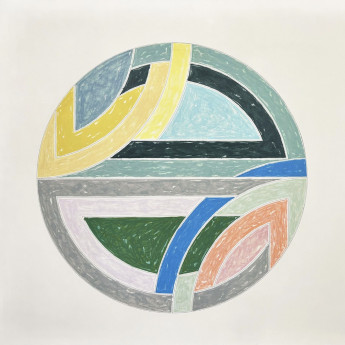
Art Movements - September 03, 2025
Decoding Abstract Art: How to Approach and Appreciate Non-Representational Works
Explore iconic abstract art through works by Chillida, Calder, Frankenthaler & more. Discover how form, color, and rhythm shape our experience. Read More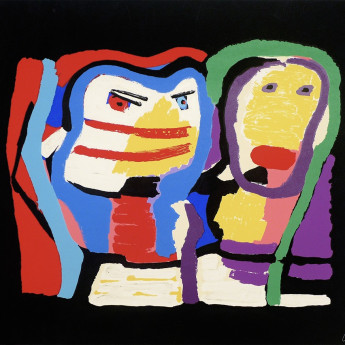

What is Bay Area Figurative Art ?
The Bay Area Figurative Movement, which also goes by the names Bay Area Figurative School, Bay Area Figurative Art, or Bay Area Figuration, came to existence in San-Francisco Bay Area. This was in the mid-20th century, when a group of artists from the area stopped working on the then popular Abstract Expressionism for a preference to figuration in painting. The movement lasted a total of two decades during the 1950's and 1960's.