Details
Artist
Styles
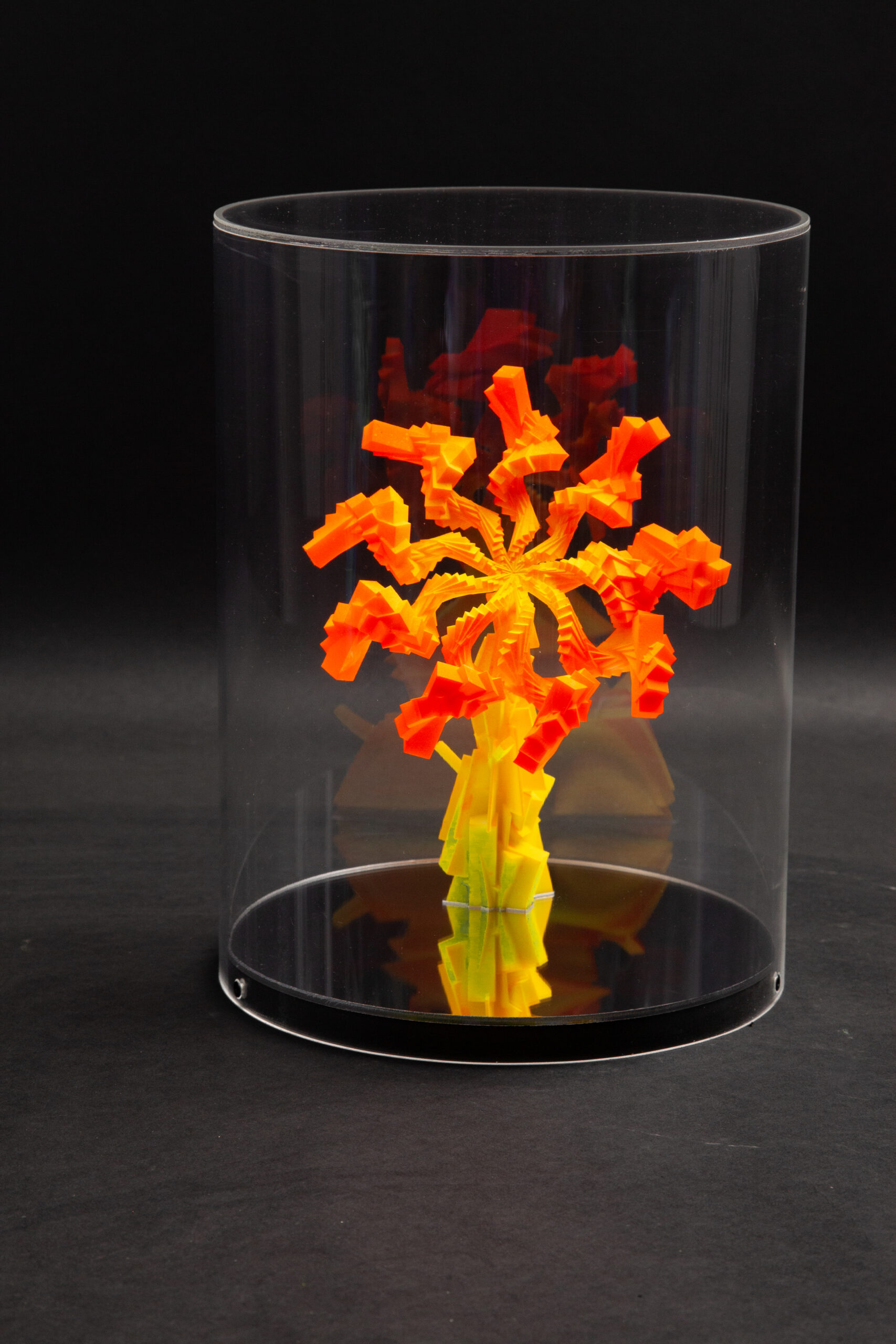
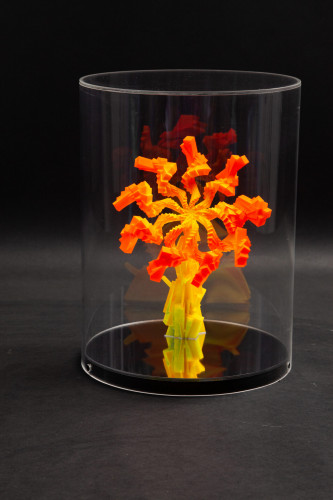
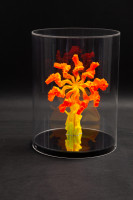
Hand-painted acrylic sculpture. Signed at the bottom. La Cannabis Sativa d’Edgar Poe Jaune Orange by Miguel Chevalier is a 2025 hand-painted acrylic sculpture that merges digital aesthetics with botanical imagination. Encased in a cylindrical display, the vivid orange and yellow structure spirals outward like a psychedelic plant, blending natural forms with pixelated geometry. Inspired by Edgar Allan Poe and the Cannabis sativa plant, Chevalier transforms organic growth into a synthetic, luminous vision. The bold colors and mirrored base enhance the illusion of movement and complexity. Produced in an edition of 12, this work embodies Chevalier’s signature fusion of art, nature, and virtual reality.
La Cannabis Sativa d’Edgar Poe Jaune Orange, 2025
form
Medium
Size
25 x 20 X 20 cm
- Inches
- Centimeters
Edition
Price
- USD
- EUR
- GBP
Details
Artist
Styles
Hand-painted acrylic sculpture. Signed at the bottom. La Cannabis Sativa d’Edgar Poe Jaune Orange by Miguel Chevalier is a 2025 hand-painted acrylic sculpture that merges digital aesthetics with botanical imagination. Encased in a cylindrical display, the vivid orange and yellow structure spirals outward like a psychedelic plant, blending natural forms with pixelated geometry. Inspired by Edgar Allan Poe and the Cannabis sativa plant, Chevalier transforms organic growth into a synthetic, luminous vision. The bold colors and mirrored base enhance the illusion of movement and complexity. Produced in an edition of 12, this work embodies Chevalier’s signature fusion of art, nature, and virtual reality.
- Recently Added
- Price (low-high )
- Price (high-low )
- Year (low-high )
- Year (high-low )
Miguel Chevalier
La Cannabis Sativa D’Edgar Poe Bleu Vert, 2025
Sculpture / Object
Acrylic Sculpture
EUR 3,000
Miguel Chevalier
La Cannabis Sativa D’Edgar Poe Jaune Orange, 2025
Sculpture / Object
Acrylic Sculpture
EUR 3,000

Miguel Chevalier
Meta Cités Filaire Rouge, 2019
Limited Edition Print
Mixed Media
EUR 3,000

Miguel Chevalier
Meta Cites Light Jaune Vert, 2019
Limited Edition Print
Mixed Media
EUR 3,000

Miguel Chevalier
Mini Voxels Light Blue, 2015
Sculpture / Object
Mixed Media
EUR 4,500

Miguel Chevalier
Mini Voxels Light Red, 2015
Sculpture / Object
Mixed Media
EUR 4,500
Related Artists


Related Articles

Art Movements - March 28, 2025
Light Art: Illumination as a Sculptural Medium
Explore how artists from Moholy-Nagy to Opie transform light into sculpture—shaping perception, space, and digital-era visual art. Read More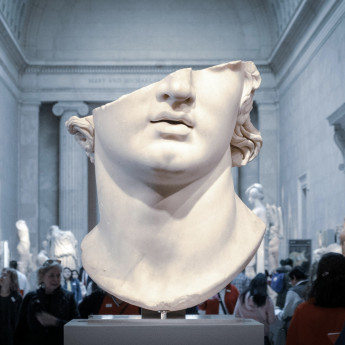

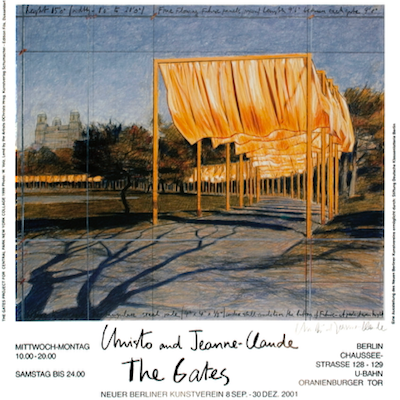
What is site specific art?
Site-Specific Art is a form of artwork created to exist in a particular location, with the artist considering the site as an integral part of the creative process. Robert Irwin was a key figure in promoting this art form in California. Site-Specific Art emerged as a reaction against modernist objects, which were often portable, commodified, and confined to museum spaces. In contrast, Site-Specific Art is inherently tied to its location, challenging the traditional notions of art as a transportable and marketable commodity.