Details
Artist
Styles
Etching and collage. Helene II (2004) by Manolo Valdés is an etching and collage that continues the artist’s signature exploration of feminine archetypes through abstraction and historical quotation. In this composition, a faceless woman is depicted wrapped in a voluminous cloak, rendered in stark white against a rich brown background. The only burst of color and detail appears in the elaborate collage headdress, integrating modernist fragments and cubist references. The anonymity of the face focuses attention on form, gesture, and symbolism. Created in an edition of 100 plus 10 hors commerce, the work measures 103 x 75 cm and showcases Valdés’s ability to fuse classical and contemporary visual languages.
Helene II, 2004
form
Medium
Size
103 x 75 cm
- Inches
- Centimeters
Edition
Price
- USD
- EUR
- GBP
Details
Artist
Styles
Etching and collage. Helene II (2004) by Manolo Valdés is an etching and collage that continues the artist’s signature exploration of feminine archetypes through abstraction and historical quotation. In this composition, a faceless woman is depicted wrapped in a voluminous cloak, rendered in stark white against a rich brown background. The only burst of color and detail appears in the elaborate collage headdress, integrating modernist fragments and cubist references. The anonymity of the face focuses attention on form, gesture, and symbolism. Created in an edition of 100 plus 10 hors commerce, the work measures 103 x 75 cm and showcases Valdés’s ability to fuse classical and contemporary visual languages.
- Recently Added
- Price (low-high )
- Price (high-low )
- Year (low-high )
- Year (high-low )

Manolo Valdés
Las Damas De Barajas, 2006
Sculpture / Object
Bronze
EUR 23,890

Manolo Valdés
Retratro De Mujer Con Mantilla, 1992
Limited Edition Print
Mixed Media
EUR 24,000

Manolo Valdés
Mujer Con Sombrero IV , I, 2002
Limited Edition Print
Mixed Media
EUR 16,900

Manolo Valdés
Helene II, 2004
Limited Edition Print
Collage
EUR 9,600

Manolo Valdés
Helene I, 2004
Limited Edition Print
Collage
EUR 9,600

Manolo Valdés
Jarron Con 2 Asas, 1993
Limited Edition Print
Collage
EUR 11,900

Manolo Valdés
La Donna Italiana (Helene), 2005
Limited Edition Print
Collage
EUR 4,250

Manolo Valdés
Eva III, 1993
Limited Edition Print
Mixed Media
Inquire For Price

Manolo Valdés
Desnudo I, 2002
Limited Edition Print
Etching
EUR 1,875

Manolo Valdés
Desnudo VI, 2002
Limited Edition Print
Etching
EUR 1,900

Manolo Valdés
Desnudo XIII, 2002
Limited Edition Print
Etching
EUR 1,875

Manolo Valdés
Las Meninas #4, 2000
Limited Edition Print
Etching
EUR 3,700

Manolo Valdés
Still Life III, 1986
Limited Edition Print
Etching
EUR 1,550

Manolo Valdés
Still Life V, 1986
Limited Edition Print
Etching
EUR 1,550

Manolo Valdés
Still Life VI, 1986
Limited Edition Print
Etching
EUR 1,570

Manolo Valdés
Dama Con Sombrero (Pamela I), 2013
Limited Edition Print
Collage
Currently Not Available

Manolo Valdés
Condeduque, 1987
Limited Edition Print
Etching
Currently Not Available
Related Artists


Related Articles

Popular, Art Movements - May 01, 2020
Reinvention of the Art world: The Insurgency of Pop Art
Explore the rise of Pop Art, from its roots in 1950s Britain to its global impact. Discover iconic works by Warhol, Lichtenstein, and others redefining culture. Read More

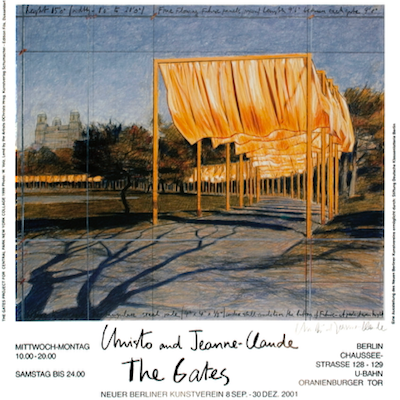
What is site specific art?
Site-Specific Art is a form of artwork created to exist in a particular location, with the artist considering the site as an integral part of the creative process. Robert Irwin was a key figure in promoting this art form in California. Site-Specific Art emerged as a reaction against modernist objects, which were often portable, commodified, and confined to museum spaces. In contrast, Site-Specific Art is inherently tied to its location, challenging the traditional notions of art as a transportable and marketable commodity.