Details
Artist
Styles
// Ludwig Wilding's SBST 2827, created in 1993, is a captivating piece that explores optical illusions through intricate geometric patterns. This object uses black-and-white striped forms arranged in a repetitive grid, creating a series of flower-like shapes that seem to pulse and shift as the viewer’s perspective changes. The precise alignment of lines and shapes produces a moiré effect, a visual phenomenon that adds depth and movement to an otherwise static piece. Wilding, known for his contributions to Op Art, manipulates perception to engage viewers in a sensory experience that challenges the stability of visual reality. This limited edition work exemplifies Wilding’s skill in creating dynamic compositions that fuse art with optical science.
SBST 2827, 1993
form
Medium
Size
28 x 28 X 6 cm
- Inches
- Centimeters
Edition
Price
- USD
- EUR
- GBP
Details
Artist
Styles
// Ludwig Wilding's SBST 2827, created in 1993, is a captivating piece that explores optical illusions through intricate geometric patterns. This object uses black-and-white striped forms arranged in a repetitive grid, creating a series of flower-like shapes that seem to pulse and shift as the viewer’s perspective changes. The precise alignment of lines and shapes produces a moiré effect, a visual phenomenon that adds depth and movement to an otherwise static piece. Wilding, known for his contributions to Op Art, manipulates perception to engage viewers in a sensory experience that challenges the stability of visual reality. This limited edition work exemplifies Wilding’s skill in creating dynamic compositions that fuse art with optical science.
- Recently Added
- Price (low-high )
- Price (high-low )
- Year (low-high )
- Year (high-low )

Ludwig Wilding
SBST 2827, 1993
Sculpture / Object
Object
EUR 1,500

Ludwig Wilding
SBST 2838, 2000
Sculpture / Object
Object
EUR 1,500

Ludwig Wilding
SBST 2823, 1993
Sculpture / Object
Object
EUR 1,500

Ludwig Wilding
SB II, 1986
Sculpture / Object
Object
EUR 1,500

Ludwig Wilding
SBST 2818, 1986
Sculpture / Object
Object
EUR 1,500

Ludwig Wilding
SBT 2835, 1998
Sculpture / Object
Object
EUR 1,500

Ludwig Wilding
SBST 2839, 2001
Limited Edition Print
Mixed Media
EUR 1,500
Related Artists


Related Articles
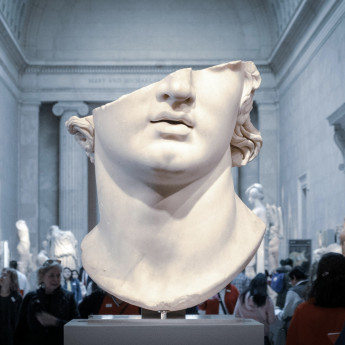
Popular, Collecting - July 23, 2025
Sculpture Care and Display: From Plinths to Pedestals in Your Home
Learn how to display and care for sculpture at home—from lighting tips to material care—so your art can truly shine in any space. Read More


What is concrete art?
Concrete Art is an art movement founded by the Dutch artist Theo van Doesburg in the 1930s. The movement emphasizes pure abstraction, focusing on geometric shapes and colors without any reference to the natural world or symbolic meaning. Unlike other forms of abstract art, Concrete Art is entirely non-representational and is based on mathematical principles and precise execution. It aims to create universal, timeless works by using simple, clear forms that emphasize objectivity and clarity.