Details
Artist
Styles
Signed and numbered in the lower margin; unframed // Hide in the City No. 37 by Liu Bolin is a striking 2007 photograph from the artist's renowned Invisible Man series. In this piece, Bolin camouflages himself against a wall covered with Chinese propaganda text, blending seamlessly into the urban landscape. His meticulous body paint allows him to disappear within the wall, creating a visual commentary on themes of identity, conformity, and the individual’s relationship to society. Bolin’s performance art captures the tension between the self and the collective, particularly within the context of modern Chinese society. This signed and numbered photograph not only showcases Bolin’s technical skill but also serves as a profound critique on the erasure of individuality within a regulated environment.
Hide in the city n 37, 2007
form
Medium
Size
95 x 120 cm
- Inches
- Centimeters
Edition
Price
- USD
- EUR
- GBP
Details
Artist
Styles
Signed and numbered in the lower margin; unframed // Hide in the City No. 37 by Liu Bolin is a striking 2007 photograph from the artist's renowned Invisible Man series. In this piece, Bolin camouflages himself against a wall covered with Chinese propaganda text, blending seamlessly into the urban landscape. His meticulous body paint allows him to disappear within the wall, creating a visual commentary on themes of identity, conformity, and the individual’s relationship to society. Bolin’s performance art captures the tension between the self and the collective, particularly within the context of modern Chinese society. This signed and numbered photograph not only showcases Bolin’s technical skill but also serves as a profound critique on the erasure of individuality within a regulated environment.
- Recently Added
- Price (low-high )
- Price (high-low )
- Year (low-high )
- Year (high-low )

Liu Bolin
Hide In The City N 37, 2007
Photography
Photograph
EUR 15,400
Related Artists


Related Articles

Popular, Art Movements - May 01, 2020
Reinvention of the Art world: The Insurgency of Pop Art
Explore the rise of Pop Art, from its roots in 1950s Britain to its global impact. Discover iconic works by Warhol, Lichtenstein, and others redefining culture. Read More

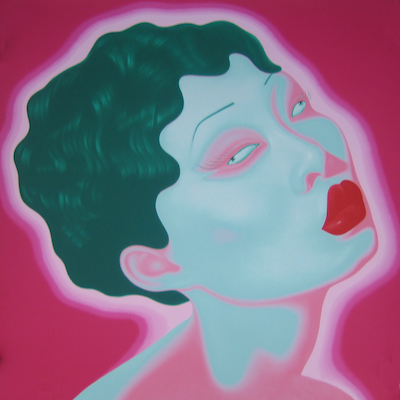
Artwork by Feng Zhengjie
What is Chinese contemporary art?
Chinese Contemporary Art is marked by a wide range of styles and experimental approaches. In the 1980s, avant-garde exhibitions were often shut down by government officials. The 1990s saw the rise of political pop and cynical realism, while China's One-Child Policy influenced artists to explore the individual as a subject matter.
RECENTLY VIEWED
-->