21-color screenprint with poured resin
- Hand-signed by artist
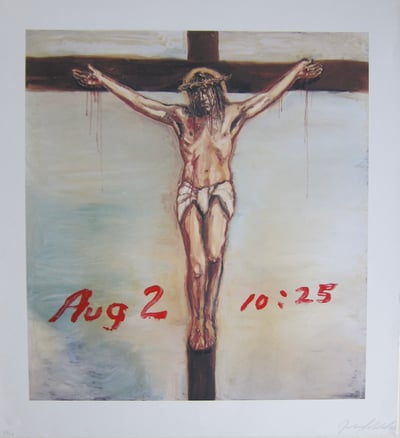
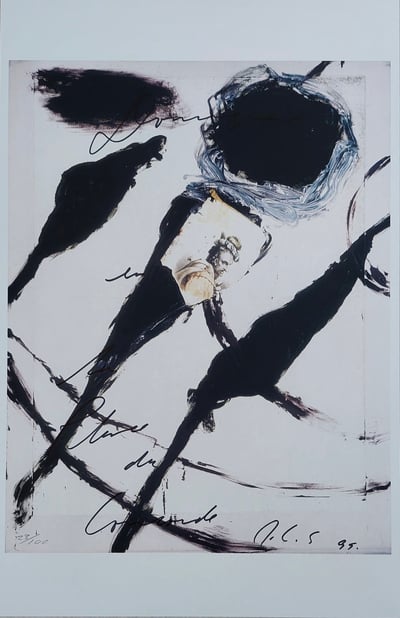
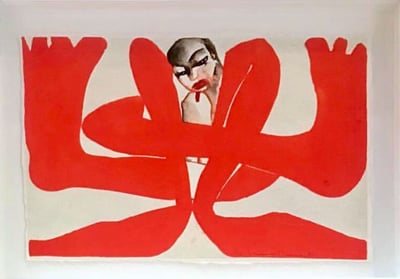
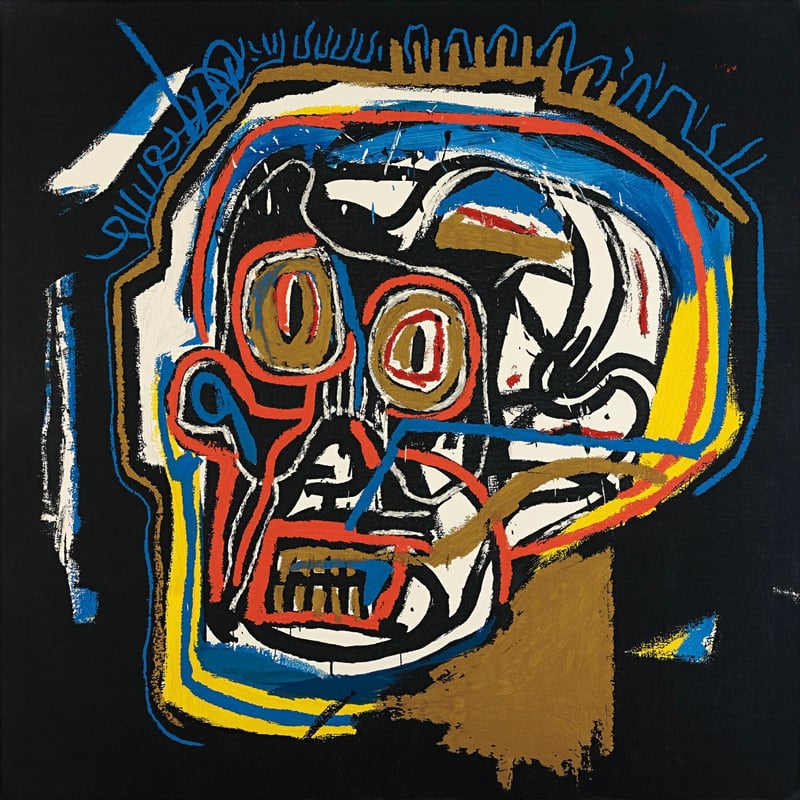
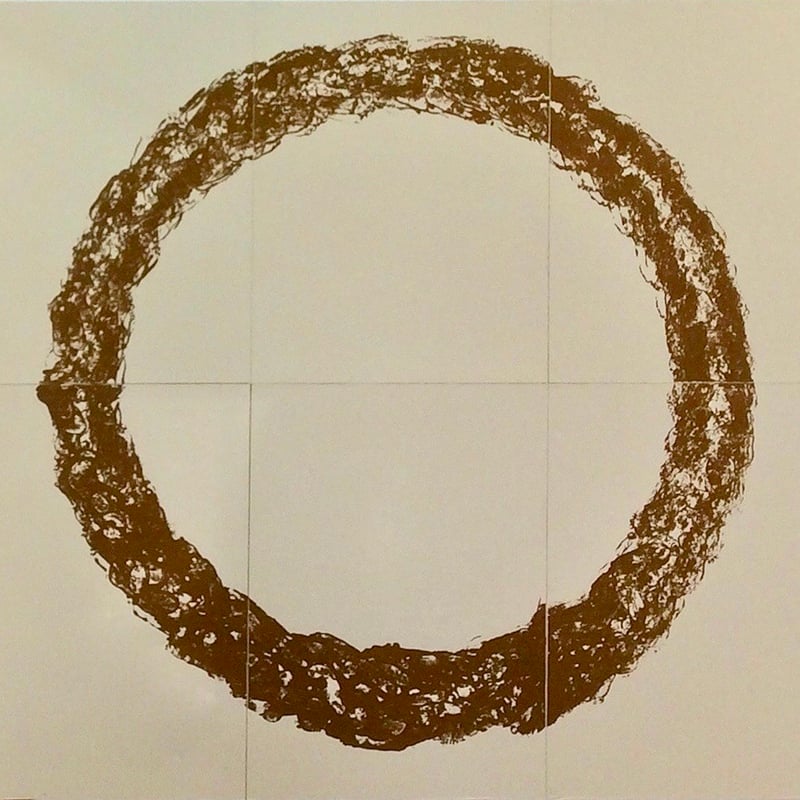
Julian Schnabel’s Victor Hugo Demo is a silkscreen limited edition print created in 1998. This 21-color screenprint incorporates poured resin, adding a textured, tactile quality to the work. The central figure, dressed in vibrant red, evokes a historical or mythical presence, with loose brushwork giving an ethereal feel. The abstracted background, filled with earthy tones and dynamic strokes, contrasts with the figure’s stark presence, creating a visual tension. Schnabel’s signature style is evident in the layering and expressive gestures, which offer a sense of spontaneity and depth. This piece captures a blend of figurative and abstract elements, resonating with the artist’s experimental approach.
Julian Schnabel (United States, 1951) is a multidisciplinary artist and filmmaker. He gained prominence in the 1980s with his 'plate paintings,' large-scale works incorporating broken ceramics. A leading figure in Neo-Expressionism, Schnabel's films, such as 'The Diving Bell and the Butterfly,' have received critical acclaim.
SilkscreenSilkscreen is a printmaking method that uses a screen made of silk or other mesh fabric. The screen is treated with a substance that blocks ink in certain areas, allowing ink to pass through only in the desired sections. Each color in the print requires a separate screen.
21-color screenprint with poured resin
- Hand-signed by artist
Julian Schnabel’s Victor Hugo Demo is a silkscreen limited edition print created in 1998. This 21-color screenprint incorporates poured resin, adding a textured, tactile quality to the work. The central figure, dressed in vibrant red, evokes a historical or mythical presence, with loose brushwork giving an ethereal feel. The abstracted background, filled with earthy tones and dynamic strokes, contrasts with the figure’s stark presence, creating a visual tension. Schnabel’s signature style is evident in the layering and expressive gestures, which offer a sense of spontaneity and depth. This piece captures a blend of figurative and abstract elements, resonating with the artist’s experimental approach.
Julian Schnabel (United States, 1951) is a multidisciplinary artist and filmmaker. He gained prominence in the 1980s with his 'plate paintings,' large-scale works incorporating broken ceramics. A leading figure in Neo-Expressionism, Schnabel's films, such as 'The Diving Bell and the Butterfly,' have received critical acclaim.
There's been too much attention on marketing. Can't we just talk about the paintings?
- Julian Schnabel
Julian Schnabel is an American painter, artist, and filmmaker, who was born in Brooklyn, NY in October 1951. Julian Schnabel first gained notice as an artist via his first one-man show in 1979. He has had numerous subsequent solo exhibits all over the globe. In addition to his painting, Schnabel has also had much success in films, which he ventured into during the 1990s. The multi-talented artist is known as a"bad boy" of the art world. One of Julian Schnabel’s signatures is adding unusual elements (i.e. broken pottery) to his canvases. In fact, Schnabel received international recognition for his "plate paintings," which were large-scale paintings set on broken ceramic plates. The artist has played a pivotal role in the Neo-Expressionism movement and was part of a contingent of artists in the '80s, which included Jean-Michel Basquiat and David Salle, who endeavored to restore the art of painting to its pre-abstraction status. Their style stressed exuberance and expressivity in contrast to the pervasive intellectualism of Conceptualist and Minimalist art that was showcased at that time. They balanced the technical aspects with emotional resonance. As a Neo-Expressionist, Julian Schnabel reintroduced human emotion and sentiment to painting while banishing the idea of detachment as well as unconventional supports such as cardboard,black velvet, and weathered tarpaulins. In addition to painting, Julian Schnabel has also branched out into photography, music, and movies. Schnabel has garnered widespread critical acclaim as the director of films including Before Night Falls, The Diving Bell and the Butterfly, as well as the co-writer and director of the 1996 film Basquiat, which was based on the life of fellow artist Jean-Michel Basquiat. (Artist website)
Contemporary art refers to avant-garde or innovative art created in the recent past or present day. The exact starting point of contemporary art varies depending on the institution, often tied to the founding year of museums or galleries that showcase the style. Contemporary art is characterized by its focus on current ideas, diverse media, and the exploration of new concepts and techniques.