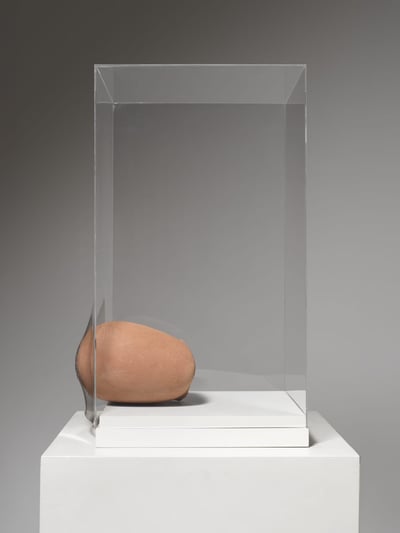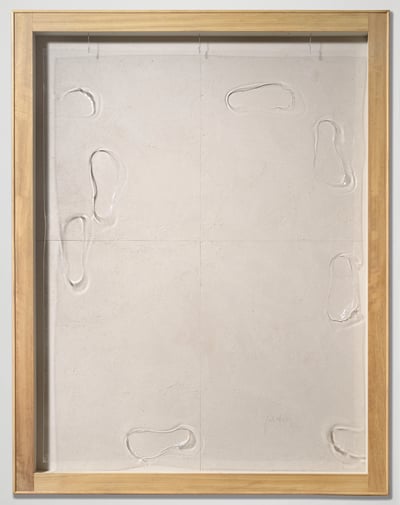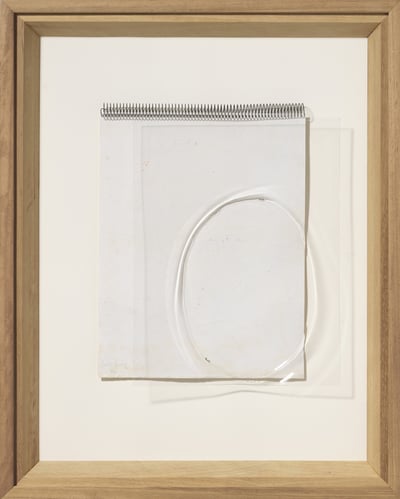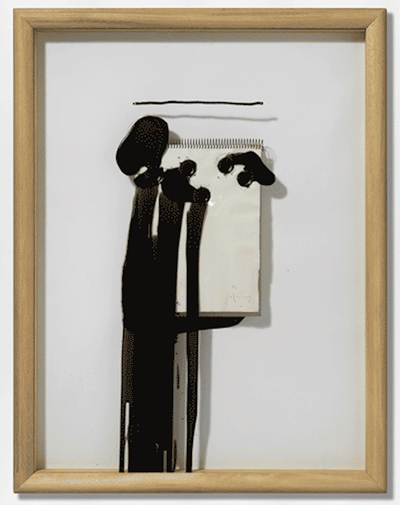
'Arrossegar ombres' by Jordi Alcaraz is a mixed-media artwork characterized by a minimalist yet dynamic composition. The piece features a series of fluid black shapes, seemingly suspended or dragged across a white surface, evoking a sense of motion and tension. Thin black lines extend from the larger black forms, creating a visual interplay between weight and delicacy. The raw texture and gestural quality suggest themes of impermanence, shadow, and the passage of time. Alcaraz’s signature use of unconventional materials and abstraction invites viewers to reflect on the boundaries between two-dimensional and three-dimensional space. Measuring 190 x 150.5 cm, this work exemplifies his exploration of conceptual art.
Jordi Alcaraz (Spain, 1963) is a Catalan artist blending painting, sculpture, and drawing into poetic, conceptual works. Using materials like glass, mirrors, and books, he explores themes of time, space, and language, often distorting surfaces to challenge perception. Alcaraz's art has been exhibited internationally, reflecting his unique approach to abstraction and materiality.
Mixed MediaMixed media refers to artwork that incorporates more than one medium within a single piece. Unlike multimedia art, which combines distinct forms of visual art and often includes elements like sound, video, or digital media, mixed media focuses on combining traditional art materials, such as paint, ink, and collage. Mixed media art allows artists to achieve a wide range of effects and textures by layering and blending different materials.
'Arrossegar ombres' by Jordi Alcaraz is a mixed-media artwork characterized by a minimalist yet dynamic composition. The piece features a series of fluid black shapes, seemingly suspended or dragged across a white surface, evoking a sense of motion and tension. Thin black lines extend from the larger black forms, creating a visual interplay between weight and delicacy. The raw texture and gestural quality suggest themes of impermanence, shadow, and the passage of time. Alcaraz’s signature use of unconventional materials and abstraction invites viewers to reflect on the boundaries between two-dimensional and three-dimensional space. Measuring 190 x 150.5 cm, this work exemplifies his exploration of conceptual art.
Jordi Alcaraz (Spain, 1963) is a Catalan artist blending painting, sculpture, and drawing into poetic, conceptual works. Using materials like glass, mirrors, and books, he explores themes of time, space, and language, often distorting surfaces to challenge perception. Alcaraz's art has been exhibited internationally, reflecting his unique approach to abstraction and materiality.
Jordi Alcaraz has described his own work as an attempt to ‘overcome the traditional boundaries’ that often beset the genres of art. Multi-faceted as a sculptor, engraver and painter, Alcaraz is renowned for his fusion of all three mediums and the resulting ethereal works that highlight the malleability of materials and the ever-changing nature of our own reality and surroundings. Disappearance Exercise is among the most recognised of his works and succinctly highlights his uniquely poetic style; he uses methacrylate by painting on it, etching it and perforating a hole into it; splashes of black paint may then spontaneously disappear through a hole in the methacrylate. His ambiguous and often surreal works have drawn comparisons to his fellow Catalan artists, Dali and Miro, while his use of distortion and reflection recall Abstract Expressionism and Arte Povera – Alcaraz softens the lines between many artistic styles. (Artist website)
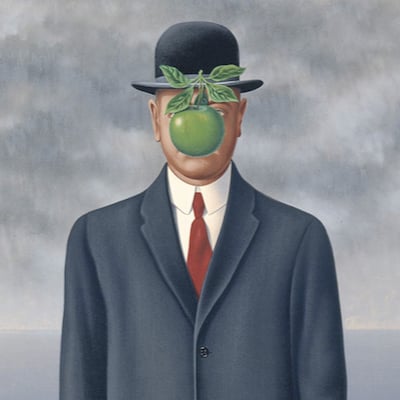
Surrealism began in the 1920s as an art and literary movement with the goal of revealing the unconscious mind and unleashing the imagination by exploring unusual and dream-like imagery. Influenced by Sigmund Freud’s theories of psychoanalysis, Surrealist artists and writers sought to bring the unconscious into rational life, blurring the lines between reality and dreams. The movement aimed to challenge conventional perceptions and express the irrational aspects of the human experience.