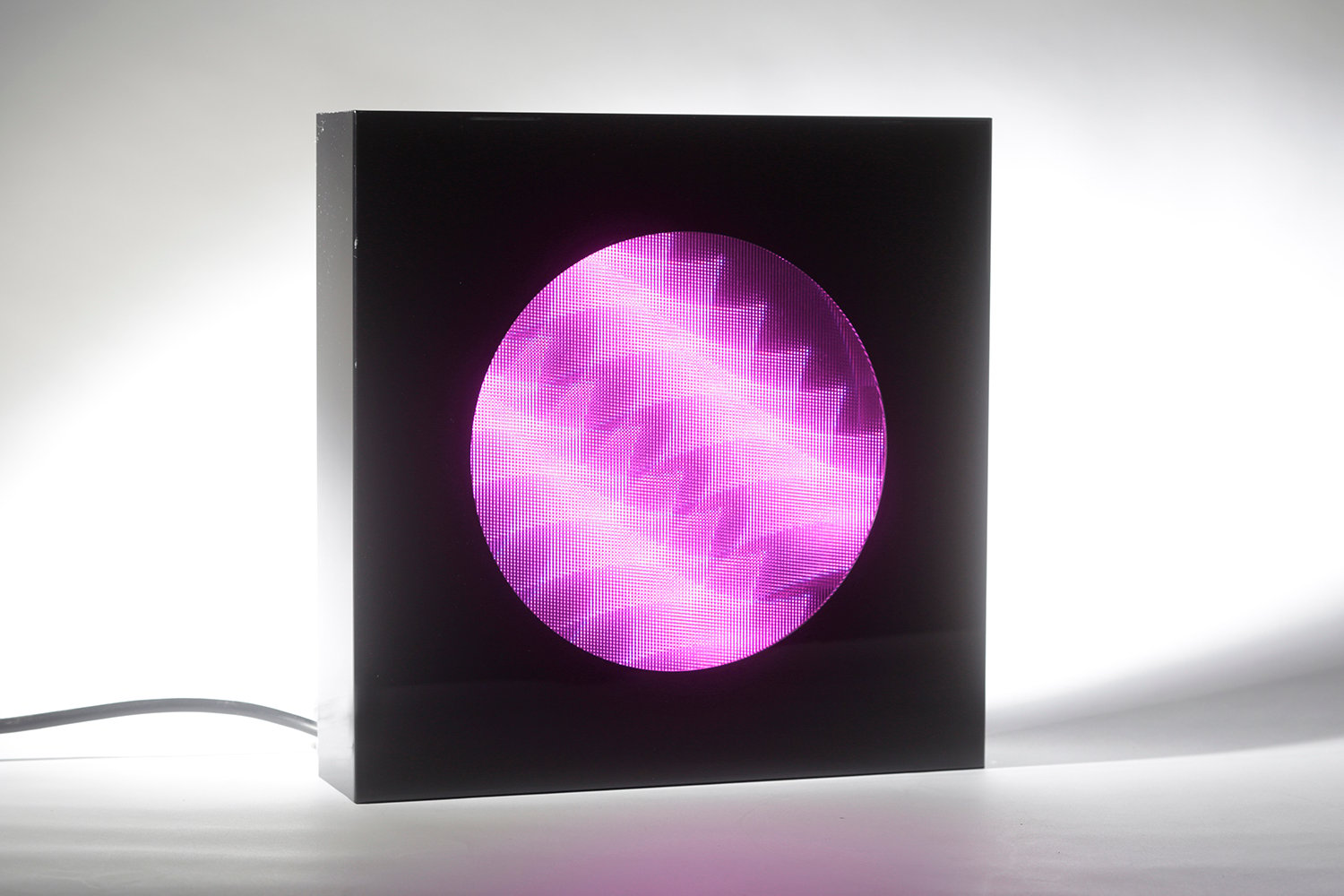
Box with motor and moving colored lights
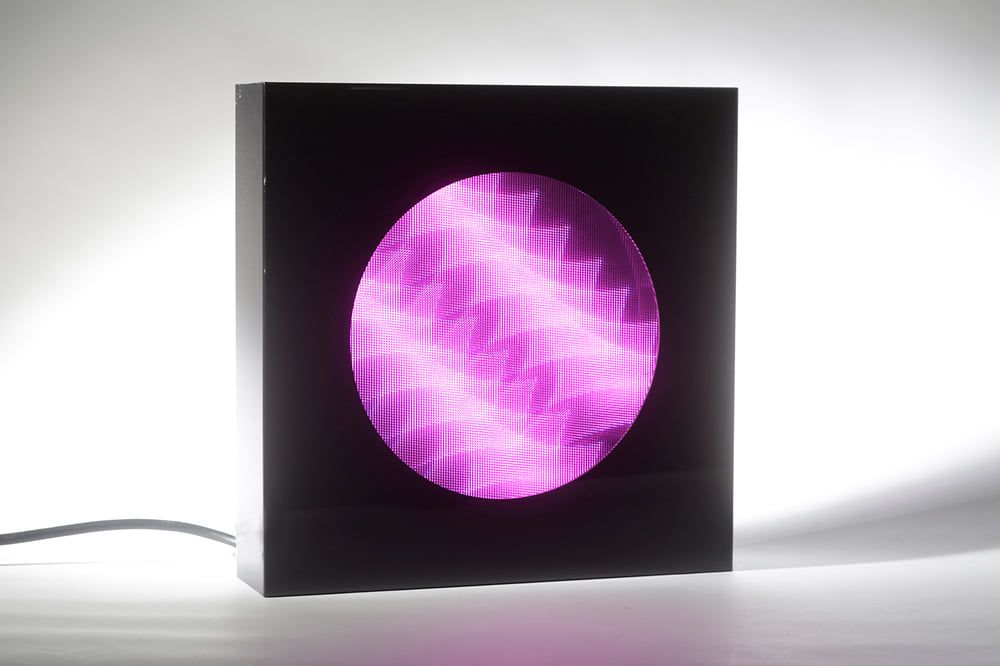
Boite à lumières by Horacio García Rossi is a mixed media light sculpture created in 2012. This piece consists of a box containing a motorized system that generates moving colored lights, with an edition limited to 20. A vibrant circular display of purple lights, seen through a dark frame, creates a mesmerizing, almost hypnotic effect as it shifts in motion. García Rossi, a pioneer in kinetic and light art, explores the dynamic interaction between light and perception, inviting viewers into a sensory experience where light itself becomes the subject. The work’s minimalist structure emphasizes the ethereal quality of the shifting colors, embodying García Rossi’s fascination with optical illusion and movement.
Artwork Copyright © Horacio García RossiHoracio García Rossi (Argentina, 1929–2012) was an Argentine artist and co-founder of the Groupe de Recherche d'Art Visuel (GRAV). His work focused on kinetic art, exploring light and movement through geometric forms and interactive installations. García Rossi's innovative approach challenged traditional perceptions of art, engaging viewers in dynamic visual experiences.
Artwork Copyright © Horacio García RossiBoite à lumières, 2012
Form
Medium
Size
- Inches
- Centimeters
Edition
Price
- USD
- EUR
- GBP
- CHF
- Authenticity Guaranteed
- Insured Shipping
- Online Since 2005
●Inventory 3358
●Signed
●Comes with gallery invoice and certificate
●Any questions?
Box with motor and moving colored lights
Boite à lumières by Horacio García Rossi is a mixed media light sculpture created in 2012. This piece consists of a box containing a motorized system that generates moving colored lights, with an edition limited to 20. A vibrant circular display of purple lights, seen through a dark frame, creates a mesmerizing, almost hypnotic effect as it shifts in motion. García Rossi, a pioneer in kinetic and light art, explores the dynamic interaction between light and perception, inviting viewers into a sensory experience where light itself becomes the subject. The work’s minimalist structure emphasizes the ethereal quality of the shifting colors, embodying García Rossi’s fascination with optical illusion and movement.
Artwork Copyright © Horacio García RossiHoracio García Rossi (Argentina, 1929–2012) was an Argentine artist and co-founder of the Groupe de Recherche d'Art Visuel (GRAV). His work focused on kinetic art, exploring light and movement through geometric forms and interactive installations. García Rossi's innovative approach challenged traditional perceptions of art, engaging viewers in dynamic visual experiences.
Artwork Copyright © Horacio García Rossi- Recently Added
- Price (Low-High)
- Price (High-Low)
- Year (Low-High)
- Year (High-Low)
Horacio García Rossi
Boite à lumières, 2012
Sculpture / Object
Mixed Media
EUR 3,000
Related Artists


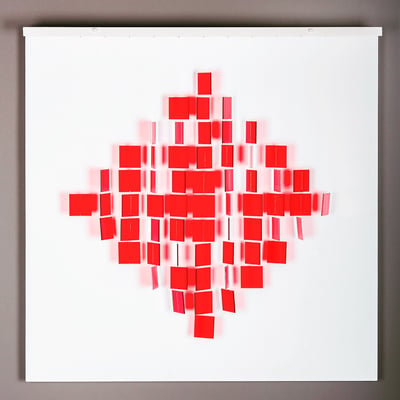
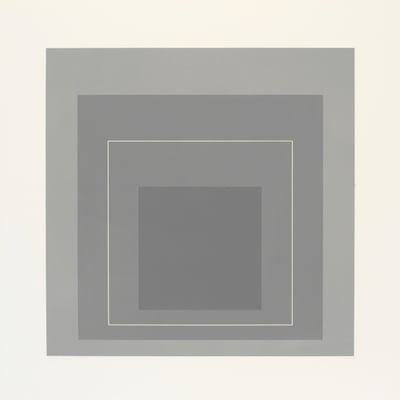
Artwork by Joseph Albers
What is concrete art?
Concrete Art is an art movement founded by the Dutch artist Theo van Doesburg in the 1930s. The movement emphasizes pure abstraction, focusing on geometric shapes and colors without any reference to the natural world or symbolic meaning. Unlike other forms of abstract art, Concrete Art is entirely non-representational and is based on mathematical principles and precise execution. It aims to create universal, timeless works by using simple, clear forms that emphasize objectivity and clarity.