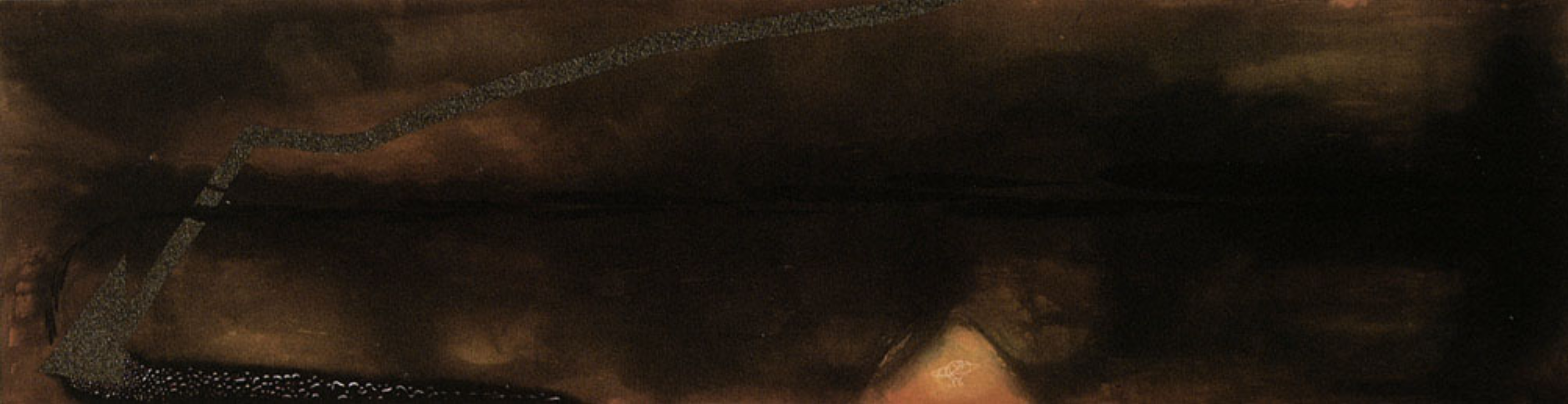
Etching, aquatint on copper plate and silkscreen print, in 5 colours, on Fabriano paper.
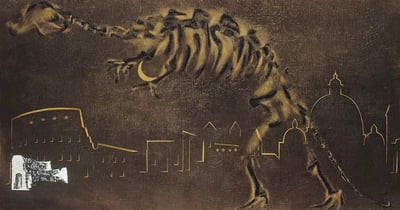
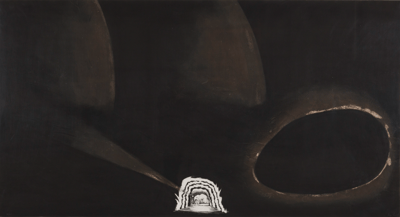
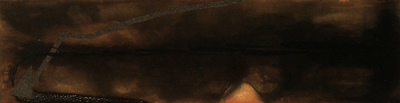
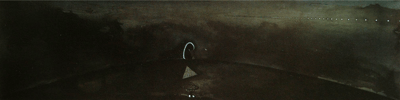
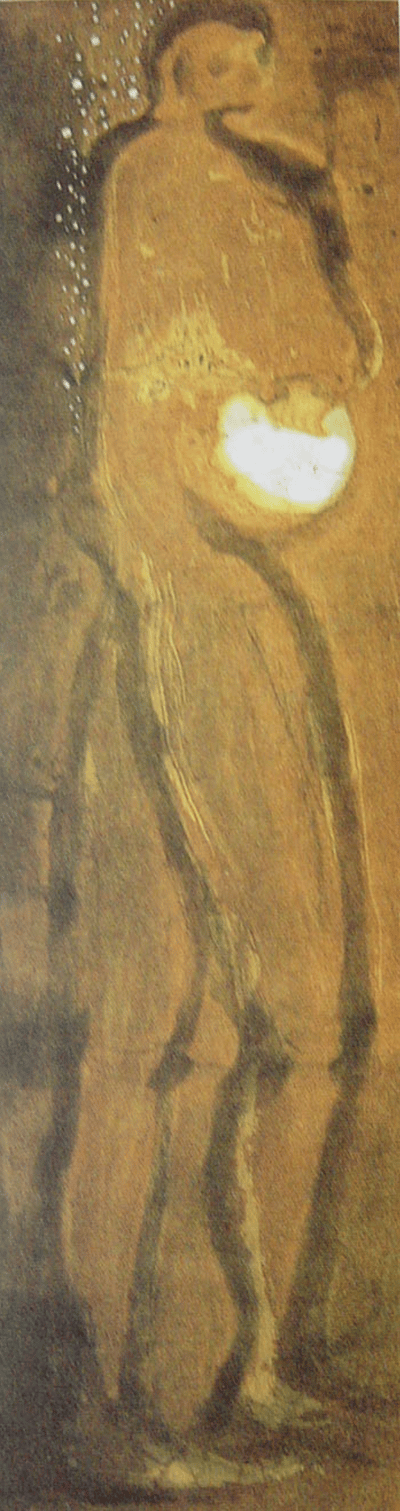
Sparire I (1988) by Enzo Cucchi is a vast, brooding work executed in etching, aquatint, and silkscreen on Fabriano paper. Spanning 78 x 300 cm, this panoramic composition immerses the viewer in a dark, atmospheric expanse interrupted by symbolic interventions. A prominent arrow composed of tiny luminous dots cuts diagonally through the shadowy field, suggesting direction, force, or passage. The lower right corner glows subtly with a soft orange form, evoking earth, fire, or a buried presence, while the entire image pulses with a quiet, existential tension. The title, meaning “to disappear,” aligns with the fading contours and sense of vanishing that permeates the scene. Cucchi’s layered techniques and use of five distinct colors build a nuanced visual and emotional texture. This print, produced in an edition of 45 with ten artist’s proofs, is a meditative exploration of absence, transformation, and metaphysical space.
Enzo Cucchi (Italy, 1949) is a prominent figure in the Transavanguardia movement, known for his expressive and symbolic paintings. Drawing on Italian history, mythology, and literature, his works are characterized by vivid colors, dramatic compositions, and dreamlike imagery. Cucchi's art bridges tradition and modernity, earning him international acclaim.
Mixed MediaMixed media refers to artwork that incorporates more than one medium within a single piece. Unlike multimedia art, which combines distinct forms of visual art and often includes elements like sound, video, or digital media, mixed media focuses on combining traditional art materials, such as paint, ink, and collage. Mixed media art allows artists to achieve a wide range of effects and textures by layering and blending different materials.
Etching, aquatint on copper plate and silkscreen print, in 5 colours, on Fabriano paper.
Sparire I (1988) by Enzo Cucchi is a vast, brooding work executed in etching, aquatint, and silkscreen on Fabriano paper. Spanning 78 x 300 cm, this panoramic composition immerses the viewer in a dark, atmospheric expanse interrupted by symbolic interventions. A prominent arrow composed of tiny luminous dots cuts diagonally through the shadowy field, suggesting direction, force, or passage. The lower right corner glows subtly with a soft orange form, evoking earth, fire, or a buried presence, while the entire image pulses with a quiet, existential tension. The title, meaning “to disappear,” aligns with the fading contours and sense of vanishing that permeates the scene. Cucchi’s layered techniques and use of five distinct colors build a nuanced visual and emotional texture. This print, produced in an edition of 45 with ten artist’s proofs, is a meditative exploration of absence, transformation, and metaphysical space.
Enzo Cucchi (Italy, 1949) is a prominent figure in the Transavanguardia movement, known for his expressive and symbolic paintings. Drawing on Italian history, mythology, and literature, his works are characterized by vivid colors, dramatic compositions, and dreamlike imagery. Cucchi's art bridges tradition and modernity, earning him international acclaim.
Painting recognises no customs. Children do not know gender. Art hates painters.
- Enzo Cucchi
A central figure of the Italian Transavanguardia movement, alongside Mimmo Paladino and Francesco Clemente, Enzo Cucchi is an artist whose works encompass a Neo-Expressionistic style and breathe fresh air into symbolism and figurative drawing. A lot of Cucchi’s creations resemble ancient cave-paintings with their textured surfaces and spontaneous charcoal lines; a lot of his imagery also employs such primitive tools and motifs as fire, livestock and eyes, with imagery blurring the lines between faces and landscapes - Ghiaccio...Bollente is one among many works to exemplify this. Cucchi has noted that emotion is the most important facet of his creativity; he stated: “Everything has to be emotional. Every single sign you make with your hands, your skills, the stuff you draw… Every movement you make should be done emotionally lit.”
Transavanguardia is the Italian version of Neo-Expressionism, referring to an art movement that emerged in Italy and other parts of Western Europe during the 1970s and 1980s. The term translates to beyond the avant-garde. Transavanguardia arose as a reaction against the dominance of conceptual art, reintroducing emotion and reviving painting as a primary medium. The movement marked a return to mythic imagery and figurative art, celebrating a rediscovery of traditional forms and themes in a contemporary context.