Details
Artist
Styles
Etching with carborundum. Roma (1991) by Enzo Cucchi is a monumental etching with carborundum that fuses the mythic and the historical in a surreal tableau. A large, spectral animal skeleton—possibly a tiger or another large feline—arches across a shadowy Roman skyline, its ribs and spine rendered with dramatic texture. Iconic landmarks like the Colosseum and domes of Roman architecture are outlined in luminous gold, while a crescent moon appears lodged in the beast’s ribcage, heightening the dreamlike quality. The use of carborundum adds rich physical depth, aligning with Cucchi’s characteristic blend of symbolism, expressionism, and mystery. Produced in an edition of 60 with 9 artist's proofs, the work evokes both the grandeur and decay of Rome.
Details
Artist
Styles
Etching with carborundum. Roma (1991) by Enzo Cucchi is a monumental etching with carborundum that fuses the mythic and the historical in a surreal tableau. A large, spectral animal skeleton—possibly a tiger or another large feline—arches across a shadowy Roman skyline, its ribs and spine rendered with dramatic texture. Iconic landmarks like the Colosseum and domes of Roman architecture are outlined in luminous gold, while a crescent moon appears lodged in the beast’s ribcage, heightening the dreamlike quality. The use of carborundum adds rich physical depth, aligning with Cucchi’s characteristic blend of symbolism, expressionism, and mystery. Produced in an edition of 60 with 9 artist's proofs, the work evokes both the grandeur and decay of Rome.
- Recently Added
- Price (low-high )
- Price (high-low )
- Year (low-high )
- Year (high-low )

Enzo Cucchi
L'elefante Di Giotto, 1986
Limited Edition Print
Mixed Media
EUR 11,000

Enzo Cucchi
Roma, 1991
Limited Edition Print
Mixed Media
EUR 8,000

Enzo Cucchi
Sparire I, 1988
Limited Edition Print
Mixed Media
EUR 5,500

Enzo Cucchi
Sparire II, 1988
Limited Edition Print
Mixed Media
EUR 5,500

Enzo Cucchi
Uomini, 1989
Limited Edition Print
Etching And Aquatint
EUR 7,500

Enzo Cucchi
Four Arms And Seven Hands, 2011
Sculpture / Object
Mixed Media
EUR 3,500

Enzo Cucchi
La Scala, 1990
Limited Edition Print
Mixed Media
Currently Not Available
Related Artists


Related Articles

Art Movements - November 15, 2022
Transavanguardia: an Italian Renaissance, Beyond Neo Expressionism
Explore the Transavanguardia movement, an Italian Neo-Expressionist renaissance. Discover its bold artists and their revival of tradition through modern innovation. Read More

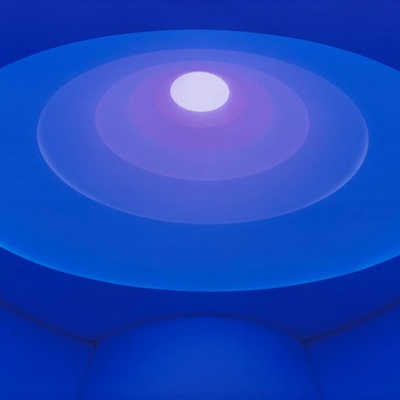
What is ‘light and space’?
The Light and Space Movement refers to loosely affiliated art movements connected to minimalism, geometric abstraction, and op art that originated in Southern California in the 1960s. Greatly influenced by artist John McLaughlin, these artists focused on sensory phenomena such as light, perception, and space as central elements of their work. They also incorporated cutting-edge technologies from the aerospace and engineering industries to develop light-filled and sensuous objects, creating immersive experiences that emphasize the viewer's perception.