
Details
Artist
Styles
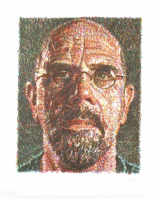
Digital ink-jet print on wove paper Published by Parkett, Zurich, Switzerland Chuck Close’s Self-Portrait (2000) is a striking digital inkjet print that reflects his lifelong exploration of portraiture and hyperrealism. The image presents an intimate, highly detailed close-up of the artist’s face, emphasizing the texture of his skin, facial hair, and round glasses. The blurred edges and sharp central focus create an almost sculptural presence, drawing attention to Close’s intense gaze. Known for his meticulous technique and interest in the relationship between photography and painting, this self-portrait captures his deep engagement with identity and perception. Published by Parkett in Zurich in a limited edition of 70, it exemplifies Close’s mastery of translating photographic realism into an emotionally resonant work.
Details
Artist
Styles
Digital ink-jet print on wove paper Published by Parkett, Zurich, Switzerland Chuck Close’s Self-Portrait (2000) is a striking digital inkjet print that reflects his lifelong exploration of portraiture and hyperrealism. The image presents an intimate, highly detailed close-up of the artist’s face, emphasizing the texture of his skin, facial hair, and round glasses. The blurred edges and sharp central focus create an almost sculptural presence, drawing attention to Close’s intense gaze. Known for his meticulous technique and interest in the relationship between photography and painting, this self-portrait captures his deep engagement with identity and perception. Published by Parkett in Zurich in a limited edition of 70, it exemplifies Close’s mastery of translating photographic realism into an emotionally resonant work.
- Recently Added
- Price (low-high )
- Price (high-low )
- Year (low-high )
- Year (high-low )

Chuck Close
Self Portrait (2), 2012
Limited Edition Print
Mixed Media
USD 6,760

Chuck Close
Self Portrait (1), 2012
Limited Edition Print
Mixed Media
USD 40,000 - 50,000

Chuck Close
Self Portrait/White Ink, 1978
Limited Edition Print
Etching And Aquatint
USD 27,000 - 35,000

Chuck Close
#14 From Untitled (set Of 6 Kates), 2005
Limited Edition Print
Pigment Print
USD 17,800

Chuck Close
#11 From Untitled (set Of 6 Kates), 2005
Limited Edition Print
Pigment Print
USD 12,900

Chuck Close
Self-Portrait, 2012
Limited Edition Print
Silkscreen
USD 40,000 - 50,000

Chuck Close
Marta/Fingerprint, 1986
Limited Edition Print
Etching
Inquire For Price

Chuck Close
Leslie/Fingerprint, 1986
Limited Edition Print
Etching
Inquire For Price

Chuck Close
Emily/Fingerprint, 1986
Limited Edition Print
Etching
Inquire For Price

Chuck Close
Kara, 2012
Limited Edition Print
Mixed Media
Inquire For Price
Chuck Close
Self Portrait (Lincoln Center), 2007
Limited Edition Print
Screen-print
USD 12,000 - 17,000

Chuck Close
Alex/Reduction Print, 1993
Limited Edition Print
Screen-print
USD 29,500

Chuck Close
Self Portrait / Pulp / Pochoir, 2000
Limited Edition Print
Mixed Media
USD 29,500

Chuck Close
Untitled ((Doctors Of The World), 2001
Limited Edition Print
Digital Print On Paper
USD 1,695

Chuck Close
Dalai Lama, 2005
Limited Edition Print
Digital Print On Paper
USD 4,850

Chuck Close
Renee Cox, 2012
Limited Edition Print
Digital Print On Paper
Currently Not Available
Related Artists


Related Articles
Popular, Artists - November 28, 2025
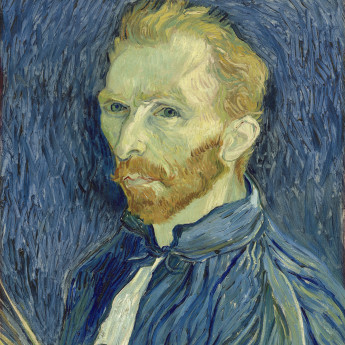
From Self-Portraits to Selfies: The Evolution of Self-Expression in Art
Explore the evolution of self-portraits to selfies—from Rembrandt to Instagram—revealing how art and identity intertwine across centuries. Read More

What is contemporary art?
Contemporary art refers to avant-garde or innovative art created in the recent past or present day. The exact starting point of contemporary art varies depending on the institution, often tied to the founding year of museums or galleries that showcase the style. Contemporary art is characterized by its focus on current ideas, diverse media, and the exploration of new concepts and techniques.