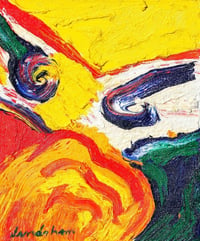
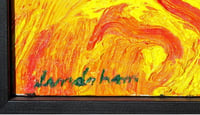
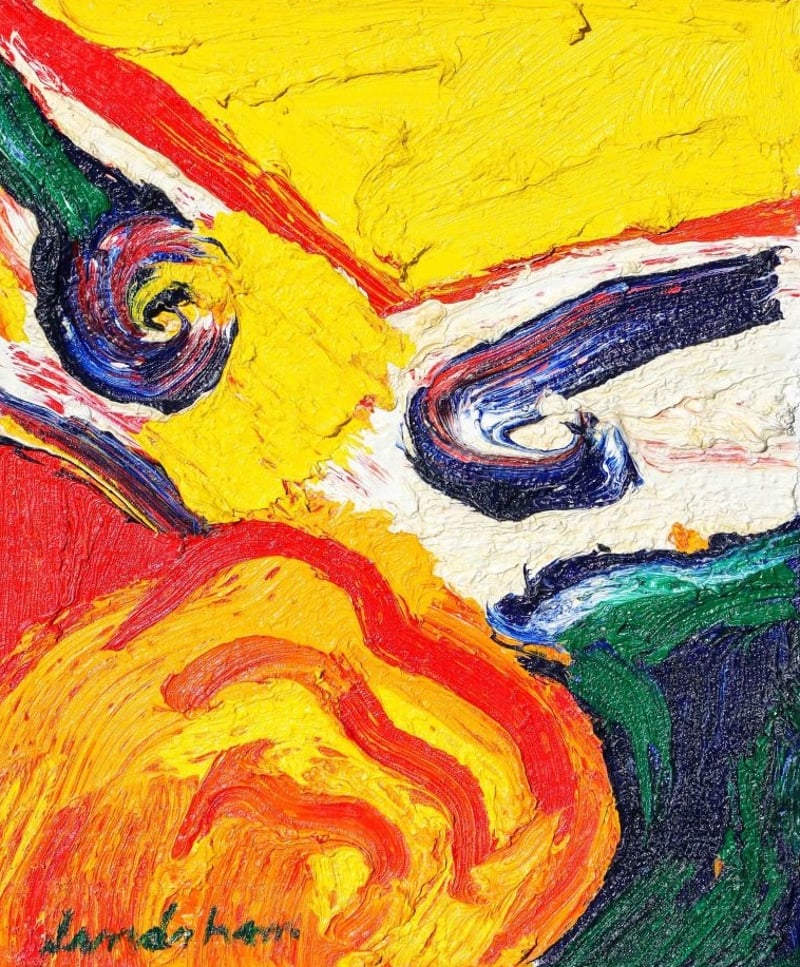
Signed lower left. Estate stamp and titled on the reverse.
Certificate of authenticity from the Bengt Lindström Foundation.
A powerful, mask-like visage confronts the viewer from a field of thickly applied acrylic, its features rendered in Lindström's signature vocabulary of bold contours, saturated primary colours, and raw gestural energy. The Swedish-born, Paris-based artist — deeply connected to the CoBrA legacy through his studies with Fernand Léger — channels Nordic myth and primal human expression into a painting of hypnotic frontal intensity. The title L'introspection suggests a gaze turned inward, yet the face's commanding presence makes it impossible to look away. With an estate stamp on the reverse and a certificate from the Bengt Lindström Foundation, this acrylic on canvas is fully authenticated and represents the artist's mature expressive power.
Artwork Copyright © Bengt LindstromBengt Lindström (Sweden, 1925–2008) was a painter and sculptor celebrated for his bold, vibrant use of color and expressive, distorted faces. Influenced by Nordic mythology and Sámi culture, his dynamic works bridged modern expressionism and folkloric storytelling, cementing his legacy in 20th-century art.
Artwork Copyright © Bengt LindstromL’introspection, Unknown
Form
Medium
Size
- Inches
- Centimeters
Edition
Price
- USD
- EUR
- GBP
- CHF
- Authenticity Guaranteed
- Insured Shipping
- Online Since 2005
●Inventory 16855
●Signed
●Comes with gallery invoice and certificate
●Sell Us a Similar Artwork. Learn more.
Signed lower left. Estate stamp and titled on the reverse.
Certificate of authenticity from the Bengt Lindström Foundation.
A powerful, mask-like visage confronts the viewer from a field of thickly applied acrylic, its features rendered in Lindström's signature vocabulary of bold contours, saturated primary colours, and raw gestural energy. The Swedish-born, Paris-based artist — deeply connected to the CoBrA legacy through his studies with Fernand Léger — channels Nordic myth and primal human expression into a painting of hypnotic frontal intensity. The title L'introspection suggests a gaze turned inward, yet the face's commanding presence makes it impossible to look away. With an estate stamp on the reverse and a certificate from the Bengt Lindström Foundation, this acrylic on canvas is fully authenticated and represents the artist's mature expressive power.
Artwork Copyright © Bengt LindstromBengt Lindström (Sweden, 1925–2008) was a painter and sculptor celebrated for his bold, vibrant use of color and expressive, distorted faces. Influenced by Nordic mythology and Sámi culture, his dynamic works bridged modern expressionism and folkloric storytelling, cementing his legacy in 20th-century art.
Artwork Copyright © Bengt Lindstrom- Recently Added
- Price (Low-High)
- Price (High-Low)
- Year (Low-High)
- Year (High-Low)

Bengt Lindstrom
L’introspection, Unknown
Painting
Acrylic on canvas
EUR 8,500

Bengt Lindstrom
Komposition, 1976
Limited Edition Print
Lithograph
USD 750

Bengt Lindstrom
L'Attente
Painting
Acrylic on paper
EUR 9,500
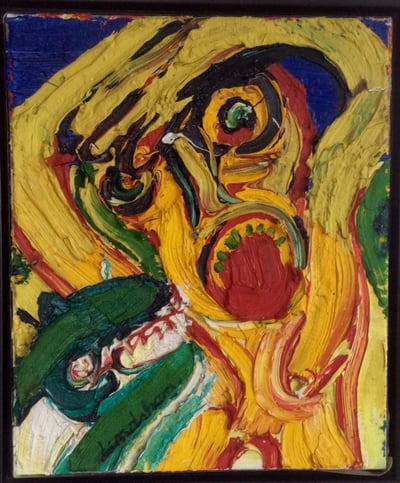
Bengt Lindstrom
Untitled (Yellow Swirl ), 1960
Painting
Oil on canvas
Currently Not Available
Related Artists
Related Articles
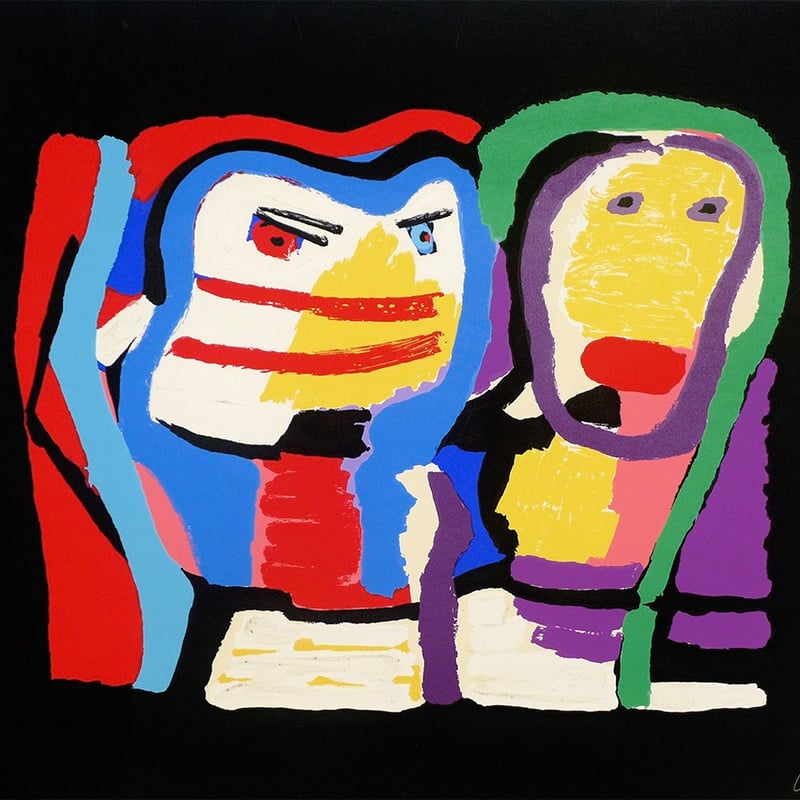
Art Movements - November 21, 2022
Botch, Blotch and Splotch: The Exuberant Maelstrom of the Cobra Art Movement.
Explore the CoBrA movement’s bold creativity, blending raw expression and experimentation. Discover its impact on post-war art and avant-garde traditions.Read More
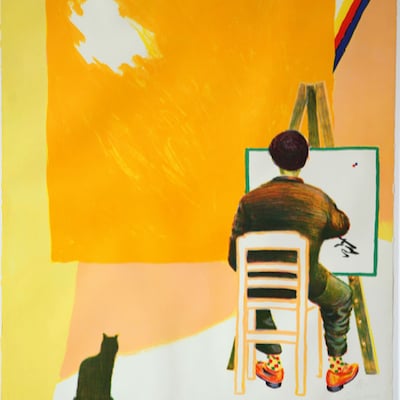
Artwork by Roger Raveel
What is new figuration?
Neo-Figurative Art is a collective term that refers to the revival of figurative art in America and Europe during the 1960s, following a period dominated by abstraction. Michel Ragon, a French art critic, argued that this resurgence of figuration occurred during a critical time of social and political upheaval in both regions.

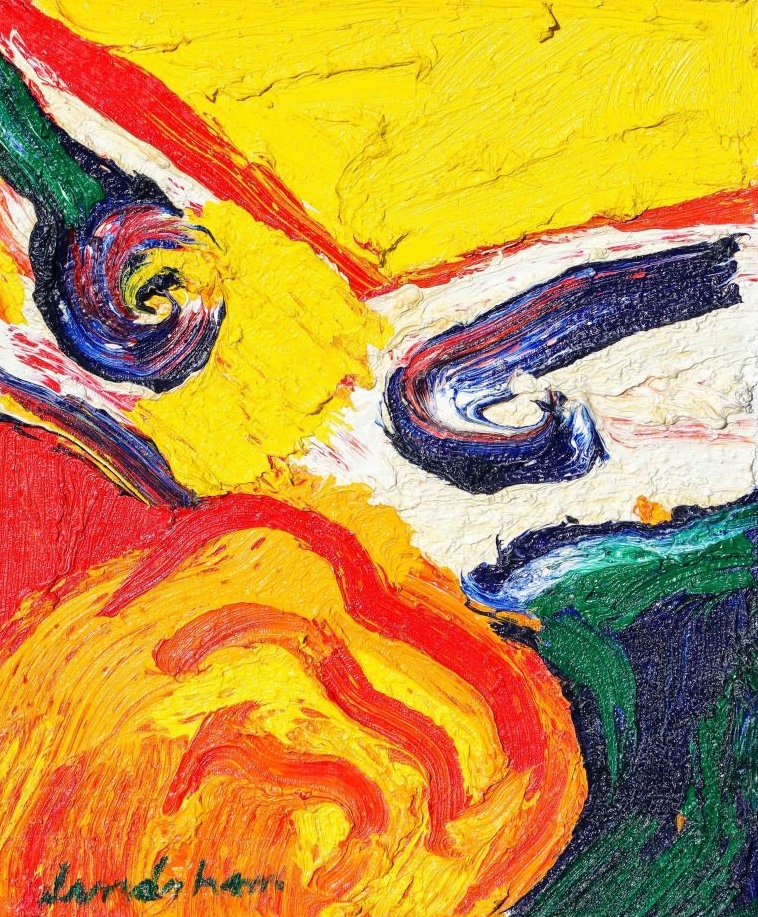
Bengt Lindstrom
L’introspection, Unknown
55 x 46 cm


