
From the rare limited edition of 200 - Original lithograph in colors on paper - Hand signed and numbered by Lindstrom
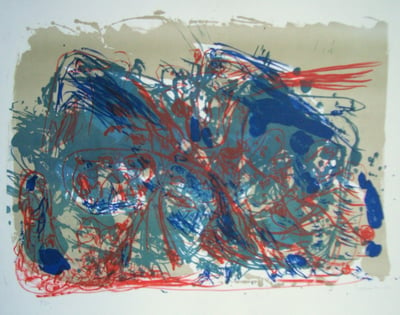
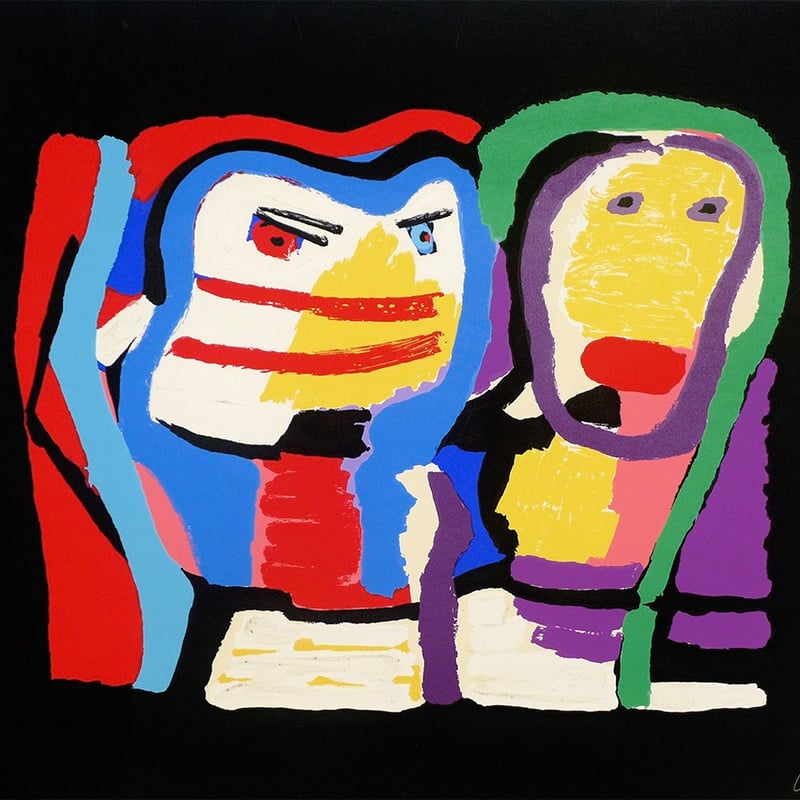
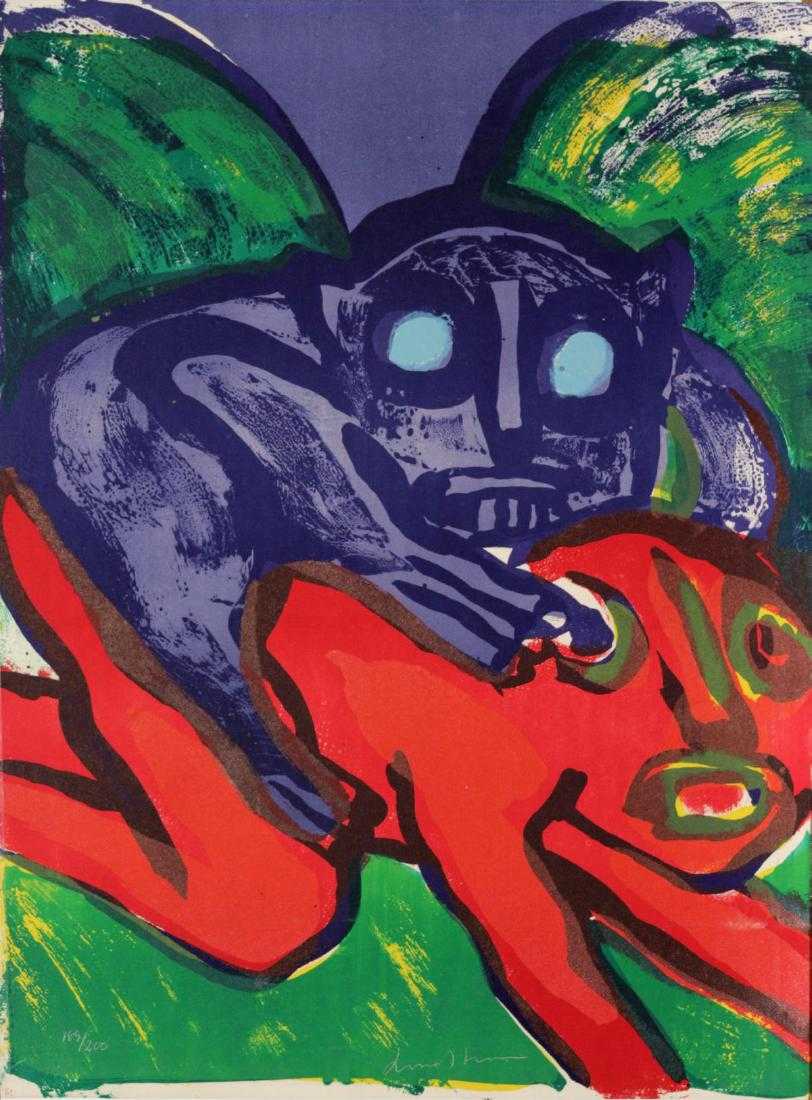
Komposition by Bengt Lindström is a vivid lithograph from 1976, showcasing the artist's bold, expressive use of color and form. In this composition, two abstract figures—one in deep blue and the other in bright red—are entangled in an intense, almost confrontational interaction. The figure in blue, with glowing eyes and primitive, mask-like features, appears to dominate the red figure beneath it, creating a sense of power struggle or tension. Surrounding shades of green and purple add depth, enhancing the dramatic intensity of the scene. Lindström’s characteristic, almost primal style imbues the artwork with an emotional rawness, inviting viewers to interpret themes of conflict, dominance, and vulnerability.
Artwork Copyright © Bengt LindstromBengt Lindström (Sweden, 1925–2008) was a painter and sculptor celebrated for his bold, vibrant use of color and expressive, distorted faces. Influenced by Nordic mythology and Sámi culture, his dynamic works bridged modern expressionism and folkloric storytelling, cementing his legacy in 20th-century art.
Artwork Copyright © Bengt LindstromKomposition, 1976
Form
Medium
Size
- Inches
- Centimeters
Edition
Price
- USD
- EUR
- GBP
- CHF
- Authenticity Guaranteed
- Insured Shipping
- Online Since 2005
●Inventory 6343
●Signed
●Comes with gallery invoice and certificate
●Sell Us a Similar Artwork. Learn more.
From the rare limited edition of 200 - Original lithograph in colors on paper - Hand signed and numbered by Lindstrom
Komposition by Bengt Lindström is a vivid lithograph from 1976, showcasing the artist's bold, expressive use of color and form. In this composition, two abstract figures—one in deep blue and the other in bright red—are entangled in an intense, almost confrontational interaction. The figure in blue, with glowing eyes and primitive, mask-like features, appears to dominate the red figure beneath it, creating a sense of power struggle or tension. Surrounding shades of green and purple add depth, enhancing the dramatic intensity of the scene. Lindström’s characteristic, almost primal style imbues the artwork with an emotional rawness, inviting viewers to interpret themes of conflict, dominance, and vulnerability.
Artwork Copyright © Bengt LindstromBengt Lindström (Sweden, 1925–2008) was a painter and sculptor celebrated for his bold, vibrant use of color and expressive, distorted faces. Influenced by Nordic mythology and Sámi culture, his dynamic works bridged modern expressionism and folkloric storytelling, cementing his legacy in 20th-century art.
Artwork Copyright © Bengt Lindstrom- Recently Added
- Price (Low-High)
- Price (High-Low)
- Year (Low-High)
- Year (High-Low)

Bengt Lindstrom
L’introspection, Unknown
Painting
Acrylic on canvas
EUR 8,500

Bengt Lindstrom
Komposition, 1976
Limited Edition Print
Lithograph
USD 750

Bengt Lindstrom
L'Attente
Painting
Acrylic on paper
EUR 9,500
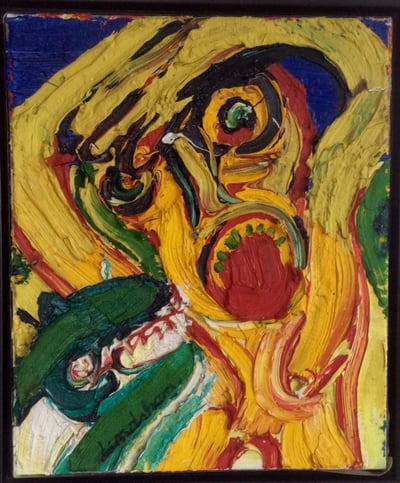
Bengt Lindstrom
Untitled (Yellow Swirl ), 1960
Painting
Oil on canvas
Currently Not Available
Related Artists
Related Articles
Art Movements - November 21, 2022
Botch, Blotch and Splotch: The Exuberant Maelstrom of the Cobra Art Movement.
Explore the CoBrA movement’s bold creativity, blending raw expression and experimentation. Discover its impact on post-war art and avant-garde traditions.Read More
Popular, News, Artists, Collecting - August 12, 2026
In Minor Keys: Finding Intimacy and Identity at the 61st Venice Biennale — and in Your Collection
Explore how Koyo Kouoh’s 61st Venice Biennale vision, In Minor Keys, is shifting contemporary collecting toward quiet introspection, memory, and personal identity.Read More
Artwork by Roger Raveel
What is new figuration?
Neo-Figurative Art is a collective term that refers to the revival of figurative art in America and Europe during the 1960s, following a period dominated by abstraction. Michel Ragon, a French art critic, argued that this resurgence of figuration occurred during a critical time of social and political upheaval in both regions.
Bengt Lindstrom
Komposition, 1976
54.6 x 71.4 cm


