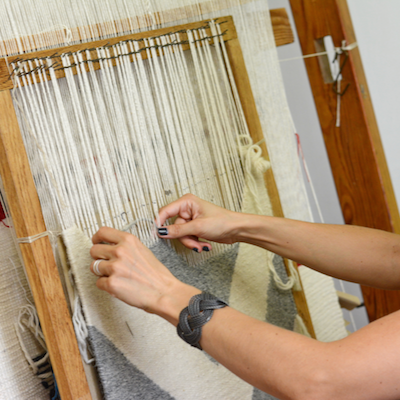
What is Tapestry?
Tapestry is a heavy, handwoven textile featuring intricate designs or images woven directly into the fabric. Created by skilled weavers using materials like wool, linen, cotton, silk, and sometimes silver and gold threads, tapestries have historically served as art pieces, decorations, insulation, and symbols of authority.
Show All
- Show All
- Established
- Discoveries
A,B,C
ARTWORKS RELATED TO TAPESTRY

Rufino Tamayo
Untitled (Textile), 1960s
Tapestry
Tapestry
Inquire For Price

Sonia Delaunay
Labyrinthe, 1929 - 1980
Tapestry
Tapestry
EUR 12,000

Nicolas Party
Untitled (Artist's Blanket), 2017
Tapestry
Tapestry
USD 2,500

John Armleder
Gold Fish, 2016
Tapestry
Tapestry
EUR 1,400

John Armleder
Silver Fish, 2016
Tapestry
Tapestry
EUR 1,400

Andy Warhol
Silver Marilyn, 1990s
Tapestry
Tapestry
EUR 18,000

Andy Warhol
Flowers, 1968
Tapestry
Tapestry
EUR 25,000

Grayson Perry
Comfort Blanket, 2014-2023
Tapestry
Tapestry
GBP 4,500

KAWS
Confined, 2022
Tapestry
Tapestry
GBP 3,950

Sonia Delaunay
Carrés Magique, c. 1980
Tapestry
Tapestry
EUR 10,900

Eduardo Chillida
Untitled (tapestry), 1965
Tapestry
Tapestry
Inquire For Price

Man Ray
Nocturnal, c.1960
Tapestry
Tapestry
EUR 1,550

Josef Felix Müller
Birkenwald IV, 2006
Tapestry
Tapestry
EUR 2,700

Thomas Lange
Prometheus, 1986
Tapestry
Tapestry
EUR 2,700

Sergey Bratkov
Magic Carpet (small), 2006
Tapestry
Tapestry
EUR 2,700

Peter Blake
I Love You, 1983
Tapestry
Tapestry
Currently Not Available
Related Articles

Collecting - March 26, 2023
Are You Buying the Real Thing? Authenticity, Provenance and the Art Dealer's Checklist
Learn how to verify the authenticity of art with expert tips on provenance, certificates, and dealer checklists. Protect your investment with informed buying. Read More


Photography is the process of creating an image on light sensitive materials. The image is produced by using a camera, which has a lens that focuses on light either reflected or emitted from an object. These visible wavelengths are used to reproduce the image seen.
Earth art, also known as Land Art, emerged in the 1960s and 70s as part of the conceptual art movement. It involves creating artworks by sculpting the land or constructing structures in the landscape using natural materials like earth, rocks, or twigs. These works are often large-scale and emphasize the relationship between art and nature.