Netherlands
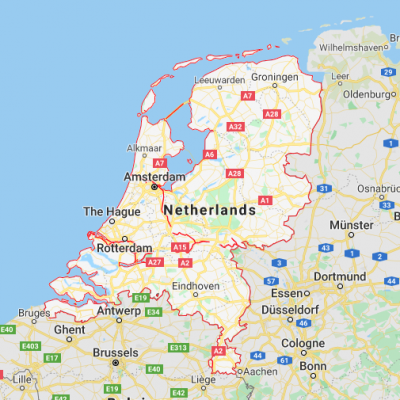
The contemporary art scene in the Netherlands is renowned for its innovative spirit and diverse creative expressions. Key institutions like the Stedelijk Museum in Amsterdam and Museum Boijmans Van Beuningen in Rotterdam showcase internationally acclaimed artists and foster emerging talent. Prominent figures such as Marlene Dumas, known for her thought-provoking paintings, and Rineke Dijkstra, celebrated for her intimate portraiture, underscore the country's contribution to contemporary art. Events like the annual Amsterdam Art Weekend further highlight the Netherlands' dynamic art scene. Discover Dutch contemporary art on Composition Gallery's website.
Show All
- Show All
- Established
- Discoveries
Show All
ARTWORKS RELATED TO NETHERLANDS

Karel Appel
Untitled (Colorful Figure), 1998
Drawing / Watercolor
Pastel
EUR 7,500

Guillaume Corneille
Composition abstraite, 1952
Drawing / Watercolor
Mixed Media
EUR 11,500

Bram Van Velde
MP 166, 1975
Limited Edition Print
Lithograph
EUR 2,350

Bram Van Velde
MP 167, 1975
Limited Edition Print
Lithograph
EUR 2,350

Guillaume Corneille
Chats Champêtres, 2008
Limited Edition Print
Engraving
EUR 1,500

Guillaume Corneille
Plat, 1999
Ceramics
Plate
EUR 3,500

Guillaume Corneille
Femme rose aux cheveux bleus, 1999
Limited Edition Print
Mixed Media
EUR 1,500

Guillaume Corneille
La femme et l’oiseau rouge, 1995
Limited Edition Print
Lithograph
EUR 1,500
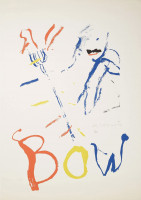
Willem de Kooning
Rainbow: Thelonious Monk Devil at the Keyboard, 1972/76
Limited Edition Print
Lithograph
Currently Not Available
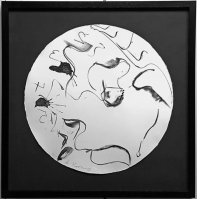
Willem de Kooning
Untitled from Self Portrait in a Convex Mirror, 1984
Limited Edition Print
Lithograph
Inquire For Price

Karel Appel
A Group of 3 Screenprints, 1975 / 1978
Limited Edition Print
Screen-print
USD 2,700

Guillaume Corneille
Däumelinchen, 1999
Limited Edition Print
Lithograph
EUR 980

Karel Appel
Two Figures, c. 1980
Limited Edition Print
Lithograph
USD 1,000

Karel Appel
Composition , 1969
Limited Edition Print
Lithograph
USD 950

Karel Appel
Serie Personages, 1969
Limited Edition Print
Lithograph
USD 780

Karel Appel
Cats, 1979
Limited Edition Print
Lithograph
Inquire For Price
Related Articles
Art Movements - November 21, 2022
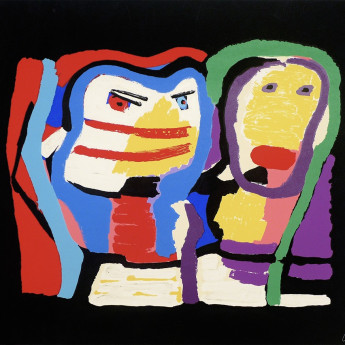
Botch, Blotch and Splotch: The Exuberant Maelstrom of the Cobra Art Movement.
Explore the CoBrA movement’s bold creativity, blending raw expression and experimentation. Discover its impact on post-war art and avant-garde traditions. Read More


Also known as Dadaism, Dada was a literary and artistic movement that began in 1916 in Zurich, Switzerland. It emerged as a rejection of rationalism and nationalism, which were seen as contributing factors to World War I. The movement had political undertones and was strongly anti-war. Dada activities included demonstrations, gatherings, and the publication of literary and art journals that explored cultural and political topics.
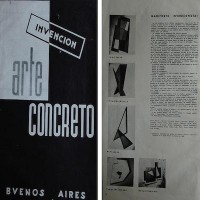
The Manifesto Invencionista was published in 1946, marking the beginning of the concrete art movement in Buenos Aires, Argentina. Written by artist Tomás Maldonado and published by the Asociación Arte Concreto-Invención, the manifesto announced the principles of Concrete Art. Concrete art is purely abstract, with no reference to visual reality, emphasizing geometric forms and the materiality of the artwork itself.