Details
Artist
Styles
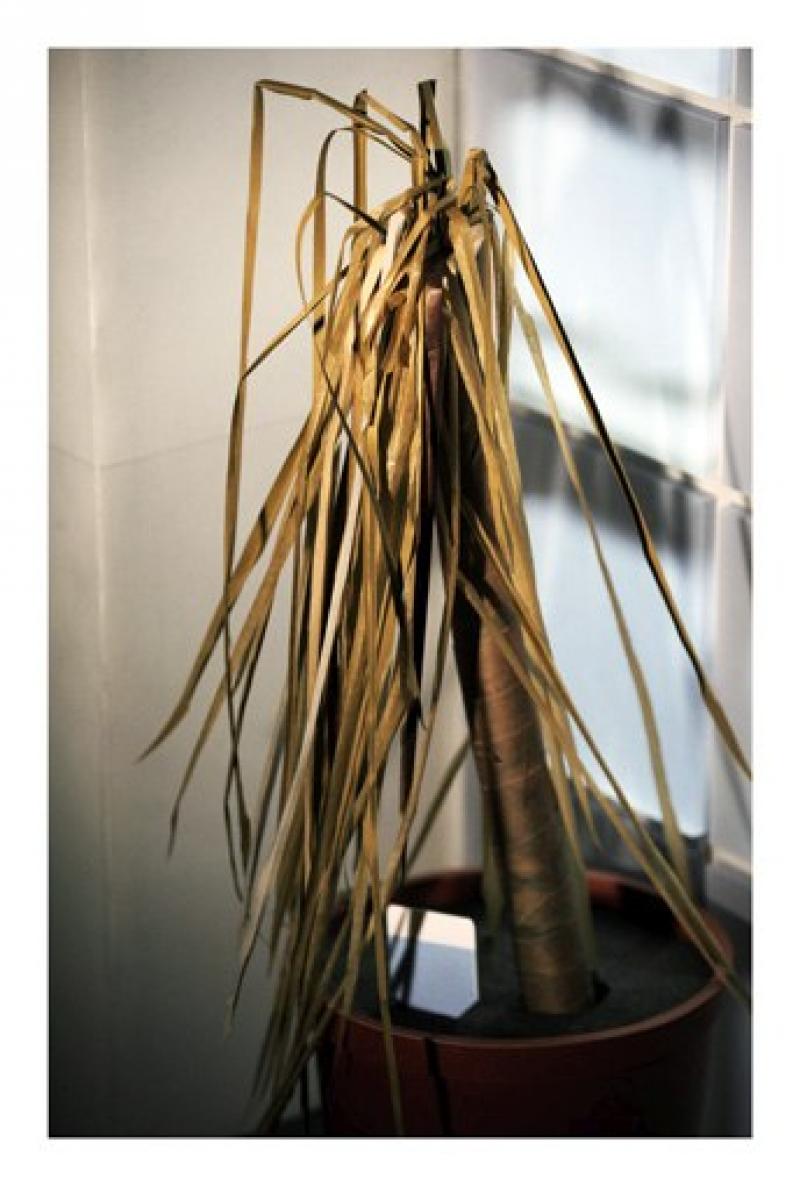
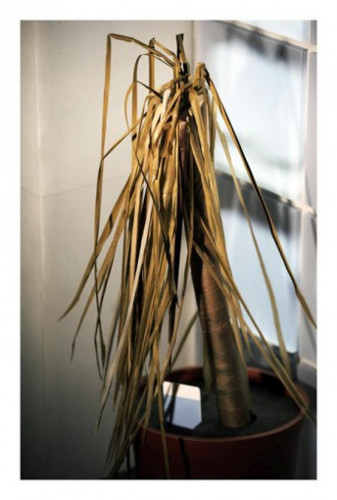
Screen print accompanied by a Book by Rudolf Carnap: "Scheinprobleme in der Philosophie. Das Fremdpsychische und der Realismusstreit" (Pseudo-Problems in Philosophy. The External World and the Debate on Realism); Release date: March 2006 Languages: German. Format: 24.3 × 16.3 cm. Edition of 200, signed and numbered. Ex Libris #9 (2006) by Thomas Demand is a screenprint accompanied by a reprint of Rudolf Carnap’s philosophical text Scheinprobleme in der Philosophie. The image depicts a desiccated, brown-leafed potted plant in stark lighting, evoking a sense of quiet decay and formal stillness. Characteristically, Demand photographs hyperreal paper constructions, and here, the artificiality of the object contrasts with the philosophical depth of Carnap’s treatise on pseudo-problems and realism. Part of the celebrated Ex Libris series, this edition highlights the personal intellectual influences on contemporary artists. The book and print are presented together in a signed, numbered edition of 200, giving new context and visibility to historical texts through an artist’s conceptual lens.
Ex Libris #9, 2006
form
Medium
Size
24.3 x 16.3 cm
- Inches
- Centimeters
Edition
Price
- USD
- EUR
- GBP
Details
Artist
Styles
Screen print accompanied by a Book by Rudolf Carnap: "Scheinprobleme in der Philosophie. Das Fremdpsychische und der Realismusstreit" (Pseudo-Problems in Philosophy. The External World and the Debate on Realism); Release date: March 2006 Languages: German. Format: 24.3 × 16.3 cm. Edition of 200, signed and numbered. Ex Libris #9 (2006) by Thomas Demand is a screenprint accompanied by a reprint of Rudolf Carnap’s philosophical text Scheinprobleme in der Philosophie. The image depicts a desiccated, brown-leafed potted plant in stark lighting, evoking a sense of quiet decay and formal stillness. Characteristically, Demand photographs hyperreal paper constructions, and here, the artificiality of the object contrasts with the philosophical depth of Carnap’s treatise on pseudo-problems and realism. Part of the celebrated Ex Libris series, this edition highlights the personal intellectual influences on contemporary artists. The book and print are presented together in a signed, numbered edition of 200, giving new context and visibility to historical texts through an artist’s conceptual lens.
- Recently Added
- Price (low-high )
- Price (high-low )
- Year (low-high )
- Year (high-low )

Thomas Demand
Texte Zur Kunst, 2010
Limited Edition Print
Offset Print
EUR 780
Thomas Demand
Ex Libris #9, 2006
Limited Edition Print
Screen-print
EUR 2,400

Thomas Demand
Bullion, 2003
Limited Edition Print
Lambda Print
EUR 4,250
Related Artists


Related Articles

Art Movements - May 05, 2022
The Dusseldorf School and the birth of modern photography
Discover the Düsseldorf School of Photography, its roots in objectivity, and its legacy in modern art. Explore works by Gursky, Höfer, and the Bechers. Read More

What is Process Art?
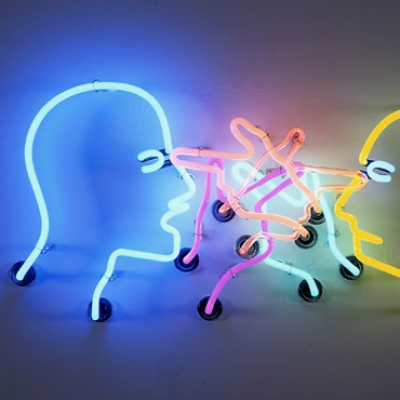
Process Art is an artistic movement and creative approach where the focus is on the act of creation rather than the final product. The term process in this context refers to the various stages of art-making, including gathering, sorting, associating, and organizing materials and actions. This movement emphasizes the artistic journey and the human expression involved in creating art, rather than the finished piece itself. Process Art is driven by inherent motivation, intentionality, and the rationale behind the actions, viewing the creative process as the true artwork.