
Details
Artist
Styles
Archival pigment print - Hand-signed in pencil, and numbered // Ross Bleckner's Five Tulips (2019) is a limited edition archival pigment print, measuring 76 x 76 cm. This piece, hand-signed and numbered by the artist, showcases Bleckner’s characteristic ethereal style, emphasizing blurred forms and soft transitions between colors. The composition features an abstract portrayal of five tulips, rendered in warm hues of red, orange, and pink, creating a sense of movement and flow. The subtle gradients and blurred outlines evoke a dreamlike atmosphere, encouraging viewers to immerse themselves in the transient beauty of nature. The muted, almost impressionistic style highlights Bleckner's exploration of memory and perception within his floral subject matter.
Details
Artist
Styles
Archival pigment print - Hand-signed in pencil, and numbered // Ross Bleckner's Five Tulips (2019) is a limited edition archival pigment print, measuring 76 x 76 cm. This piece, hand-signed and numbered by the artist, showcases Bleckner’s characteristic ethereal style, emphasizing blurred forms and soft transitions between colors. The composition features an abstract portrayal of five tulips, rendered in warm hues of red, orange, and pink, creating a sense of movement and flow. The subtle gradients and blurred outlines evoke a dreamlike atmosphere, encouraging viewers to immerse themselves in the transient beauty of nature. The muted, almost impressionistic style highlights Bleckner's exploration of memory and perception within his floral subject matter.
- Recently Added
- Price (low-high )
- Price (high-low )
- Year (low-high )
- Year (high-low )
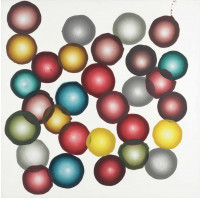
Ross Bleckner
Untitled, 2001
Painting
Mixed Media
Inquire For Price

Ross Bleckner
PS III, 1997
Limited Edition Print
Screen-print
USD 3,575

Ross Bleckner
PS I, 1997
Limited Edition Print
Screen-print
USD 3,575

Ross Bleckner
September 23rd Bis (variant 4), 2016
Limited Edition Print
Lithograph
EUR 1,800

Ross Bleckner
September 23rd Bis (variant 5), 2016
Limited Edition Print
Lithograph
EUR 1,800

Ross Bleckner
September 23rd Bis (variant 6), 2016
Limited Edition Print
Lithograph
EUR 1,800

Ross Bleckner
September 23rd Bis (variant 3), 2016
Limited Edition Print
Lithograph
EUR 1,800

Ross Bleckner
September 23rd, 2016
Limited Edition Print
Lithograph
EUR 1,800

Ross Bleckner
November 27th, 2016
Limited Edition Print
Lithograph
EUR 1,800

Ross Bleckner
November 29th, 2016
Limited Edition Print
Lithograph
EUR 1,800

Ross Bleckner
Dream And Do I, 1997
Limited Edition Print
Screen-print
USD 3,400

Ross Bleckner
Dream And Do II, 1997
Limited Edition Print
Screen-print
USD 3,400

Ross Bleckner
September 23rd Bis (variant 1), 2016
Limited Edition Print
Lithograph
Currently Not Available
Related Artists


Related Articles

Popular, Artists, Art Movements - February 29, 2024
The World's 10 Most Influential Street Artists: Urban Canvases
Explore the world’s most influential street artists who transformed urban landscapes. Discover their iconic works and lasting impact on contemporary art. Read More

Who are the American Abstract Artists (AAA) ?
American Abstract Artists (AAA) is an organization founded in New York City in 1936 to promote abstract art and its appreciation in the United States. At a time when abstract art faced strong opposition from critics, the AAA provided crucial exhibition opportunities for abstract artists, helping to foster the growth and acceptance of the movement.