Details
Artist
Styles
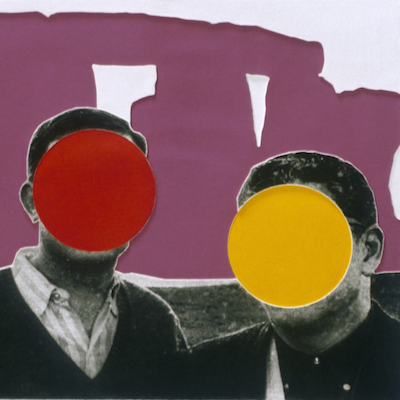
Letterpress printing dipthych on Japanese paper, cut-out, collage on laid paper, each sheet hand signed, numbered and dated by the artist. // Cutting Out CONYT 3 by Lorraine O'Grady is a thought-provoking diptych collage created between 1977 and 2017. This limited edition piece (12+1) uses letterpress text on Japanese paper, with cut-out words arranged across two panels. The phrases “DRACULA IS” and “ready when you are” juxtapose gothic intrigue with a sense of anticipation or readiness. The use of bold typography and the careful placement of text against the simplicity of white space draw the viewer's focus to the words, creating an open-ended narrative that invites various interpretations. O'Grady’s work often explores identity and language, and this collage exemplifies her ability to blend humor, mystery, and cultural critique in a minimalist format.
Cutting Out CONYT 3, 1977 - 2017
form
Medium
Size
106 x 76 cm
- Inches
- Centimeters
Edition
Price
- USD
- EUR
- GBP
Details
Artist
Styles
Letterpress printing dipthych on Japanese paper, cut-out, collage on laid paper, each sheet hand signed, numbered and dated by the artist. // Cutting Out CONYT 3 by Lorraine O'Grady is a thought-provoking diptych collage created between 1977 and 2017. This limited edition piece (12+1) uses letterpress text on Japanese paper, with cut-out words arranged across two panels. The phrases “DRACULA IS” and “ready when you are” juxtapose gothic intrigue with a sense of anticipation or readiness. The use of bold typography and the careful placement of text against the simplicity of white space draw the viewer's focus to the words, creating an open-ended narrative that invites various interpretations. O'Grady’s work often explores identity and language, and this collage exemplifies her ability to blend humor, mystery, and cultural critique in a minimalist format.
- Recently Added
- Price (low-high )
- Price (high-low )
- Year (low-high )
- Year (high-low )

Lorraine O'Grady
Cutting Out CONYT 7, 1977 - 2017
Limited Edition Print
Mixed Media
USD 20,000

Lorraine O'Grady
Cutting Out CONYT 6, 1977 - 2017
Limited Edition Print
Mixed Media
USD 20,000

Lorraine O'Grady
Cutting Out CONYT 5, 1977 - 2017
Limited Edition Print
Mixed Media
USD 20,000

Lorraine O'Grady
Cutting Out CONYT 4, 1977 - 2017
Limited Edition Print
Mixed Media
USD 20,000

Lorraine O'Grady
Cutting Out CONYT 3, 1977 - 2017
Limited Edition Print
Mixed Media
USD 20,000

Lorraine O'Grady
Cutting Out CONYT 2, 1977 - 2017
Limited Edition Print
Mixed Media
USD 20,000

Lorraine O'Grady
Cutting Out CONYT 1, 1977 - 2017
Limited Edition Print
Mixed Media
USD 20,000
Related Artists


Related Articles

Artists - April 07, 2025
Julian Opie’s Artistic Universe: From Walking Figures to Dynamic Landscapes
Discover Julian Opie’s iconic art: bold figures, vibrant landscapes, and LED works that turn everyday moments into minimalist masterpieces. Read More

What is conceptual art?
Sometimes referred to as Conceptualism, this is an art form where the idea(s) or concept(s) behind the work take precedence over material concerns and traditional aesthetics. Many conceptual artworks can be created by anyone simply by following written instructions. The concept or idea is the most essential aspect of the artwork.