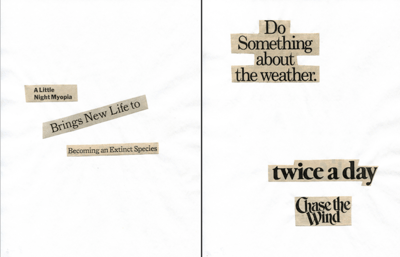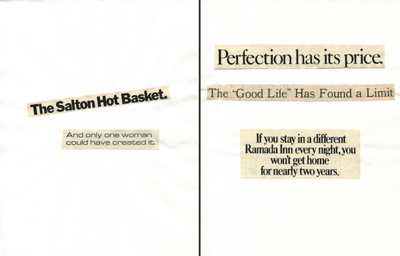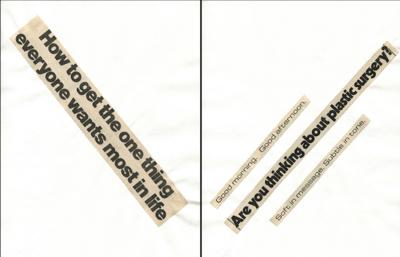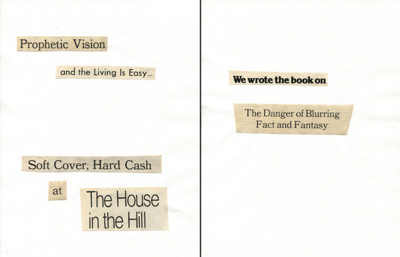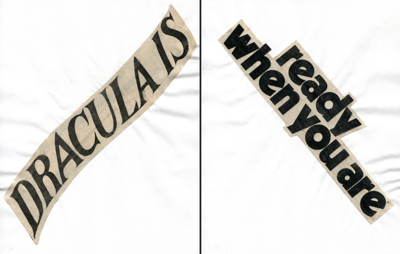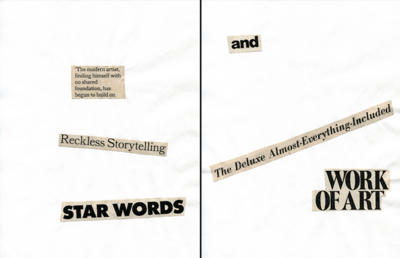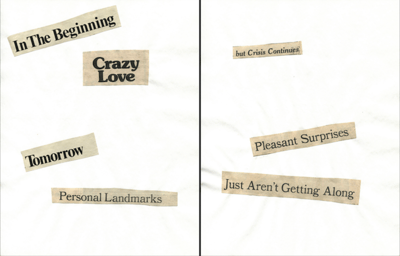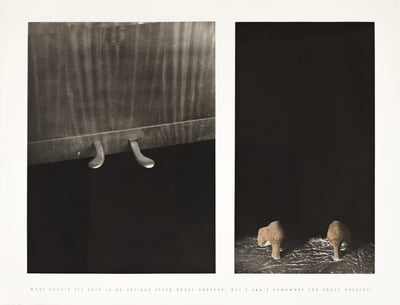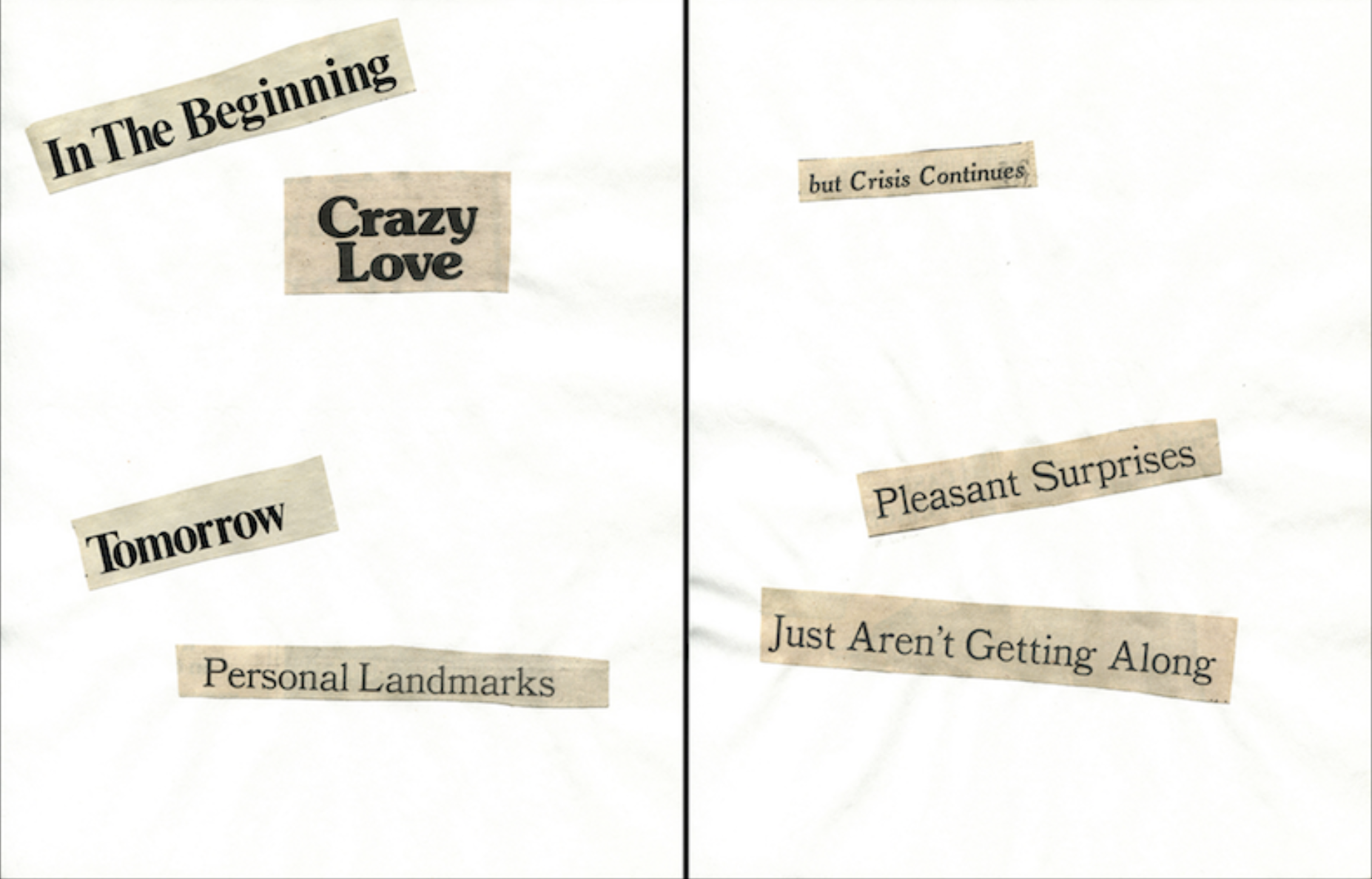
Letterpress printing dipthych on Japanese paper, cut-out, collage on laid paper, hand signed, numbered and dated by the artist.
Cutting Out CONYT 1 by Lorraine O'Grady is a mixed-media diptych that spans decades from 1977 to 2017. This limited edition piece (12 + 1 AP) features hand-cut text fragments from newsprint, arranged on delicate Japanese paper and mounted on laid paper. The phrases—such as In The Beginning, Crazy Love, and but Crisis Continues—create a narrative collage that reflects the emotional highs and lows of human experience, from hope and intimacy to tension and disconnection. The minimalistic arrangement and simplicity of the text invite viewers to form their own interpretations, making this work a contemplative exploration of language and relationships.
Lorraine O'Grady (United States, 1934) is a conceptual and performance artist whose work examines Black female identity and cultural hybridity. Notable for her performance persona Mlle Bourgeoise Noire, she critiques racial and gender exclusion in the art world. O'Grady's influential pieces have been featured in major exhibitions, including a 2021 retrospective at the Brooklyn Museum.
Mixed MediaMixed media refers to artwork that incorporates more than one medium within a single piece. Unlike multimedia art, which combines distinct forms of visual art and often includes elements like sound, video, or digital media, mixed media focuses on combining traditional art materials, such as paint, ink, and collage. Mixed media art allows artists to achieve a wide range of effects and textures by layering and blending different materials.
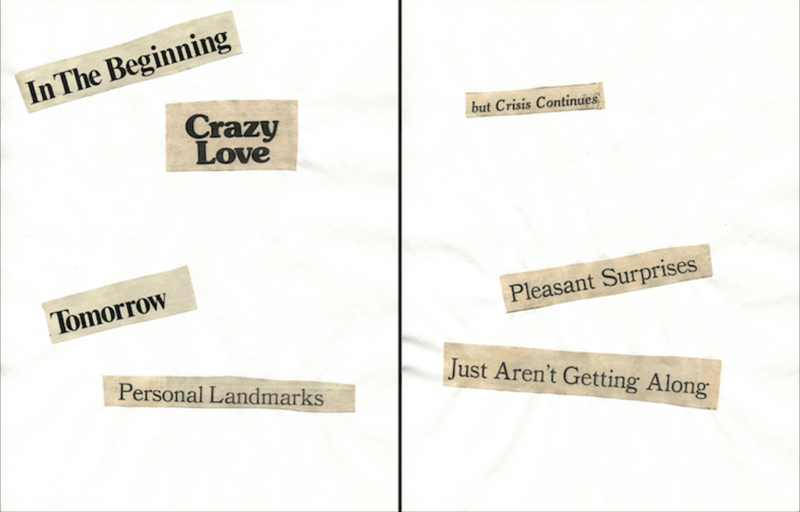
Letterpress printing dipthych on Japanese paper, cut-out, collage on laid paper, hand signed, numbered and dated by the artist.
Cutting Out CONYT 1 by Lorraine O'Grady is a mixed-media diptych that spans decades from 1977 to 2017. This limited edition piece (12 + 1 AP) features hand-cut text fragments from newsprint, arranged on delicate Japanese paper and mounted on laid paper. The phrases—such as In The Beginning, Crazy Love, and but Crisis Continues—create a narrative collage that reflects the emotional highs and lows of human experience, from hope and intimacy to tension and disconnection. The minimalistic arrangement and simplicity of the text invite viewers to form their own interpretations, making this work a contemplative exploration of language and relationships.
Lorraine O'Grady (United States, 1934) is a conceptual and performance artist whose work examines Black female identity and cultural hybridity. Notable for her performance persona Mlle Bourgeoise Noire, she critiques racial and gender exclusion in the art world. O'Grady's influential pieces have been featured in major exhibitions, including a 2021 retrospective at the Brooklyn Museum.
To name ourselves rather than be named we must first see ourselves.
- Lorraine O'Grady
Lorraine O'Grady (b. 1934 USA) is an influential American conceptual artist and critic known for her pioneering work that addresses issues of race, gender, and identity. O'Grady's practice spans performance, installation, and photography, and she is best known for her performances and projects that challenge the exclusion of Black women from the mainstream art world. One of her most iconic works, Mlle Bourgeoise Noire (1980–83), involved O'Grady assuming the persona of a beauty queen, dressed in a gown made of 180 pairs of white gloves, to critique racism and sexism within the art world. Her performances often engage directly with audiences, blending activism with art to provoke dialogue and reflection on societal norms and structures. O'Grady’s work is deeply rooted in her experiences as a Black woman, and her art continues to inspire discussions about the intersections of race, gender, and power in contemporary society. She has exhibited widely and remains a significant figure in the discourse on identity and representation in art. (Artist website)
Lettrism is an art form that uses letters, words, and symbols to create artwork. The movement was established in Paris in the 1940s and later gained popularity in the 1950s in America. Lettrisme is the French spelling of the movement's name, derived from the French word for letter.