Details
Artist
Styles
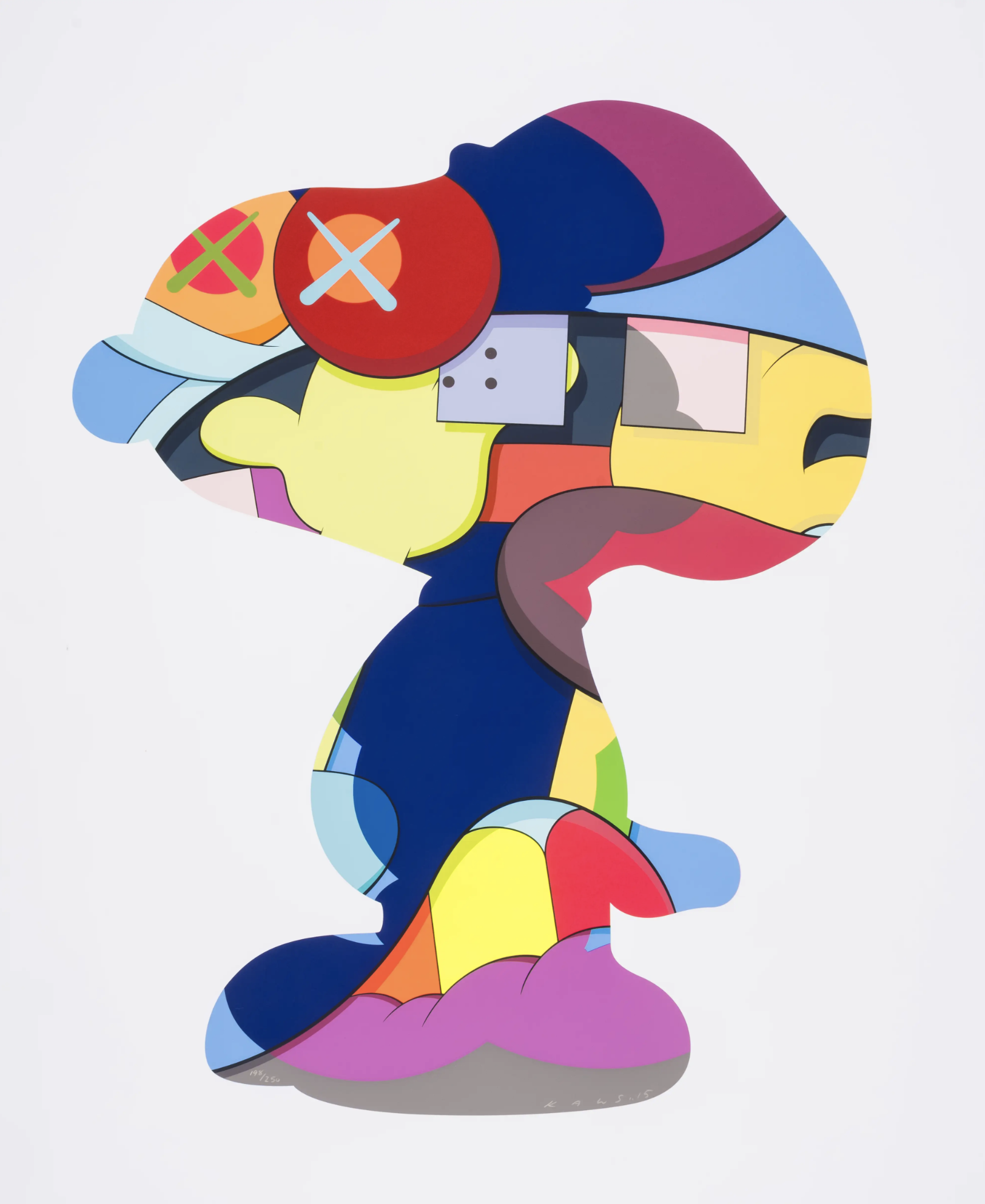
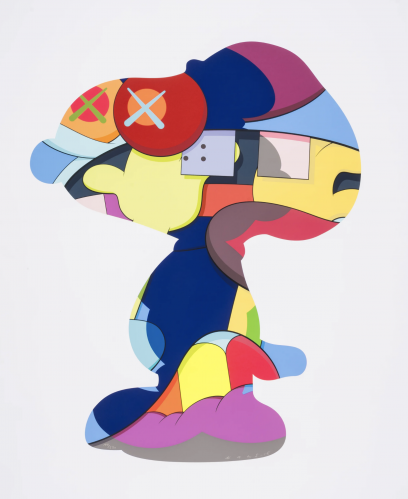
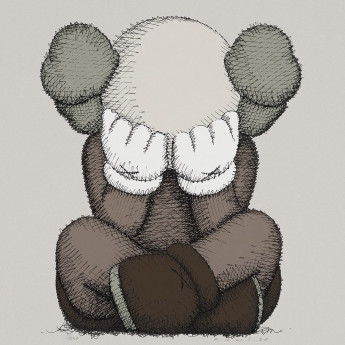
Screenprint in colours, on Saunders Waterford wove paper. Signed and dated in pencil, numbered from the edition of 250. Published by Pace Prints, New York. No One’s Home (2015) by KAWS is a bold, vibrant screenprint that reimagines the silhouette of Snoopy, rendered in flat planes of color and intersecting abstract shapes. The iconic "X" eyes and cartoonish forms reference both street art and pop culture, merging nostalgic imagery with contemporary design. KAWS deconstructs familiar figures into patchworks of color and form, challenging the viewer’s recognition while preserving emotional resonance. Printed on Saunders Waterford wove paper in an edition of 250 and published by Pace Prints, this work exemplifies KAWS's ability to blend commercial aesthetics with fine art sensibility.
No One's Home, 2015
form
Medium
Size
91.4 x 76.2 cm
- Inches
- Centimeters
Edition
Price
- USD
- EUR
- GBP
Details
Artist
Styles
Screenprint in colours, on Saunders Waterford wove paper. Signed and dated in pencil, numbered from the edition of 250. Published by Pace Prints, New York. No One’s Home (2015) by KAWS is a bold, vibrant screenprint that reimagines the silhouette of Snoopy, rendered in flat planes of color and intersecting abstract shapes. The iconic "X" eyes and cartoonish forms reference both street art and pop culture, merging nostalgic imagery with contemporary design. KAWS deconstructs familiar figures into patchworks of color and form, challenging the viewer’s recognition while preserving emotional resonance. Printed on Saunders Waterford wove paper in an edition of 250 and published by Pace Prints, this work exemplifies KAWS's ability to blend commercial aesthetics with fine art sensibility.
- Recently Added
- Price (low-high )
- Price (high-low )
- Year (low-high )
- Year (high-low )
KAWS
Stay Steady, 2015
Limited Edition Print
Screen-print
USD 10,750
KAWS
No One's Home, 2015
Limited Edition Print
Screen-print
USD 10,750

KAWS
Blame Game, 2014
Limited Edition Print
Screen-print
GBP 9,000 - 12,000

KAWS
Presenting The Past, 2014
Limited Edition Print
Silkscreen
USD 31,000 - 35,000

KAWS
Dissected Companion (Brown), 2006
Limited Edition Print
Screen-print
USD 30,000 - 40,000

KAWS
You Should Know I Know, 2015
Limited Edition Print
Screen-print
USD 17,750

KAWS
Tension #10, 2019
Limited Edition Print
Serigraph
USD 15,500

KAWS
Tension #1, 2019
Limited Edition Print
Serigraph
USD 15,500

KAWS
What Party - Blue, 2020
Limited Edition Print
Screen-print
USD 25,000 - 30,000

KAWS
The News 2, 2017
Limited Edition Print
Serigraph
USD 11,150

KAWS
Blame Game IX, 2014
Limited Edition Print
Screen-print
USD 16,900

KAWS
Separated, 2021
Limited Edition Print
Lithograph
USD 9,200

KAWS
Untitled IX (Urge), 2020
Limited Edition Print
Silkscreen
USD 7,000 - 10,000

KAWS
Untitled VIII (Urge), 2020
Limited Edition Print
Silkscreen
USD 7,000 - 10,000

KAWS
Untitled III (Urge), 2020
Limited Edition Print
Silkscreen
USD 7,000 - 10,000

KAWS
Holiday Space: 11.5, 2020
Sculpture / Object
Mixed Media
GBP 3,500

KAWS
Passing Through (Mono), 2013
Sculpture / Object
Mixed Media
GBP 1,950

KAWS
Lost Time, Alone Again, Far Far Down, 2018
Limited Edition Print
Screen-print
GBP 40,000 - 50,000

KAWS
Passing Through (Black), 2013
Sculpture / Object
Mixed Media
GBP 1,950

KAWS
Four Foot Companion - Brown, 2007
Sculpture / Object
Mixed Media
Inquire For Price

KAWS
Wonderwall (red), 2010
Sculpture / Object
Mixed Media
GBP 5,700

KAWS
Astro Boy (red), 2012
Sculpture / Object
Mixed Media
GBP 7,000 - 10,000

KAWS
BFF Blue (MoMA Exclusive), 2017
Sculpture / Object
Mixed Media
EUR 1,350

KAWS
Small Lies, 2017
Sculpture / Object
Mixed Media
EUR 2,400
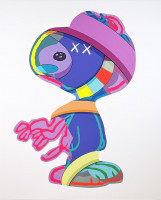
KAWS
The Things That Comfort, 2015
Limited Edition Print
Screen-print
USD 30,000 - 40,000
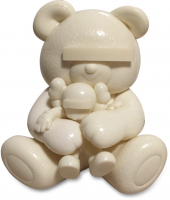
KAWS
Undercover Bear (white), 2009
Sculpture / Object
Mixed Media
Inquire For Price
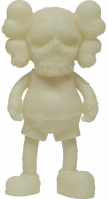
KAWS
Pushead Companion (Glow In The Dark), 2006
Sculpture / Object
Mixed Media
Inquire For Price
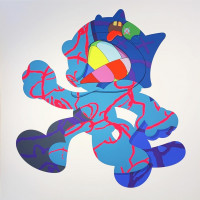
KAWS
Ankle Bracelet, 2017
Limited Edition Print
Silkscreen
USD 45,000 - 50,000
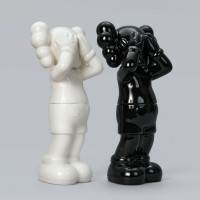
KAWS
Holiday UK (set Of Two), 2011
Sculpture / Object
Ceramic
EUR 2,500
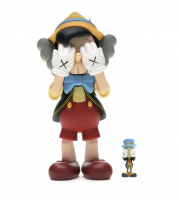
KAWS
Pinocchio & Jiminy Cricket, 2010
Sculpture / Object
Mixed Media
GBP 10,000 - 14,000
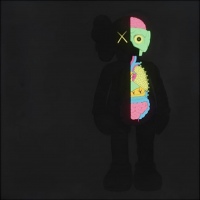
KAWS
Dissected Companion (Black), 2006
Limited Edition Print
Mixed Media
GBP 15,000 - 18,000

KAWS
Pinocchio, 2017
Sculpture / Object
Wood
Inquire For Price

KAWS
Untitled II (Urge), 2020
Limited Edition Print
Silkscreen
Inquire For Price

KAWS
Chum Vinyl Figure, 2002
Sculpture / Object
Mixed Media
Inquire For Price

KAWS
Untitled V (Urge), 2020
Limited Edition Print
Silkscreen
EUR 7,800

KAWS
Private Listing
Limited Edition Print
Screen-print
Request Info
KAWS
Private Listing
Limited Edition Print
Screen-print
Request Info

KAWS
Untitled IV (Urge), 2020
Limited Edition Print
Silkscreen
Inquire For Price

KAWS
Untitled I (Urge), 2020
Limited Edition Print
Silkscreen
Inquire For Price

KAWS
Untitled VII (Urge), 2020
Limited Edition Print
Silkscreen
Inquire For Price

KAWS
Tension #3, 2019
Limited Edition Print
Serigraph
USD 15,500

KAWS
Companion Vs Pikachu, 2002
Limited Edition Print
Screen-print
USD 11,350

KAWS
Running Chum #1, 2000
Limited Edition Print
Silkscreen
Inquire For Price

KAWS
No Reply Suite, 2015
Limited Edition Print
Silkscreen
Inquire For Price

KAWS
Running Chum #2, 2000
Limited Edition Print
Silkscreen
Inquire For Price

KAWS
Chum Vs Astroboy, 2002
Limited Edition Print
Screen-print
Inquire For Price

KAWS
Urge (9), 2020
Limited Edition Print
Silkscreen
USD 14,250

KAWS
Tension #2, 2019
Limited Edition Print
Serigraph
USD 15,300

KAWS
What Party Figure - Yellow, 2020
Sculpture / Object
Mixed Media
Inquire For Price

KAWS
Urge (8), 2020
Limited Edition Print
Silkscreen
USD 14,250

KAWS
Tension #4, 2019
Limited Edition Print
Serigraph
USD 15,400

KAWS
Tension #6, 2019
Limited Edition Print
Serigraph
USD 15,400

KAWS
KAWS X Bearbrick Anniversary 1000%, 2003
Sculpture / Object
Mixed Media
Inquire For Price

KAWS
KAWS X Bearbrick Chomper 1000%, 2003
Sculpture / Object
Mixed Media
Inquire For Price

KAWS
Seeing Lamp - Pink, 2020
Sculpture / Object
Mixed Media
GBP 60,000 - 70,000

KAWS
5 Years Later Companion - Grey, 2004
Sculpture / Object
Mixed Media
GBP 6,300

KAWS
Better Knowing, 2023
Sculpture / Object
Wood
Inquire For Price

KAWS
Star Wars Boba Fett Companion, 2013
Sculpture / Object
Mixed Media
GBP 5,700

KAWS
Star Wars Stormtrooper Companion, 2008
Sculpture / Object
Mixed Media
GBP 5,700

KAWS
Four Foot Companion - Black Dissected, 2009
Sculpture / Object
Mixed Media
Inquire For Price

KAWS
Four Foot Companion - Grey, 2007
Sculpture / Object
Mixed Media
Inquire For Price

KAWS
Four Foot - Grey Dissected, 2009
Sculpture / Object
Mixed Media
USD 100,000 - 110,000

KAWS
I Like Printing, 2002
Limited Edition Print
Screen-print
GBP 8,900

KAWS
Warm Regards, 2005
Limited Edition Print
Mixed Media
GBP 9,950

KAWS
Confined, 2022
Tapestry
Tapestry
GBP 3,950

KAWS
What Party - Set Of 7, 2020
Limited Edition Print
Screen-print
USD 120,000 - 150,000

KAWS
Running Chum III, 2000
Limited Edition Print
Silkscreen
GBP 17,500

KAWS
Tide, 2023
Limited Edition Print
Silkscreen
GBP 5,200

KAWS
The News (portfolio Of 9 Prints), 2017
Limited Edition Print
Silkscreen
USD 120,000 - 140,000

KAWS
Tension - Portfolio Of 10, 2019
Limited Edition Print
Silkscreen
USD 90,000 - 110,000

KAWS
Gone, 2019
Limited Edition Print
Screen-print
GBP 5,900

KAWS
Urge (portfolio), 2020
Limited Edition Print
Screen-print
USD 50,000 - 60,000

KAWS
KAWS X Hajime Sorayama: No Future Companion, 2008
Sculpture / Object
Mixed Media
USD 13,700

KAWS
Tension No. 6, 2019
Limited Edition Print
Screen-print
USD 11,350

KAWS
Tension No. 3, 2019
Limited Edition Print
Screen-print
USD 11,350

KAWS
Tension No. 2, 2019
Limited Edition Print
Screen-print
USD 11,350

KAWS
Share, 2021
Limited Edition Print
Screen-print
USD 8,350

KAWS
Tension 4, 2019
Limited Edition Print
Screen-print
USD 11,350

KAWS
Tension 6, 2019
Limited Edition Print
Screen-print
USD 11,350

KAWS
Far Far Down, 2018
Limited Edition Print
Screen-print
USD 23,000 - 30,000

KAWS
Man's Best Friend #9, 2016
Limited Edition Print
Screen-print
GBP 8,990

KAWS
Man's Best Friend #7, 2016
Limited Edition Print
Screen-print
GBP 8,990

KAWS
Man's Best Friend #6, 2016
Limited Edition Print
Screen-print
GBP 8,990

KAWS
Lost Time, 2017
Limited Edition Print
Serigraph
Inquire For Price

KAWS
Alone Again, 2018
Limited Edition Print
Serigraph
Inquire For Price

KAWS
Set Of 3 Serigraphs, 2017/18
Limited Edition Print
Serigraph
Inquire For Price

KAWS
Unique Ink Sketch On PAFA , 2013
Drawing / Watercolor
Ink
Inquire For Price
KAWS
Private Listing
Painting
Acrylic On Canvas
Request Info

KAWS
The Promise , 2023
Limited Edition Print
Silkscreen
Currently Not Available
Related Artists

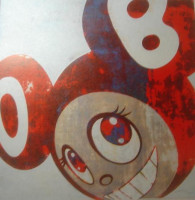


Related Articles
Popular, Art Movements - October 22, 2025
Neo-Pop Art in the 21st Century: From Takashi Murakami to KAWS
Explore Neo-Pop Art with Murakami, KAWS, Kusama & more. Bold, playful, and collectible—this movement fuses pop culture with fine art today. Read More

What is pop-art?
Pop Art is an art movement that began in Britain in 1955 and in the late 1950s in the U.S. It challenged traditional fine arts by incorporating imagery from popular culture, such as news, advertising, and comic books. Pop Art often isolates and recontextualizes materials, combining them with unrelated elements. The movement is more about the attitudes and ideas that inspired it than the specific art itself. Pop Art is seen as a reaction against the dominant ideas of Abstract Expressionism, bringing everyday consumer culture into the realm of fine art.