Details
Artist
Styles
lithograph in colours, 1969, on canvas laid onto wove paper, signed in pencil, numbered 75/75, published by Maeght, Paris, printed to the edges of the full sheet as published - S. 890 x 605 mm. (lithograph on tablecloth) // The Feverish Eskimo - M637 by Joan Miró, created in 1969, is a limited edition lithograph that brings forth the artist’s bold approach to abstraction and expressive forms. Printed on canvas laid onto wove paper, the piece features a striking central figure in solid black, contrasted against a vibrant background of red and teal splatters. The abstract form, evocative yet ambiguous, hints at a figure in motion or a creature with dynamic limbs, alluding to the title’s feverish state. Miró’s use of intense colors and star-like symbols scattered around the composition adds a sense of energy and spontaneity, inviting viewers to engage with its enigmatic narrative and interpret the fevered imagination within.
The Feverish Eskimo - M637, 1969
form
Medium
Size
88.9 x 61 cm
- Inches
- Centimeters
Edition
Price
- USD
- EUR
- GBP
Details
Artist
Styles
lithograph in colours, 1969, on canvas laid onto wove paper, signed in pencil, numbered 75/75, published by Maeght, Paris, printed to the edges of the full sheet as published - S. 890 x 605 mm. (lithograph on tablecloth) // The Feverish Eskimo - M637 by Joan Miró, created in 1969, is a limited edition lithograph that brings forth the artist’s bold approach to abstraction and expressive forms. Printed on canvas laid onto wove paper, the piece features a striking central figure in solid black, contrasted against a vibrant background of red and teal splatters. The abstract form, evocative yet ambiguous, hints at a figure in motion or a creature with dynamic limbs, alluding to the title’s feverish state. Miró’s use of intense colors and star-like symbols scattered around the composition adds a sense of energy and spontaneity, inviting viewers to engage with its enigmatic narrative and interpret the fevered imagination within.
- Recently Added
- Price (low-high )
- Price (high-low )
- Year (low-high )
- Year (high-low )

Joan Miró
El Cazador De Pulpos, 1969
Limited Edition Print
Etching And Aquatint
EUR 18,200

Joan Miró
Passage De L'Egyptienne 4, 1985
Limited Edition Print
Etching And Aquatint
EUR 7,200

Joan Miró
Passage De L'Egyptienne, 10, 1985
Limited Edition Print
Etching And Aquatint
EUR 7,200

Joan Miró
La Mangeuse De Crabes, 1981
Limited Edition Print
Mixed Media
EUR 9,500

Joan Miró
Album 21, Plate 15 - M1140
Limited Edition Print
Lithograph
USD 6,100

Joan Miró
Poster Proof Before The Lettering For The Galerie Matarasso, Nice, 1957
Limited Edition Print
Lithograph
EUR 5,050

Joan Miró
Couple D'Oiseaux II, 1966
Limited Edition Print
Etching And Aquatint
Inquire For Price

Joan Miró
Astrologie I, 1953
Limited Edition Print
Lithograph
USD 3,540
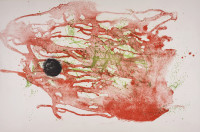
Joan Miró
Series I, Red Wash, 1961
Limited Edition Print
Lithograph
USD 5,100
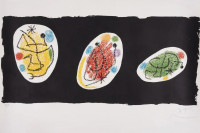
Joan Miró
For XXe Siècle No.31, 1968
Limited Edition Print
Lithograph
USD 4,750
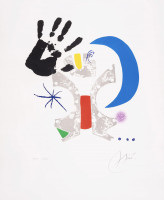
Joan Miró
Bonjour Max Ernst, 1976
Limited Edition Print
Etching And Aquatint
USD 5,450
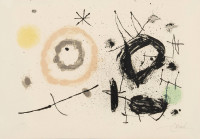
Joan Miró
Untitled (from The Bouquet De Rêves Pour Neila Portfolio), 1967
Limited Edition Print
Lithograph
USD 2,950
Joan Miró
Untitled (from The La Bague D’Aurore Portfolio), 1957
Limited Edition Print
Mixed Media
USD 14,850
Joan Miró
Les Geants III, 1960
Limited Edition Print
Aquatint
USD 4,500
Joan Miró
Le Marteau Sans Maître: One Plate, 1976
Limited Edition Print
Etching And Aquatint
USD 4,880
Joan Miró
Plate III From Espriu-Miró, 1975
Limited Edition Print
Etching And Aquatint
USD 8,350
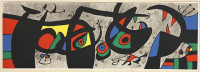
Joan Miró
Le Lézard Aux Plumes D' Or -II, 1971
Limited Edition Print
Lithograph
EUR 14,300

Joan Miró
Invitation Card For The Opening Of The Fundació Miró Barcelona, 1976
Limited Edition Print
Lithograph
USD 4,250

Joan Miró
One Plate, From Joan Miró Lithographe II, 1975
Limited Edition Print
Lithograph
USD 4,500

Joan Miró
One Plate, Homenatge à Joan Prats, 1975
Limited Edition Print
Lithograph
USD 4,250

Joan Miró
Preparatifs D’Oiseaux, 1963
Limited Edition Print
Etching And Aquatint
USD 3,900

Joan Miró
Le Lezard Aux Plumes D'Ord 3, 1971
Limited Edition Print
Lithograph
Inquire For Price

Joan Miró
I Work Like A Gardener, 1964
Limited Edition Print
Lithograph
EUR 13,800

Joan Miró
Untitled 3 From Maravillas Con Variaciones Acrósticas , 1975
Limited Edition Print
Lithograph
USD 5,460

Joan Miró
Series III, 1952
Limited Edition Print
Etching
EUR 25,900

Joan Miró
The Riddled Angel, 1973
Limited Edition Print
Etching
EUR 10,700

Joan Miró
Préparatifs D'oiseaux IV, 1963
Limited Edition Print
Aquatint
EUR 7,790

Joan Miró
L'oiseau Mangeant Le Feu, 1969
Limited Edition Print
Lithograph
EUR 7,200

Joan Miró
El Lagarto De Las Plumas De Oro, 1971
Limited Edition Print
Lithograph
EUR 7,200

Joan Miró
Nebuleuse, 1958
Limited Edition Print
Lithograph
EUR 5,450

Joan Miró
Le Courtisan Grotesque VI, 1974
Limited Edition Print
Etching And Aquatint
EUR 3,100

Joan Miró
Mannequin Parade In Bahia, 1969
Limited Edition Print
Lithograph
USD 40,500

Joan Miró
Terres De Grand Feu, 1956
Limited Edition Print
Lithograph
USD 4,500

Joan Miró
Ciel Rouge, 1960
Limited Edition Print
Lithograph
USD 4,850

Joan Miró
Emehpylop, 1968
Limited Edition Print
Drypoint
USD 9,700

Joan Miró
Personnage, 1980
Drawing / Watercolor
Pencil
Inquire For Price

Joan Miró
La Veuve Du Corsaire, 1981
Limited Edition Print
Etching And Aquatint
EUR 9,500

Joan Miró
Création Miró MCMLXI, 1962
Limited Edition Print
Etching And Aquatint
EUR 3,350

Joan Miró
Commedia D’arte V, 1979
Limited Edition Print
Etching
USD 15,000 - 20,000

Joan Miró
Album 19, Planche 5, 1961
Limited Edition Print
Lithograph
EUR 4,400

Joan Miró
Crapaud Lyre
Limited Edition Print
Etching
EUR 11,900

Joan Miró
Quelques Fleurs IV, 1964
Limited Edition Print
Lithograph
USD 5,890

Joan Miró
Plate I From Oda à Joan Miró, 1973
Limited Edition Print
Lithograph
EUR 7,750

Joan Miró
Plate IV From Espriu, 1975
Limited Edition Print
Etching
EUR 19,500

Joan Miró
Le Lézard Aux Plumes D'or (book), 1971
Limited Edition Print
Lithograph
EUR 28,000 - 35,000

Joan Miró
Martí I Pol, 1976
Limited Edition Print
Mixed Media
EUR 14,250

Joan Miró
Lapidari Nº 37 Calsedonia, 1981
Limited Edition Print
Mixed Media
EUR 11,900

Joan Miró
L´exilé Noir, 1969
Limited Edition Print
Mixed Media
EUR 15,400

Joan Miró
Personnage II, 1979
Drawing / Watercolor
Pencil
Inquire For Price

Joan Miró
Miró Graveur VII, 1981
Limited Edition Print
Woodcut
EUR 8,350

Joan Miró
Miró Graveur III, 1981
Limited Edition Print
Woodcut
EUR 13,000

Joan Miró
Serie Mallorca I, 1973
Limited Edition Print
Etching And Aquatint
EUR 11,300

Joan Miró
Serie Mallorca - Negro Y Blanco IX, 1973
Limited Edition Print
Etching And Aquatint
EUR 8,350

Joan Miró
Serie Mallorca - Negro Y Blanco VII, 1973
Limited Edition Print
Etching And Aquatint
EUR 8,350

Joan Miró
Serie Mallorca - Negro Y Blanco VI, 1973
Limited Edition Print
Etching And Aquatint
EUR 8,350

Joan Miró
Serie Mallorca - Negro Y Blanco I, 1973
Limited Edition Print
Etching And Aquatint
EUR 8,350

Joan Miró
Gaudí IX, 1979
Limited Edition Print
Etching And Aquatint
EUR 11,660

Joan Miró
Homenatge A Joan Prats 2, 1971
Limited Edition Print
Lithograph
USD 10,000

Joan Miró
Homenatge A Joan Prats, 1971
Limited Edition Print
Lithograph
USD 10,000

Joan Miró
Mirò Milano, 1981
Limited Edition Print
Lithograph
EUR 11,300

Joan Miró
Untitled, From Album 21 Portfolio - M1136, 1978
Limited Edition Print
Lithograph
USD 6,250

Joan Miró
Untitled, From Album 21 Portfolio - M1130, 1978
Limited Edition Print
Lithograph
USD 6,250

Joan Miró
Les Scarabees - D1018, 1978
Limited Edition Print
Mixed Media
USD 6,000

Joan Miró
Paroles Peintres III - D446, 1967
Limited Edition Print
Etching And Aquatint
USD 5,000

Joan Miró
Gravure Pour Un Exposition - D606, 1973
Limited Edition Print
Etching
USD 6,200

Joan Miró
Serie Mallorca - D618, 1973
Limited Edition Print
Etching And Aquatint
USD 6,200

Joan Miró
Série Mallorca 5 - D615, 1973
Limited Edition Print
Etching And Aquatint
USD 6,500

Joan Miró
Translunaire - D659, 1974
Limited Edition Print
Etching And Aquatint
USD 7,200

Joan Miró
Demi Mondaine A Sa Fenetre - D742, 1975
Limited Edition Print
Etching And Aquatint
USD 7,200

Joan Miró
Vega - D1006, 1978
Limited Edition Print
Etching
USD 6,200

Joan Miró
Le Criquet - D1021, 1978
Limited Edition Print
Etching And Aquatint
USD 6,500

Joan Miró
Le Souriceau - D1026, 1978
Limited Edition Print
Etching
USD 6,300

Joan Miró
Grand Duc II (Grand Duke II) - D395, 1965
Limited Edition Print
Etching
USD 6,100

Joan Miró
L'Invention Du Feu - D284, 1960
Limited Edition Print
Aquatint
USD 5,250

Joan Miró
Series II - Rouge Et Vert - M288, 1961
Limited Edition Print
Lithograph
USD 4,300

Joan Miró
Series II, Blue And Red - M291, 1961
Limited Edition Print
Lithograph
USD 4,300

Joan Miró
Series II - Blue And Red - M290, 1961
Limited Edition Print
Lithograph
USD 4,300

Joan Miró
Series II Blue Red And Green - M294, 1961
Limited Edition Print
Lithograph
USD 4,300

Joan Miró
Chevauchee Rouge Et Violet - M610, 1969
Limited Edition Print
Lithograph
USD 6,500

Joan Miró
The Feverish Eskimo - M637, 1969
Limited Edition Print
Lithograph
USD 6,500

Joan Miró
La Nuit Tentaculaire - M639, 1969
Limited Edition Print
Lithograph
USD 6,200

Joan Miró
Homentage A Joan Prats - M735, 1971
Limited Edition Print
Lithograph
USD 6,200

Joan Miró
Hommage A Miro - M868, 1972
Limited Edition Print
Lithograph
USD 5,300

Joan Miró
Homentage A Joan Prats - M852, 1972
Limited Edition Print
Lithograph
USD 5,300

Joan Miró
Hommage A Joan Prats - M1034, 1975
Limited Edition Print
Lithograph
USD 5,200

Joan Miró
Maravillas - M1061, 1975
Limited Edition Print
Lithograph
USD 6,500

Joan Miró
Album 21 - M1132, 1978
Limited Edition Print
Lithograph
USD 6,100

Joan Miró
Album 21, Plate 14 - M1139, 1978
Limited Edition Print
Lithograph
USD 6,200

Joan Miró
Maravillas - M1055
Limited Edition Print
Lithograph
USD 6,000

Joan Miró
Petite Fille Au Bois, 1958
Limited Edition Print
Lithograph
EUR 3,600

Joan Miró
Passage De L´Egyptienne 2, 1985
Limited Edition Print
Etching
EUR 6,600

Joan Miró
Passage De L'Egyptienne 5, 1985
Limited Edition Print
Etching And Aquatint
EUR 7,200

Joan Miró
Passage De L'Egyptienne 3, 1985
Limited Edition Print
Etching
EUR 6,600
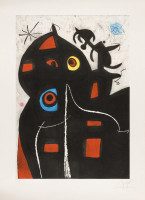
Joan Miró
Pantagruel, 1978
Limited Edition Print
Etching And Aquatint
EUR 30,000

Joan Miró
La Chevelure De Bérénice II, 1963
Limited Edition Print
Etching And Aquatint
EUR 6,000

Joan Miró
Miró 1959-1961, 1959
Limited Edition Print
Aquatint
EUR 2,250

Joan Miró
Fusées 1, 1959
Limited Edition Print
Etching
EUR 8,400

Joan Miró
Gravures Pour Une Exposition , 1973
Limited Edition Print
Etching And Aquatint
EUR 10,800

Joan Miró
Gaudi XV, 1979
Limited Edition Print
Etching And Aquatint
EUR 9,600

Joan Miró
El Aguador I, 1962
Limited Edition Print
Aquatint
EUR 4,800

Joan Miró
Derrière Le Miroir, Nº 119., 1960
Limited Edition Print
Lithograph
EUR 4,800

Joan Miró
Passage De L'Egyptienne 12, 1985
Limited Edition Print
Etching
EUR 7,200

Joan Miró
Serie Mallorca III, 1973
Limited Edition Print
Etching And Aquatint
EUR 11,300

Joan Miró
Le Bagnard - M594 , 1969
Limited Edition Print
Lithograph
USD 7,450

Joan Miró
Sobreteixims I Escultures, 1972
Limited Edition Print
Lithograph
Currently Not Available

Joan Miró
Le Roi Des Lapins, 1981
Limited Edition Print
Etching And Aquatint
Currently Not Available
Related Artists


Related Articles

Artists - February 14, 2025
Evergreen Artists: Why Picasso, Matisse, Miró and Chagall Remain Relevant Today
Discover the timeless appeal of Picasso, Matisse, Miró, and Chagall. Explore their lasting impact and shop high-quality prints at Composition.Gallery. Read More

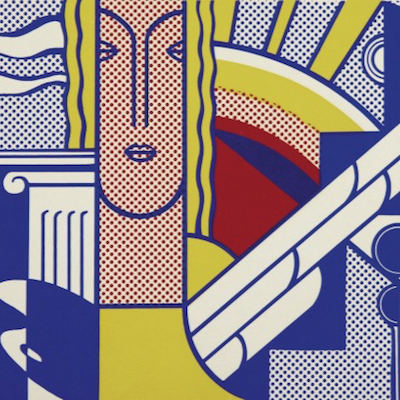
What is late modernism?
Late Modernism refers to the continuation and evolution of Modernist principles in art, architecture, and literature from the mid-20th century into the late 20th century. This movement maintains a focus on form, abstraction, and the rejection of traditional styles, but it often incorporates more complexity and ambiguity compared to early Modernism. Late Modernism explores themes such as alienation, identity, and the fragmentation of reality, reflecting the social and cultural shifts of the post-war period. It is seen in the works of architects like Louis Kahn and artists like Francis Bacon, who pushed the boundaries of Modernism while responding to the changing world around them.