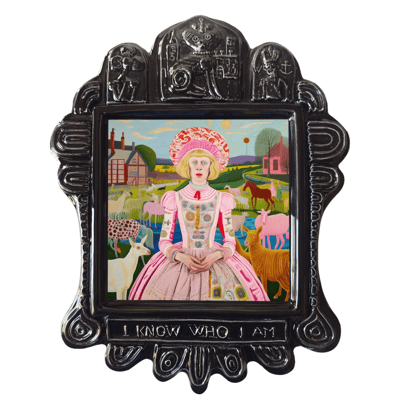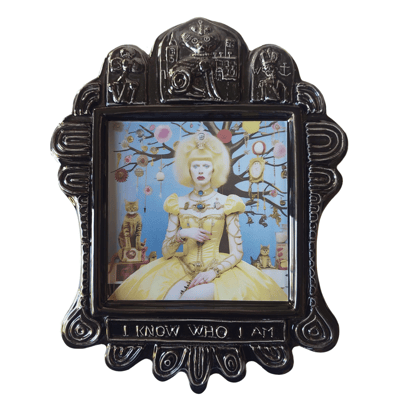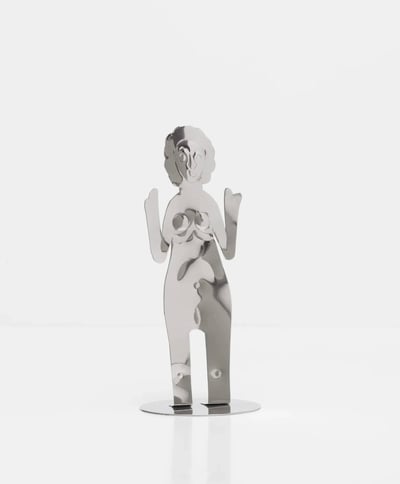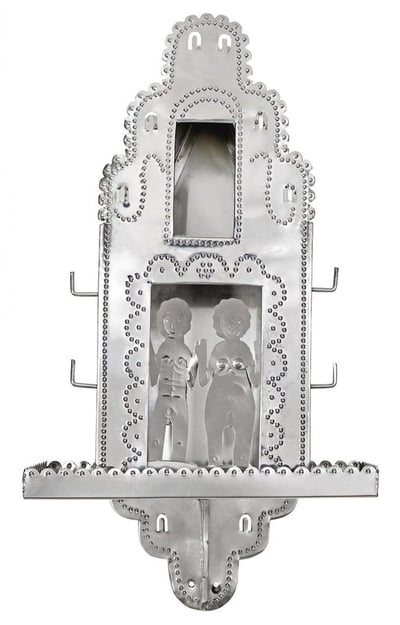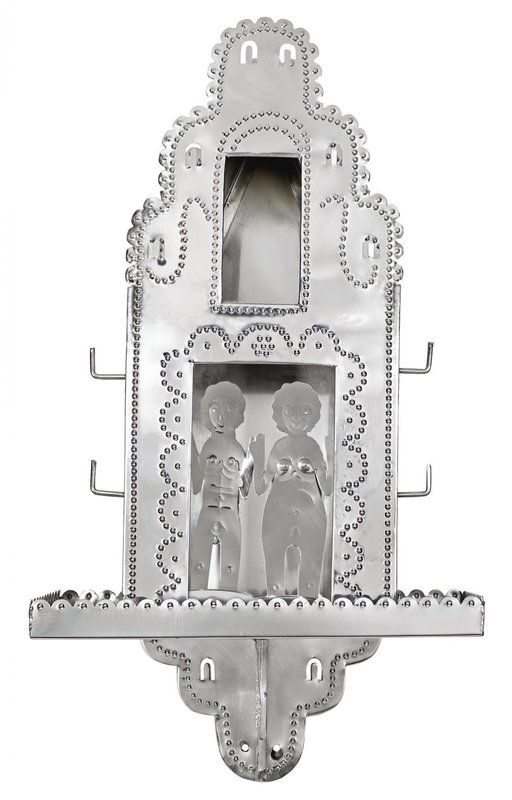
Edition of 50 - Stainless steel shrine with loose steel figures - Signed on accompanying COA - In excellent condition
Grayson Perry’s House of Love Shrine, created in 2017, is a limited-edition sculpture made of polished stainless steel. Standing 60 cm tall, this intricate piece combines a shrine-like structure with delicate, ornamental details and includes two small, removable steel figures within. The design is inspired by traditional devotional shrines but reimagined with Perry’s unique aesthetic, blending religious iconography with contemporary themes of love and identity. The shiny surface and embossed patterns create a sense of reverence while adding a playful, reflective quality. Limited to an edition of 50, each piece comes with a certificate of authenticity signed by Perry, making it a collectible work that resonates with themes of devotion, personal meaning, and modern artistry.
Grayson Perry (UK, 1960) is a celebrated contemporary artist and Turner Prize winner known for his provocative ceramics, tapestries, and multimedia works. Often exploring themes of identity, gender, and societal norms, Perry uses humor and craftsmanship to challenge perceptions. His alter ego, Claire, features prominently in his artistic narrative.
Mixed MediaMixed media refers to artwork that incorporates more than one medium within a single piece. Unlike multimedia art, which combines distinct forms of visual art and often includes elements like sound, video, or digital media, mixed media focuses on combining traditional art materials, such as paint, ink, and collage. Mixed media art allows artists to achieve a wide range of effects and textures by layering and blending different materials.
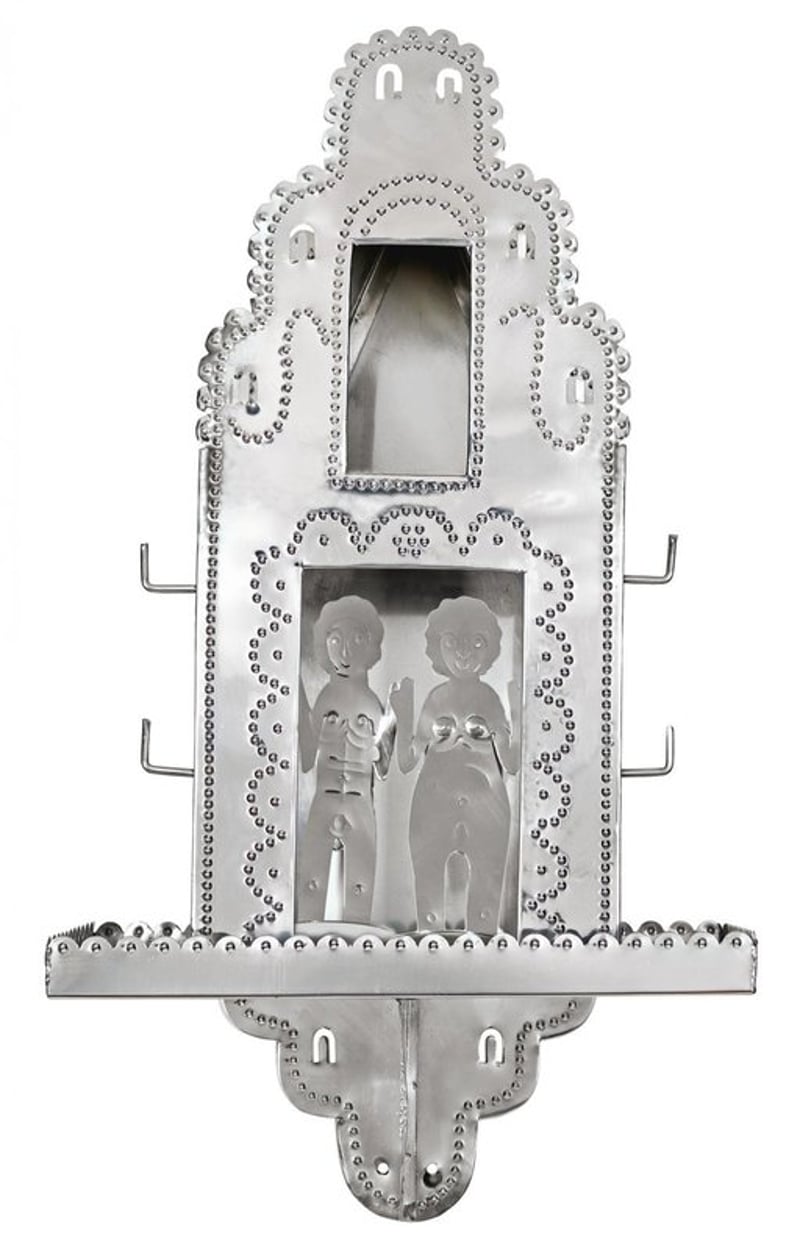
Edition of 50 - Stainless steel shrine with loose steel figures - Signed on accompanying COA - In excellent condition
Grayson Perry’s House of Love Shrine, created in 2017, is a limited-edition sculpture made of polished stainless steel. Standing 60 cm tall, this intricate piece combines a shrine-like structure with delicate, ornamental details and includes two small, removable steel figures within. The design is inspired by traditional devotional shrines but reimagined with Perry’s unique aesthetic, blending religious iconography with contemporary themes of love and identity. The shiny surface and embossed patterns create a sense of reverence while adding a playful, reflective quality. Limited to an edition of 50, each piece comes with a certificate of authenticity signed by Perry, making it a collectible work that resonates with themes of devotion, personal meaning, and modern artistry.
Grayson Perry (UK, 1960) is a celebrated contemporary artist and Turner Prize winner known for his provocative ceramics, tapestries, and multimedia works. Often exploring themes of identity, gender, and societal norms, Perry uses humor and craftsmanship to challenge perceptions. His alter ego, Claire, features prominently in his artistic narrative.
Art is not some fun add-on to life.
- Grayson Perry
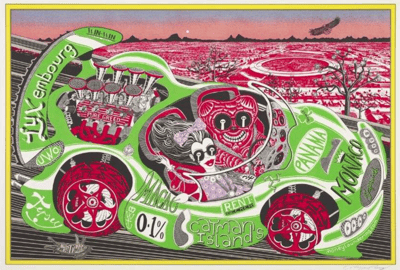
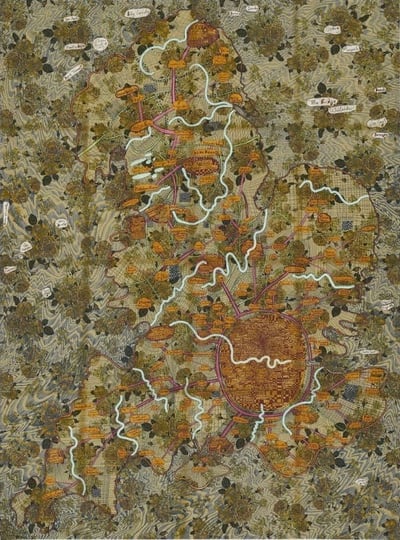
Renowned for his unorthodox expression, Grayson Perry is an artist whose most notable works include printed tapestries and ceramic vases that explore both historical and contemporary themes, as well as featuring autobiographical references to his own life, and that of his transvestite alter-ego, Claire. Among Perry’s most acclaimed works is Aspects of Myself, a ceramic vessel featuring several different figures, some altogether innocent, and others - such as a bound and gagged woman - more sinister; Perry has confirmed that these figures depict various different aspects of his own personality. In creating his ceramic works, Perry refers to the ceramic traditions of folk art and Greek pottery while using the traditional coiling method to create the final shape, he then fires in a kiln several times in order to transfer the image and finish with a lustre glaze.
Kitsch is a term used to describe cheap, commercial, sentimental, or vulgar art and objects commonly associated with popular culture. The word is borrowed from German, where it originally means trash. Since the 1920s, kitsch has been used to denote the opposite of high art, often implying that the work lacks sophistication or artistic merit.