
Details
Artist
Styles
// Linconscio Razionale by Dadamaino is an acrylic painting on canvas from the period between 1975 and 1977. The work reflects Dadamaino's exploration of minimalism and abstraction, focusing on subtle, nearly imperceptible marks across a largely monochromatic surface. The painting features a white background punctuated by delicate, linear strokes scattered evenly, inviting a meditative viewing experience. These minimal interruptions on the canvas suggest a rhythmic, almost subconscious structure, aligning with the title’s reference to a rational subconscious. The sparse composition embodies the artist's investigation into space, perception, and the boundaries between visible and invisible elements.
Linconscio Razionale, 1975 /1977
form
Medium
Size
70 x 70 cm
- Inches
- Centimeters
Edition
Price
Details
Artist
Styles
// Linconscio Razionale by Dadamaino is an acrylic painting on canvas from the period between 1975 and 1977. The work reflects Dadamaino's exploration of minimalism and abstraction, focusing on subtle, nearly imperceptible marks across a largely monochromatic surface. The painting features a white background punctuated by delicate, linear strokes scattered evenly, inviting a meditative viewing experience. These minimal interruptions on the canvas suggest a rhythmic, almost subconscious structure, aligning with the title’s reference to a rational subconscious. The sparse composition embodies the artist's investigation into space, perception, and the boundaries between visible and invisible elements.
- Recently Added
- Price (low-high )
- Price (high-low )
- Year (low-high )
- Year (high-low )

Dadamaino
Il Movimento Delle Cose, 1994
Drawing / Watercolor
Pen And Ink
EUR 8,350
Related Artists


Related Articles

Popular, Artists, Art Movements - May 05, 2022
9 Essential Artists of the The Minimalist School
Discover 9 essential artists of the Minimalist movement, including Donald Judd and Agnes Martin. Explore their transformative impact on modern art and design. Read More

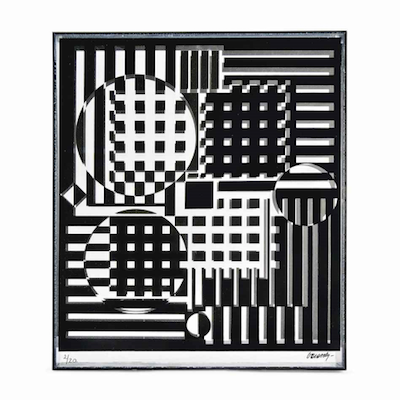
Artwork by Victor Vasarely
What is Op Art?
Op Art is a visual art style that uses optical illusions to create the impression of movement, vibrating patterns, flashing, or hidden images. The works are typically abstract, with many well-known pieces in black and white. The roots of Op Art can be traced back to earlier movements like Futurism, Constructivism, Dada, and Neo-Impressionism, particularly in their use of color effects and graphic design.
RECENTLY VIEWED
-->