Published in the catalogue raisonné
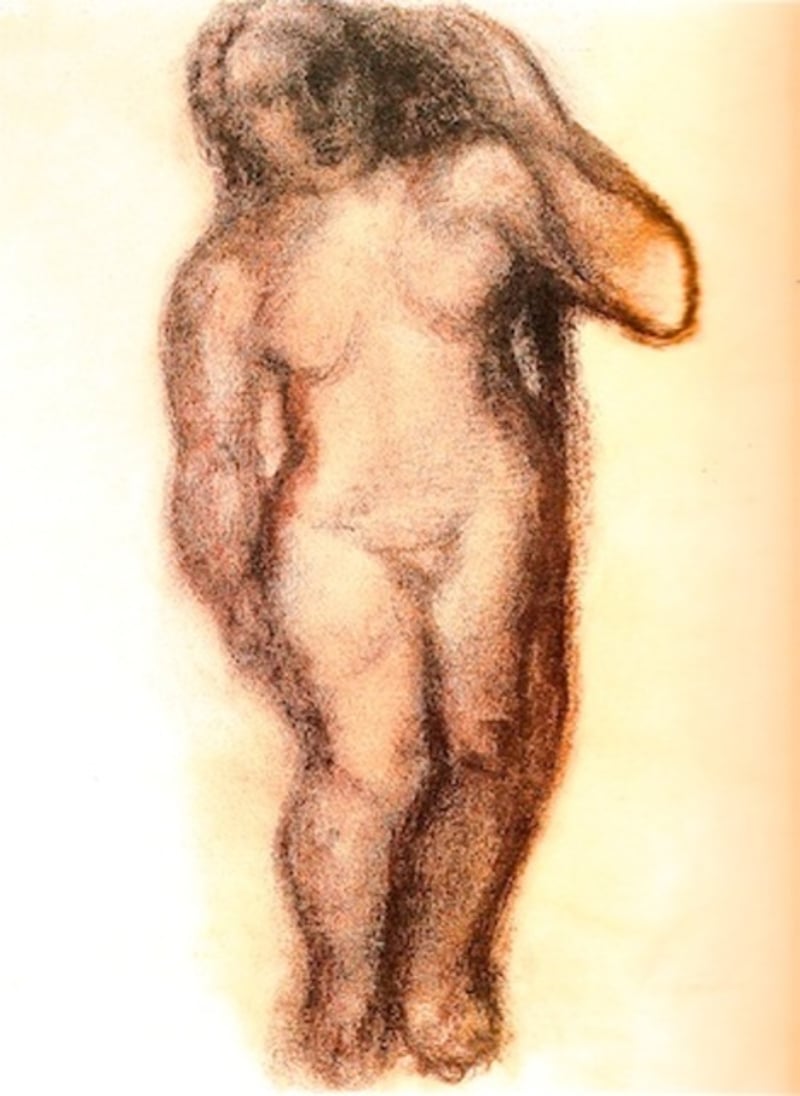
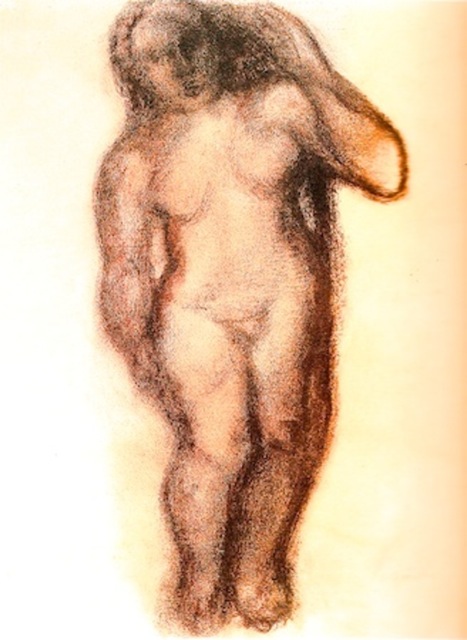
Constant Permeke's Naakt (1938) is a powerful study of the human form, capturing a figure with earthy tones and expressive strokes. The nude figure, drawn in a robust and almost sculptural style, stands in a relaxed pose, with a hand resting on her head. Permeke’s use of mixed media creates a soft, diffuse outline, emphasizing the figure’s weight and presence while conveying a sense of quiet introspection. The warm palette enhances the naturalistic feel, giving the work a raw yet tender quality. Known for his focus on the human body and emotive form, Permeke's Naakt highlights his talent for rendering the figure with both strength and sensitivity. This artwork was published in his catalogue raisonné, marking it as a significant piece within his oeuvre.
Artwork Copyright © Constant PermekeConstant Permeke (Belgium, 1886–1952) was a key figure in Flemish Expressionism, known for his emotive depictions of rural life. His paintings, characterized by earthy tones and bold forms, often portrayed farmers and fishermen, emphasizing their strength and struggles. Permeke’s work also extended to sculpture, reflecting his deep connection to humanity and nature.
Artwork Copyright © Constant PermekeNaakt, 1938
Form
Medium
Size
- Inches
- Centimeters
Edition
Price
- Authenticity Guaranteed
- Insured Shipping
- Online Since 2005
●Inventory 1644
●Signed
●Comes with gallery invoice and certificate
●Any questions?
Published in the catalogue raisonné
Constant Permeke's Naakt (1938) is a powerful study of the human form, capturing a figure with earthy tones and expressive strokes. The nude figure, drawn in a robust and almost sculptural style, stands in a relaxed pose, with a hand resting on her head. Permeke’s use of mixed media creates a soft, diffuse outline, emphasizing the figure’s weight and presence while conveying a sense of quiet introspection. The warm palette enhances the naturalistic feel, giving the work a raw yet tender quality. Known for his focus on the human body and emotive form, Permeke's Naakt highlights his talent for rendering the figure with both strength and sensitivity. This artwork was published in his catalogue raisonné, marking it as a significant piece within his oeuvre.
Artwork Copyright © Constant PermekeConstant Permeke (Belgium, 1886–1952) was a key figure in Flemish Expressionism, known for his emotive depictions of rural life. His paintings, characterized by earthy tones and bold forms, often portrayed farmers and fishermen, emphasizing their strength and struggles. Permeke’s work also extended to sculpture, reflecting his deep connection to humanity and nature.
Artwork Copyright © Constant Permeke- Recently Added
- Price (Low-High)
- Price (High-Low)
- Year (Low-High)
- Year (High-Low)
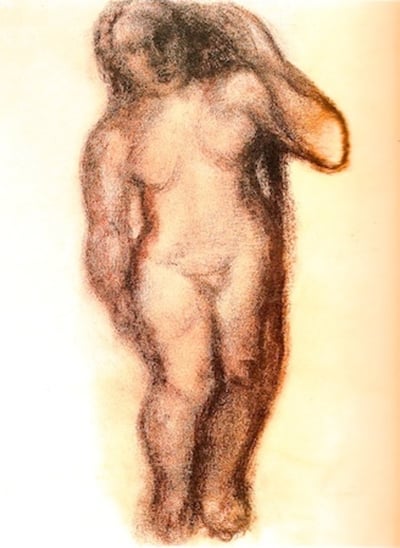
Constant Permeke
Naakt, 1938
Drawing / Watercolor
Mixed Media
EUR 10,000 – 14,000
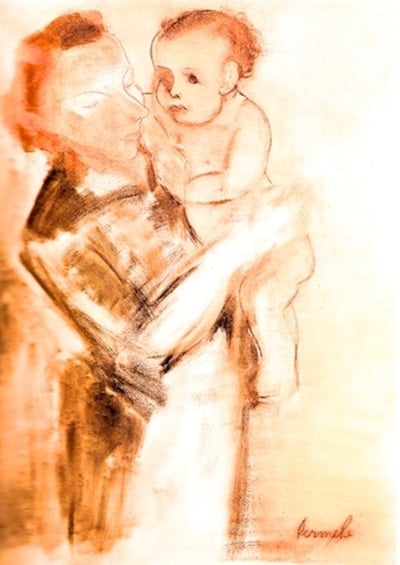
Constant Permeke
Moederschap, 1949
Drawing / Watercolor
Mixed Media
EUR 30,000 – 40,000
Related Artists
Related Articles
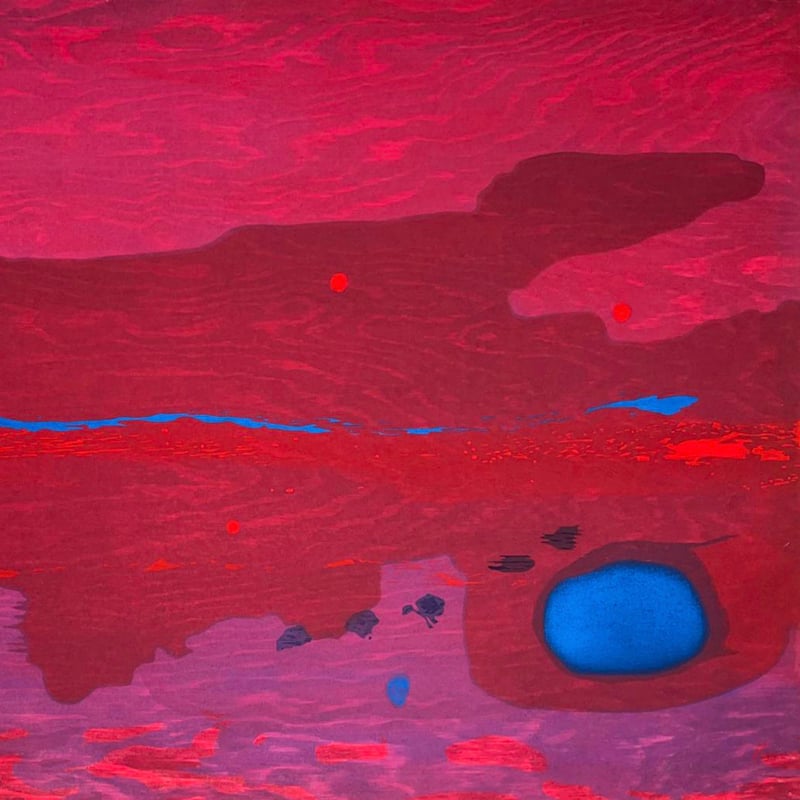
Popular, Art Movements - November 20, 2024
Understanding Abstract Expressionism: Emotion and Gesture
Explore the emotional depth of Abstract Expressionism! Discover how artists like Pollock and Rothko used gesture and color to convey human complexity.Read More
Artwork by Helen Frankenthaler
What is abstract expressionism?
Abstract Expressionism is an art movement that emerged in the United States during the 1940s and 1950s. Characterized by large, abstract canvases, the movement emphasized spontaneous, expressive brushwork and the use of color and form to convey emotion rather than represent reality. Artists like Jackson Pollock, Mark Rothko, and Willem de Kooning are key figures in this movement. Abstract Expressionism marked a shift in the art world, making New York City a center of the international art scene.

Constant Permeke
Naakt, 1938
63 x 48 cm


