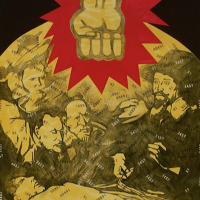
What is Assemblage?
Assemblage is an artistic process involving the combination of three-dimensional objects to create a work of art. The term, which originates from the French word for assembly, often involves the use of found objects like leaves, stones, discarded items, or recycled materials. These objects are arranged creatively to form a unique and often thought-provoking artwork.
Show All
- Show All
- Established
- Discoveries
Show All
ARTWORKS RELATED TO ASSEMBLAGE

Julian Opie
Four Parking Tickets, 1984
Sculpture / Object
Assemblage
Inquire For Price

Giulio Paolini
Elea, 2009
Sculpture / Object
Assemblage
EUR 2,300

Fernandez Arman
Candy, 1970
Sculpture / Object
Assemblage
EUR 14,850

Fernandez Arman
Accumulation, Tee, 1994
Sculpture / Object
Assemblage
Currently Not Available

Fernandez Arman
Paintbrushes, 1990
Sculpture / Object
Assemblage
EUR 14,500

Anthony Caro
Leaf Pool, 1996 - 2000
Limited Edition Print
Assemblage
EUR 2,500 - 4,000
Related Articles

Collecting - March 25, 2025
Understanding Editioned Sculptures: What Collectors Need to Know
Explore the value of editioned sculptures, from bronze to electric art. Learn how edition size, material, and artist impact collectability. Read More

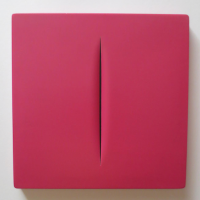
Spatialism is an art movement that originated in Italy in 1947, founded by Lucio Fontana with the intention of synthesizing sound, color, movement, and space into a new form of art. The movement's central ideas were outlined in Fontana's first manifesto, published in 1947, where he introduced the concept of spatial art to capture the spirit of the post-war era. His ideas were further developed in five subsequent manifestos. Although Fontana's ideas were sometimes considered vague, his influence was significant, as he was one of the first European artists to emphasize art as a performance and gesture.

Situationism is a psychological theory that gained prominence in 1968, following the publication of a monograph by Walter Mischel that sparked the Person-situation debate. This theory argues that behavior is primarily influenced by external situational factors rather than internal traits or motivations, challenging the ideas of trait theorists like Raymond B. Cattell and Hans Eysenck, who emphasized stable personality traits. It is important not to confuse this with the Situationist International movement, an artistic and political movement founded by Asger Jorn, which focused on the critique of modern consumer society and the influence of environments on human behavior.