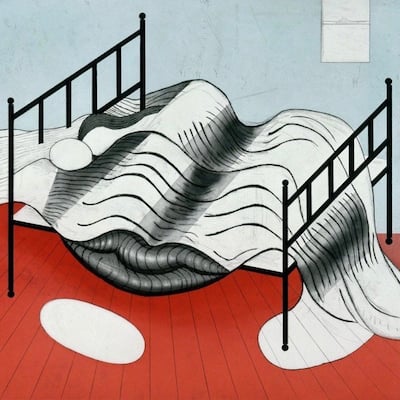
8-color lithograph on Somerset Cream paper
- from the Metropolitan Opera Fine Art II suite -
Hand-signed and numbered in pencil - Published by the Metropolitan Opera Association & printed by American Atelier, New York.
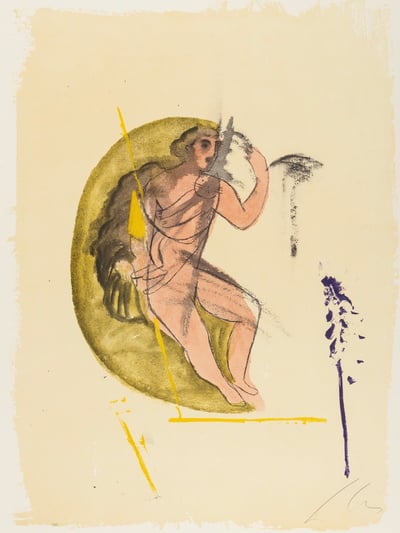
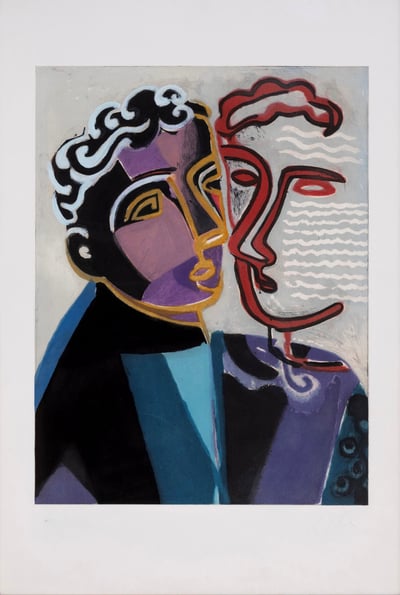
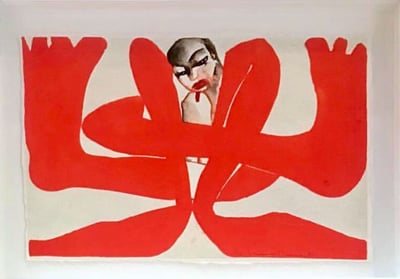
Sandro Chia's Il Trovatore (1984) is an 8-color lithograph on Somerset Cream paper, measuring 30 x 22 cm, created as part of the Metropolitan Opera Fine Art II suite. This vibrant work captures a dynamic female figure amidst swirling, expressive strokes of red, blue, green, and earthy tones. The central figure, rendered with fluid lines and rich colors, exudes movement and emotion, embodying Chia's energetic and painterly style. The use of contrasting hues and the layered background evokes a sense of passion and theatrical intensity, reflecting the operatic inspiration behind the piece. Hand-signed and numbered by the artist, this print showcases Chia's distinctive approach to contemporary figurative art.
Sandro Chia (Italy, 1946) is a prominent painter and sculptor, associated with the Transavanguardia movement. Known for his expressive, figurative style, his works blend mythology, history, and personal symbolism, often rendered in vibrant colors and dynamic compositions. Chia’s art has been exhibited globally, cementing his role in revitalizing Italian contemporary art.
LithographLithography is a printing method based on the principle that water and oil do not mix. It can be used to print artwork or text onto paper or other suitable materials. Traditionally, an image was drawn with wax, fat, or oil onto a lithographic limestone surface or plate. Today, metal plates and other surfaces are also used in lithographic printing.
8-color lithograph on Somerset Cream paper
- from the Metropolitan Opera Fine Art II suite -
Hand-signed and numbered in pencil - Published by the Metropolitan Opera Association & printed by American Atelier, New York.
Sandro Chia's Il Trovatore (1984) is an 8-color lithograph on Somerset Cream paper, measuring 30 x 22 cm, created as part of the Metropolitan Opera Fine Art II suite. This vibrant work captures a dynamic female figure amidst swirling, expressive strokes of red, blue, green, and earthy tones. The central figure, rendered with fluid lines and rich colors, exudes movement and emotion, embodying Chia's energetic and painterly style. The use of contrasting hues and the layered background evokes a sense of passion and theatrical intensity, reflecting the operatic inspiration behind the piece. Hand-signed and numbered by the artist, this print showcases Chia's distinctive approach to contemporary figurative art.
Sandro Chia (Italy, 1946) is a prominent painter and sculptor, associated with the Transavanguardia movement. Known for his expressive, figurative style, his works blend mythology, history, and personal symbolism, often rendered in vibrant colors and dynamic compositions. Chia’s art has been exhibited globally, cementing his role in revitalizing Italian contemporary art.
Painting is a bit like finding one's roots again.
- Sandro Chia
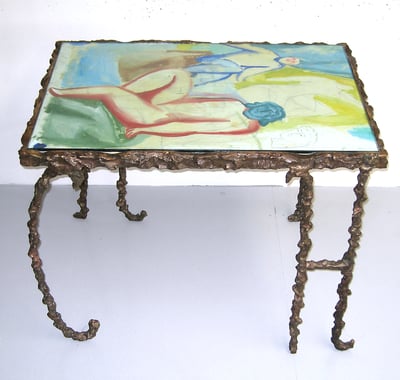
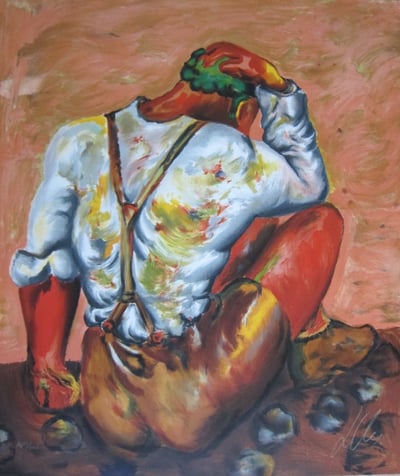
Sandro Chia (b. 1946 Italy) is an Italian painter and sculptor, renowned for his vibrant and expressive works that played a significant role in the Transavanguardia movement, Italy's version of Neo-Expressionism. Emerging in the late 1970s, Chia's work is characterized by bold colors, dynamic brushstrokes, and a revival of figurative painting, often featuring mythological, historical, and personal themes. His style is both sensual and monumental, combining elements of classical art with a contemporary twist. Chia’s paintings and sculptures often exude a sense of energy and vitality, reflecting his interest in the human figure and its emotional depth. As a leading figure in the resurgence of figurative art in the late 20th century, Chia has left a lasting impact on contemporary art.
Postmodernism is an art movement that emerged as a reaction against authority and traditional boundaries, seeking to blur the lines between art and everyday life. It aimed to bridge the gap between the cultural elite and the general public by embracing eclectic mixtures of earlier conventions and styles. Postmodernist art often challenges established norms and celebrates diversity, irony, and pastiche, making it a movement that reflects the complexities of contemporary culture.