Details
Artist
Styles
Copperplate etching, monotype, drypoint and aquatint on Zerkall handmade paper, ivory colour, 250g. - The portfolio containing 5 works by Sandro Chia, dedicated to "Elektra" (work by Hugo von Hofmansthal, set to music by Richard Strauss) signed and numbered by the artist on the front - Realized in April 1995 in Radierwerkstatt Zein/Vienna. - Thaddeus Ropac Salzburg-Paris gallery edition. - The folder made by Ammering/Ried. - Sheet size 82 x 60 cm / print 56 x 40 cm - Folder dimensions: 83×63 cm - Titles: Agamemnon, Orestes, Elektra Calma Folle, Elektra Orestes, Elektra. // Sandro Chia’s Elektra is a striking portfolio of five mixed-media prints, dedicated to the ancient Greek myth of Electra, as interpreted through Hugo von Hofmannsthal’s play and Richard Strauss’ opera. The portfolio, realized in April 1995, combines copperplate etching, monotype, drypoint, and aquatint techniques on Zerkall handmade paper. The vivid, expressive colors and dramatic, textured lines capture the intensity and complexity of the myth’s characters—Agamemnon, Orestes, and Elektra herself. Each piece in the series embodies a sense of emotional turbulence, befitting the tragic themes of vengeance, grief, and madness. The raw energy of the etching and aquatint work reflects Chia’s signature style, where the figures seem to emerge from the paper with a mix of abstracted form and classical references. This limited edition, signed and numbered by the artist, was published by Galerie Thaddaeus Ropac (Salzburg-Paris), and is housed in an elegant folder, reinforcing the gravitas of the Elektra narrative.
Details
Artist
Styles
Copperplate etching, monotype, drypoint and aquatint on Zerkall handmade paper, ivory colour, 250g. - The portfolio containing 5 works by Sandro Chia, dedicated to "Elektra" (work by Hugo von Hofmansthal, set to music by Richard Strauss) signed and numbered by the artist on the front - Realized in April 1995 in Radierwerkstatt Zein/Vienna. - Thaddeus Ropac Salzburg-Paris gallery edition. - The folder made by Ammering/Ried. - Sheet size 82 x 60 cm / print 56 x 40 cm - Folder dimensions: 83×63 cm - Titles: Agamemnon, Orestes, Elektra Calma Folle, Elektra Orestes, Elektra. // Sandro Chia’s Elektra is a striking portfolio of five mixed-media prints, dedicated to the ancient Greek myth of Electra, as interpreted through Hugo von Hofmannsthal’s play and Richard Strauss’ opera. The portfolio, realized in April 1995, combines copperplate etching, monotype, drypoint, and aquatint techniques on Zerkall handmade paper. The vivid, expressive colors and dramatic, textured lines capture the intensity and complexity of the myth’s characters—Agamemnon, Orestes, and Elektra herself. Each piece in the series embodies a sense of emotional turbulence, befitting the tragic themes of vengeance, grief, and madness. The raw energy of the etching and aquatint work reflects Chia’s signature style, where the figures seem to emerge from the paper with a mix of abstracted form and classical references. This limited edition, signed and numbered by the artist, was published by Galerie Thaddaeus Ropac (Salzburg-Paris), and is housed in an elegant folder, reinforcing the gravitas of the Elektra narrative.
- Recently Added
- Price (low-high )
- Price (high-low )
- Year (low-high )
- Year (high-low )
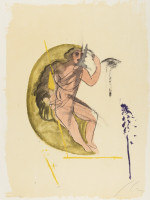
Sandro Chia
Untitled (Columbus: In Search Of A New Tomorrow), 1992
Limited Edition Print
Screen-print
Inquire For Price

Sandro Chia
Senza Titolo (Tavolo), 2001
Sculpture / Object
Mixed Media
Inquire For Price

Sandro Chia
Lonely Explore, 1991
Limited Edition Print
Lithograph
EUR 1,900

Sandro Chia
Elektra, 1995
Limited Edition Print
Mixed Media
EUR 2,500

Sandro Chia
Figure Con Albero, 1994
Sculpture / Object
Ceramic
EUR 7,300

Sandro Chia
Volti (faces)
Limited Edition Print
Etching And Aquatint
EUR 1,300

Sandro Chia
Untitled (Portrait), 1991
Limited Edition Print
Etching
EUR 2,100

Sandro Chia
Figura, 1974
Painting
Oil On Canvas
EUR 9,500

Sandro Chia
Disegno Di Donna, 1974
Painting
Oil On Canvas
EUR 9,500
Related Artists


Related Articles
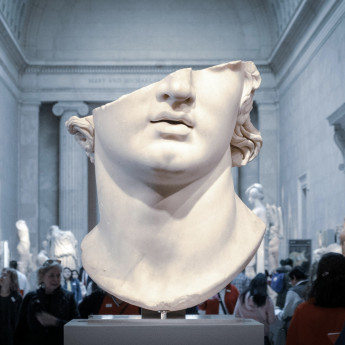
Popular, Collecting - July 23, 2025
Sculpture Care and Display: From Plinths to Pedestals in Your Home
Learn how to display and care for sculpture at home—from lighting tips to material care—so your art can truly shine in any space. Read More

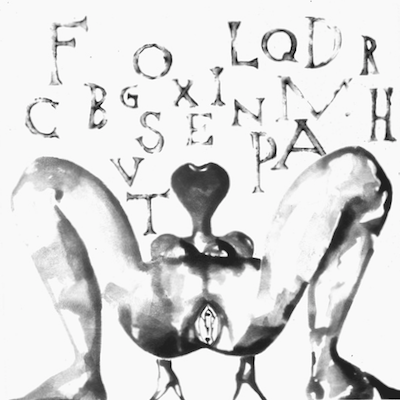
What is Transvanguardia ?
Transavanguardia is the Italian version of Neo-Expressionism, referring to an art movement that emerged in Italy and other parts of Western Europe during the 1970s and 1980s. The term translates to beyond the avant-garde. Transavanguardia arose as a reaction against the dominance of conceptual art, reintroducing emotion and reviving painting as a primary medium. The movement marked a return to mythic imagery and figurative art, celebrating a rediscovery of traditional forms and themes in a contemporary context.