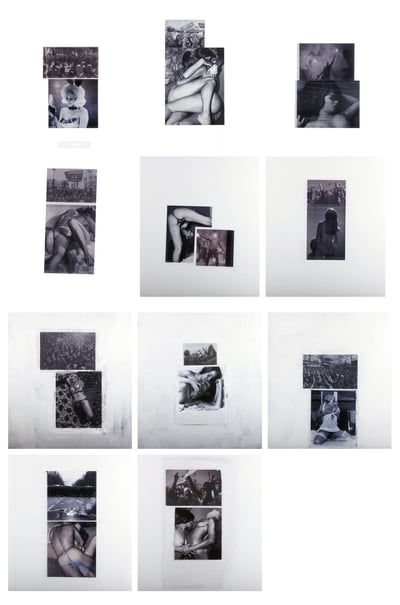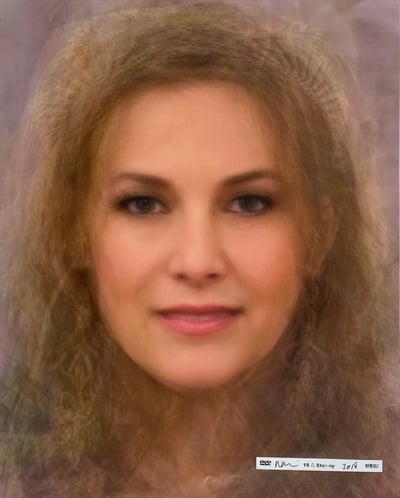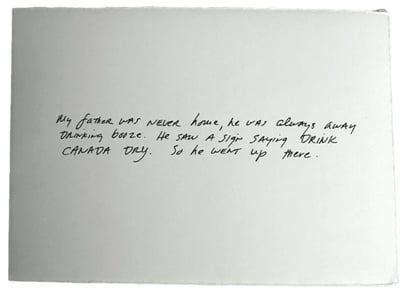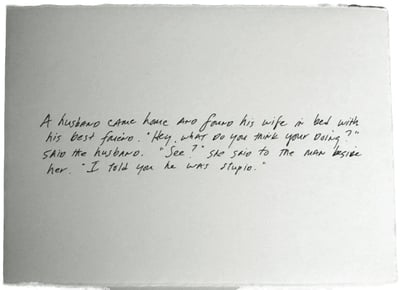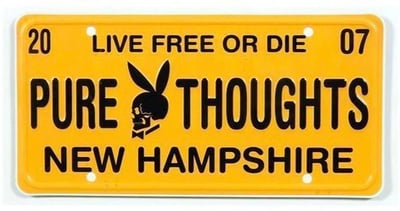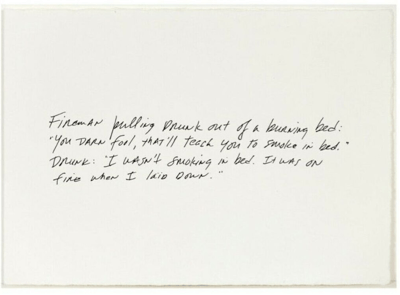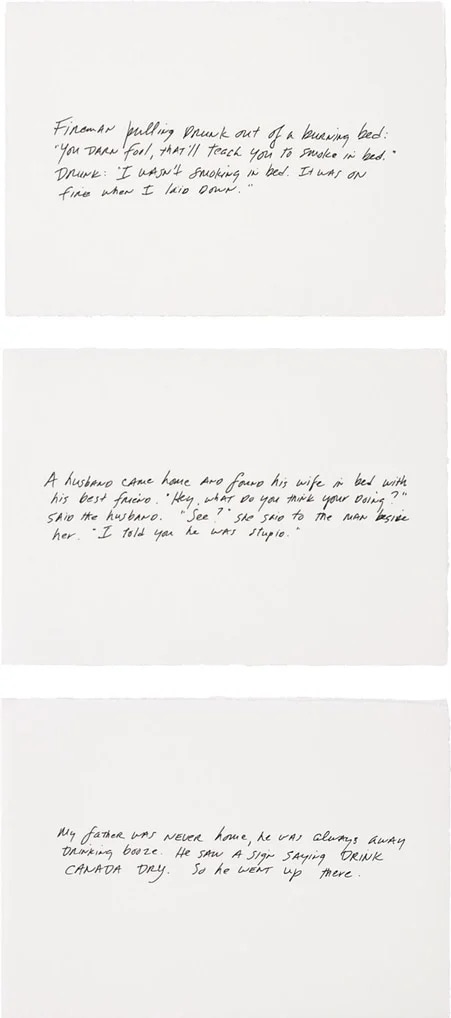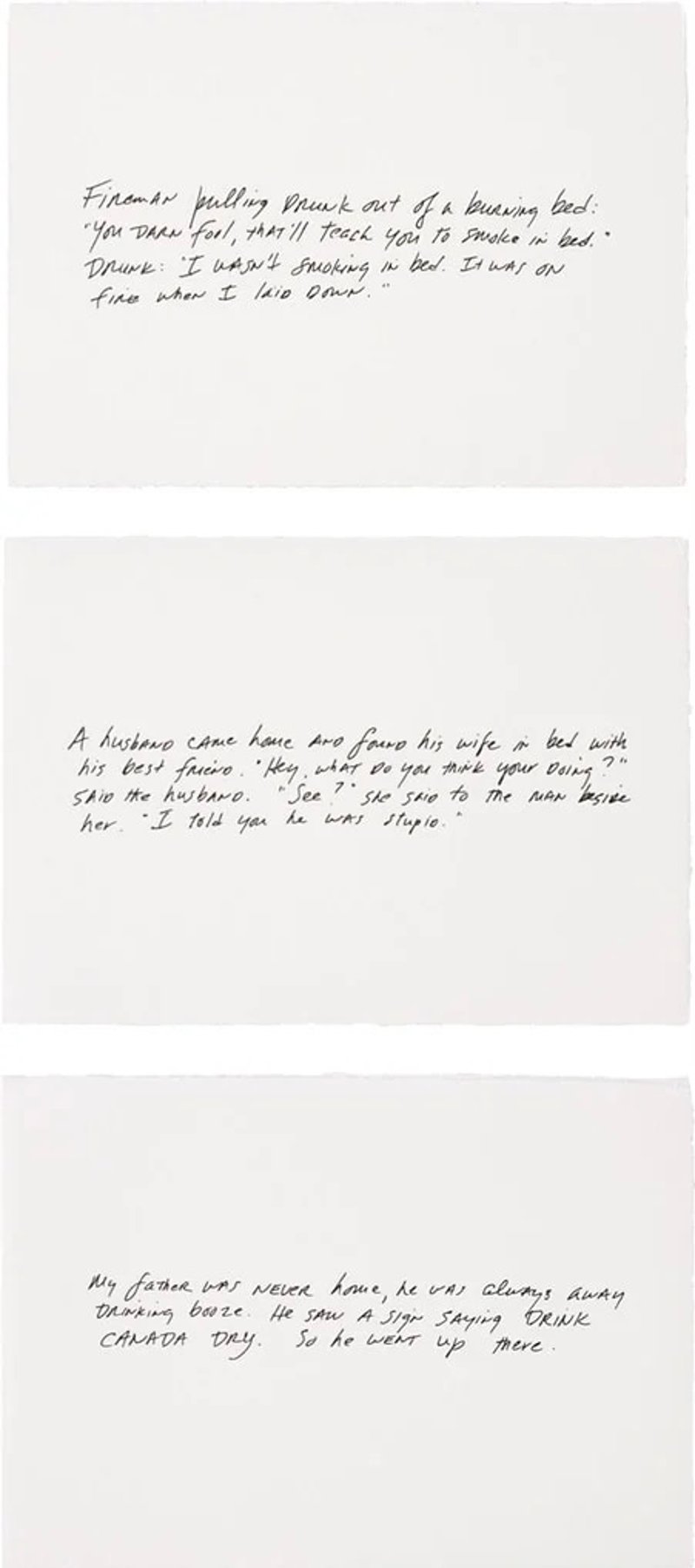
Text image from Richard Prince's iconic Jokes series - Signed and numbered by the artist in ink on interior of card.
- Foil-stamped print, on heavy wove paper, folded
This limited edition mixed media set by Richard Prince, titled The Greeting Card Jokes (Complete Set of 3), is part of his renowned Jokes series. Each piece features handwritten text, mimicking the casual tone of greeting card messages, but with a darkly humorous twist. Prince appropriates the format of everyday language, combining it with an unsettling undertone to challenge conventional social norms. The simplicity of the presentation—text on blank white cards—heightens the contrast between the lighthearted greeting card style and the subversive content. This work reflects Prince's broader exploration of mass culture, humor, and appropriation art.
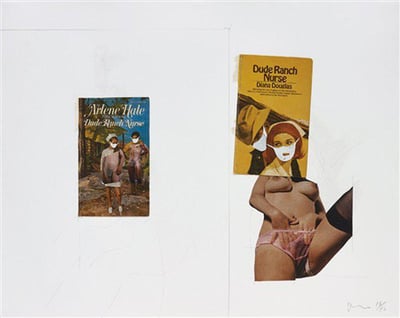
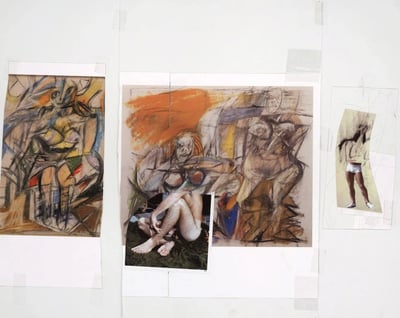
Richard Prince (USA, 1949) is a pioneering contemporary artist known for his provocative appropriation art. By rephotographing advertisements, altering pop culture imagery, and exploring themes of authorship, identity, and consumerism, Prince challenges notions of originality and artistic ownership. His controversial works are pivotal in the discourse on modern art.
Mixed MediaMixed media refers to artwork that incorporates more than one medium within a single piece. Unlike multimedia art, which combines distinct forms of visual art and often includes elements like sound, video, or digital media, mixed media focuses on combining traditional art materials, such as paint, ink, and collage. Mixed media art allows artists to achieve a wide range of effects and textures by layering and blending different materials.
Text image from Richard Prince's iconic Jokes series - Signed and numbered by the artist in ink on interior of card.
- Foil-stamped print, on heavy wove paper, folded
This limited edition mixed media set by Richard Prince, titled The Greeting Card Jokes (Complete Set of 3), is part of his renowned Jokes series. Each piece features handwritten text, mimicking the casual tone of greeting card messages, but with a darkly humorous twist. Prince appropriates the format of everyday language, combining it with an unsettling undertone to challenge conventional social norms. The simplicity of the presentation—text on blank white cards—heightens the contrast between the lighthearted greeting card style and the subversive content. This work reflects Prince's broader exploration of mass culture, humor, and appropriation art.
Richard Prince (USA, 1949) is a pioneering contemporary artist known for his provocative appropriation art. By rephotographing advertisements, altering pop culture imagery, and exploring themes of authorship, identity, and consumerism, Prince challenges notions of originality and artistic ownership. His controversial works are pivotal in the discourse on modern art.
My studio is the only place I feel good in. There, I'm fearless; outside, I'm a mess.
- Richard Prince
Renowned for his use of appropriated imagery, Richard Prince is a painter and photographer whose works often reimagine existing photographs and media in an attempt to encourage the viewer to look at them from a different perspective – his Cowboy series features several ‘rephotographs’ (a photograph of a photograph) of the original Marlboro cigarette adverts that featured a lone cowboy; in choosing such an iconic subject, Prince hopes to strip it of context and simultaneously celebrate and expose it as a false construct. Asides from his ‘rephotography’, Prince has also created an extensive body of ‘joke paintings’ - the jokes are usually simple and rely on a punchline, one such example being “I never had a penny to my name, so I changed my name.” Prince was in inspired by the work of Jackson Pollock from an early age, noting that he was drawn to someone who was “fairly antisocial, kind of a loner, someone who was noncollaborative” - he was also inspired by the painting techniques of Willem de Kooning. (Artist website)
A found object is a term used to describe a man-made or natural object, or a fragment of one, that an artist discovers or purchases and keeps for inspiration or as a work of art. The artist may also modify the object or incorporate it into a collage or assemblage, transforming it into a new piece of art.