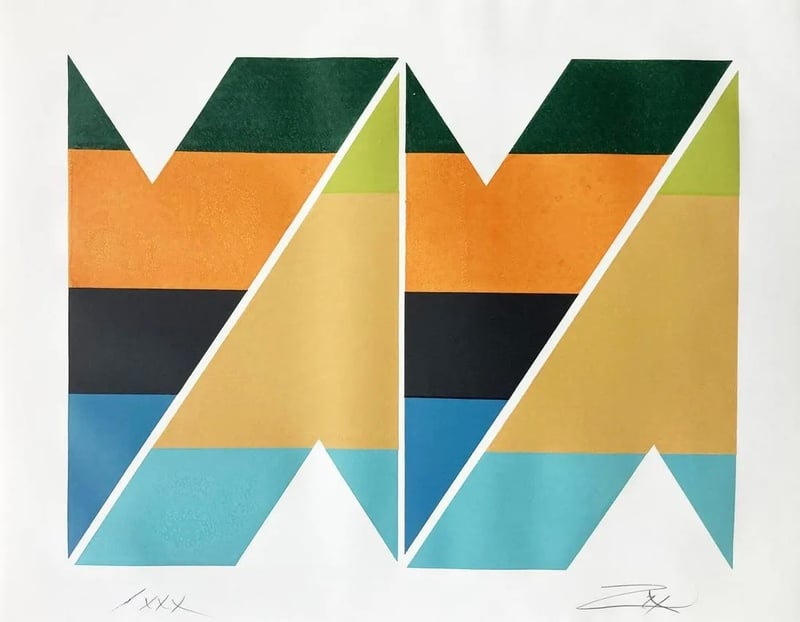
Linocut lithograph
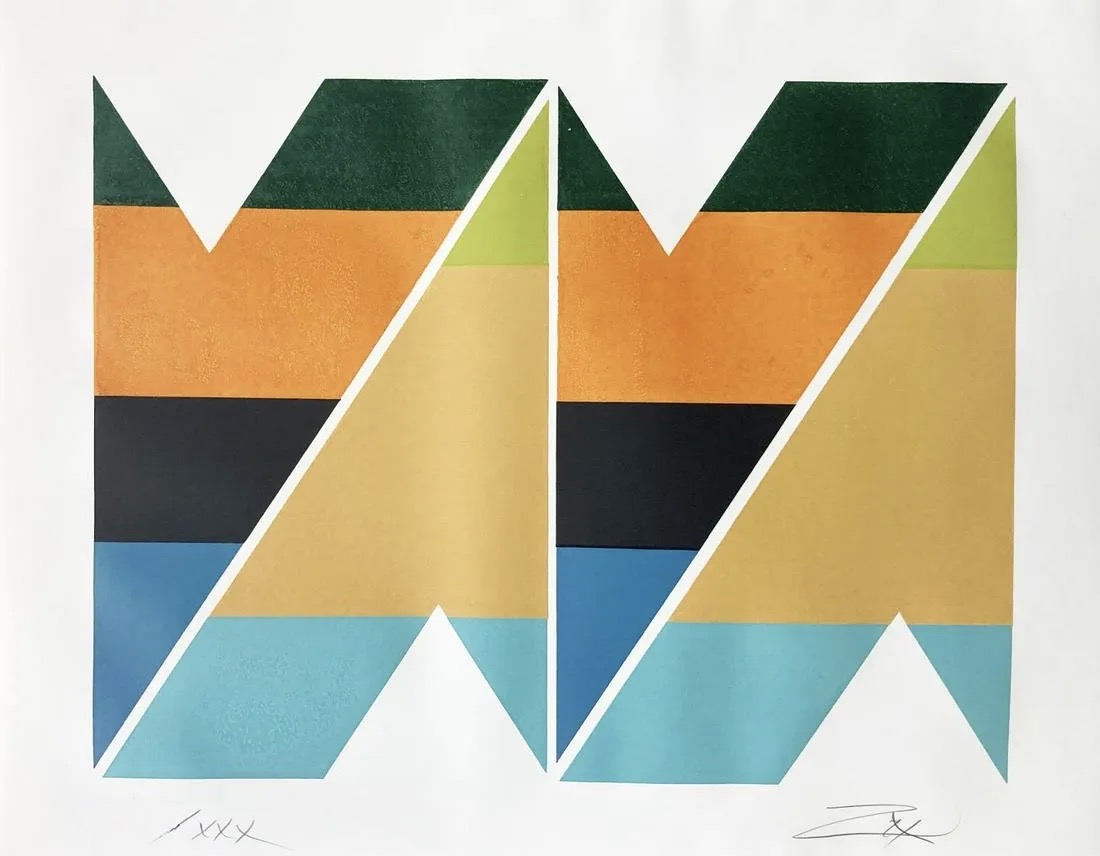
Scissors by Larry Zox is a limited edition linocut lithograph, created in 1980, measuring 30 x 42.5 cm. Known for his bold geometric abstractions, Zox presents a symmetrical composition featuring interlocking, angular shapes in vibrant blocks of color. The interplay of green, orange, black, and blue tones creates a dynamic contrast, evoking a sense of movement and rhythm. The precise, layered forms resemble scissor blades in an abstracted manner, suggesting both tension and harmony. This work exemplifies Zox's mastery of color and form, inviting viewers to explore the relationship between shape, color, and spatial interaction in a minimalist aesthetic.
Artwork Copyright © Larry ZoxLarry Zox (United States, 1937–2006) was an American painter and printmaker associated with Abstract Expressionism, Color Field painting, and Lyrical Abstraction. Renowned for his vibrant geometric compositions, Zox's work often featured dynamic color juxtapositions and hard-edge techniques. His notable series include the 'Rotation' and 'Scissors Jack' paintings, which challenged traditional notions of symmetry and form.
Artwork Copyright © Larry ZoxScissors, 1980
Form
Medium
Size
- Inches
- Centimeters
Edition
Price
- Authenticity Guaranteed
- Insured Shipping
- Online Since 2005
●Inventory 10782
●Signed
●Comes with gallery invoice and certificate
●Sell Us a Similar Artwork. Learn more.
Linocut lithograph
Scissors by Larry Zox is a limited edition linocut lithograph, created in 1980, measuring 30 x 42.5 cm. Known for his bold geometric abstractions, Zox presents a symmetrical composition featuring interlocking, angular shapes in vibrant blocks of color. The interplay of green, orange, black, and blue tones creates a dynamic contrast, evoking a sense of movement and rhythm. The precise, layered forms resemble scissor blades in an abstracted manner, suggesting both tension and harmony. This work exemplifies Zox's mastery of color and form, inviting viewers to explore the relationship between shape, color, and spatial interaction in a minimalist aesthetic.
Artwork Copyright © Larry ZoxLarry Zox (United States, 1937–2006) was an American painter and printmaker associated with Abstract Expressionism, Color Field painting, and Lyrical Abstraction. Renowned for his vibrant geometric compositions, Zox's work often featured dynamic color juxtapositions and hard-edge techniques. His notable series include the 'Rotation' and 'Scissors Jack' paintings, which challenged traditional notions of symmetry and form.
Artwork Copyright © Larry ZoxAvailability
Medium
SORT BY
Larry Zox
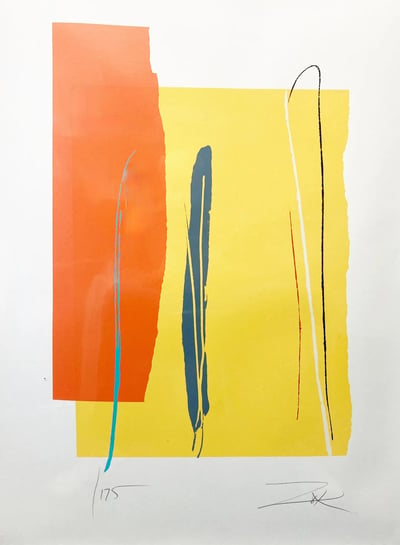
Untitled 3 from Niagara Series, 1980
Limited Edition Print
Linocut
USD 850
Larry Zox
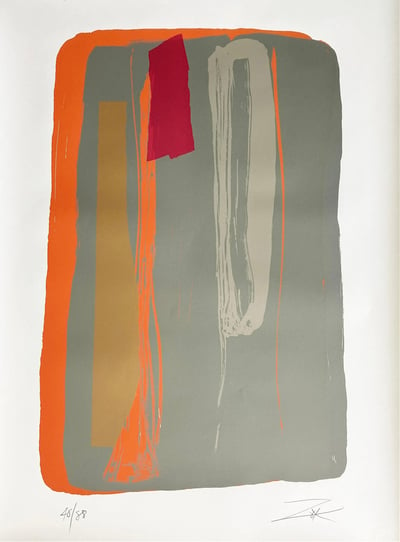
Untitled 2 from Niagara Series, 1980
Limited Edition Print
Linocut
USD 850

Larry Zox
Untitled 1 from Niagara Series, 1980
Limited Edition Print
Mixed Media
USD 850
Larry Zox
Scissors, 1980
Limited Edition Print
Mixed Media
Inquire For Price
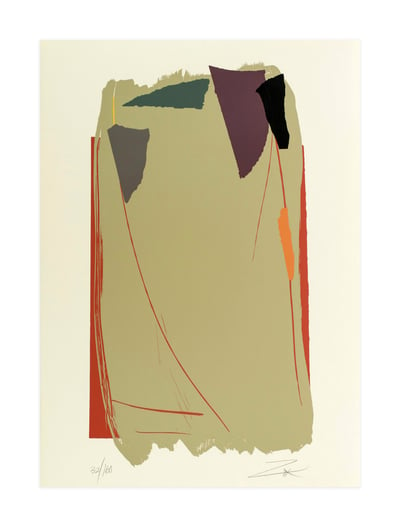
Larry Zox
Grey Sweep I, 1979
Limited Edition Print
Serigraph
Currently Not Available
Related Artists

Related Articles
Popular, Artists, Collecting - August 25, 2026
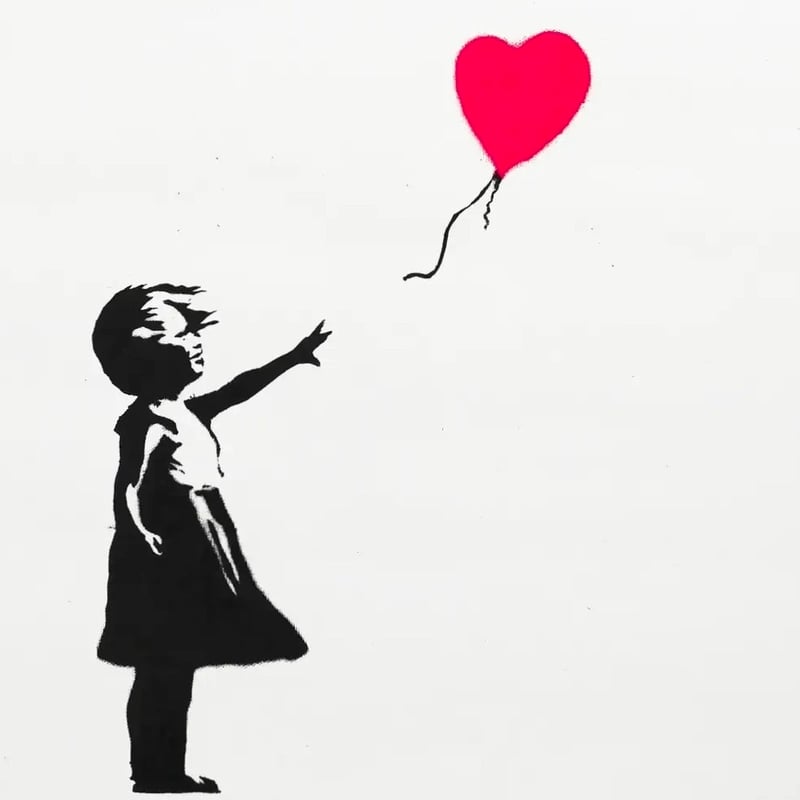
Banksy’s Girl with Balloon, 2004: Signed vs Unsigned Prints
Compare Banksy’s 2004 Girl with Balloon signed and unsigned screenprints, edition sizes, Pest Control authentication, rare proofs and auction history.Read More
Artwork by Eduardo Chillida
What is abstract art?
Abstract art uses form, shape, line, and color to create a visual experience without attempting to represent external reality. The composition exists independently of the world's visual references, focusing on expressing ideas and emotions through non-representational means.
Larry Zox
Scissors, 1980
76.2 x 108 cm


